SEDE VACANTE 1667
May 22, 1667—June 20, 1667
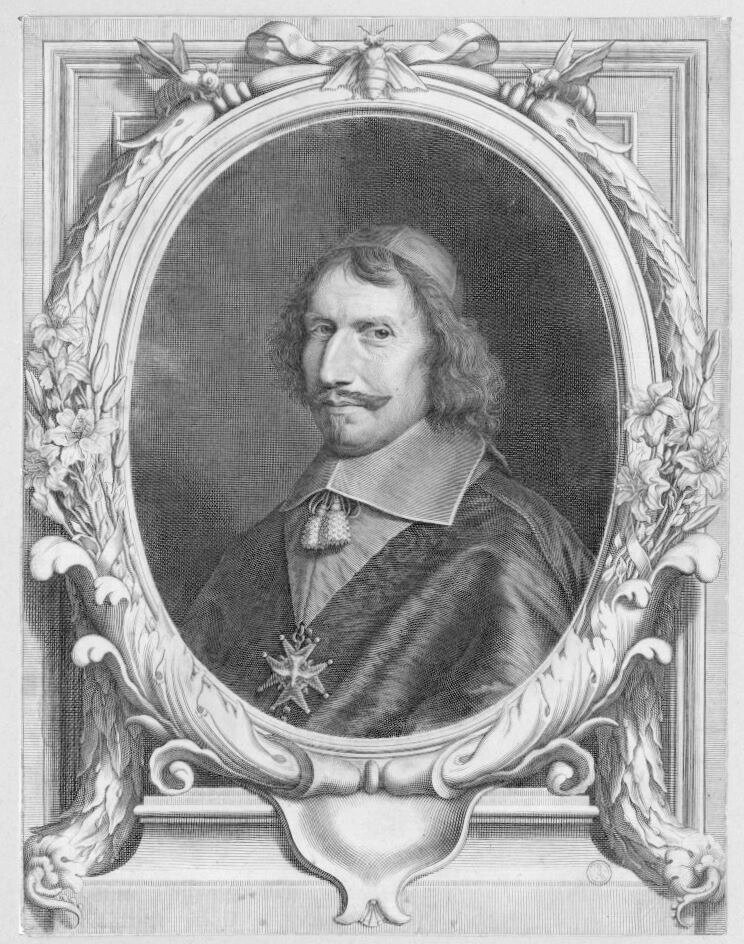
Cardinal Antonio Barberini
ANTONIO CARDINAL BARBERINI, iuniore (1607-1671), was the son of Carlo Barberini and Costanza Magalotti. He was the nephew of Pope Urban VIII (Maffeo Barberini, 1623-1644), of the Capuchin Antonio Card. Barberini, seniore, (1624), and of Lorenzo Card. Magalotti. His brother Francesco became Cardinal on the election of their uncle to the papacy, and his brother Taddeo became Prince of Palestrina and Prefect of Rome. He was the cousin of Francesco Maria Card. Machiavelli (who became cardinal in 1641), and uncle of Carlo Cardinal Barberini (1653). He was Grand Prior in Rome of the Order of St. John of Jerusalem.
The accession of his uncle brought Antonio Barberini and his brothers many positions of power, wealth and influence. He became Cardinal Deacon of S. Maria in Aquiro in 1627, and Camerlengo of the Holy Roman Church on July 28, 1638, a position which he held until his death on August 3, 1671. In that capacity he presided over the Conclaves of 1644, 1655, 1667 and 1669-1670. The authoritarianism, arrogance and greed of the family ("Quod non fecerunt Barbari, fecerunt Barberini.") brought a strong reaction on the death of Urban VIII. In 1645 Antonio and Taddeo fled to Paris (where Urban VIII had once been ambassador), and remained in exile at the Court of Louis XIV (under the patronage of the Sicilian Giulio Card. Mazzarini) until 1653; he became Grand Almoner of France and a member of the Order of the Holy Spirit. He became Cardinal Bishop of Palestrina in 1661. In 1667 he was nominated Archbishop of Rheims (July 18, 1667), a choice which was approved by Pope Alexander VII [Gauchat, Hierarchia catholica IV, 295 n. 8]. He died in Rome on August 3, 1671.
Cardinal Barberini was Cardinal Camerlengo during the conclaves of 1644, 1655, 1667 and 1670.
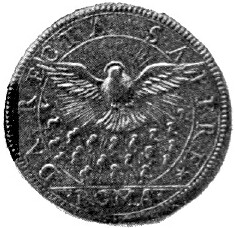 |
AG piastre ["Grant (us) to know the right "] |
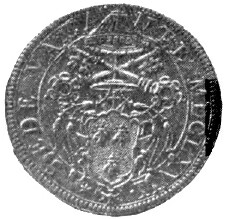 |
SEDE • VACA NTE • MDCLXVII Stemma of Cardinal Antonio Barberini, Chamberlain of the Holy Roman Church (1638-1671), crossed keys behind, surmounted by the Ombrellone Berman, p. 145. |
The Dean of the Sacred College was Cardinal Francesco Barberini, Bishop of Ostia and Velletri, nephew of Pope Urban VIII and brother of Cardinal Antonio Barberini. His nephew, Carlo Barberini, was also a member of the College of Cardinals.
The Governor of the Conclave, Msgr. Girolamo Casanate (1620-1700), was born at Naples on June 13, 1620, the son of a leading senator and sometime diplomat. He studied the law at the University of Naples and practiced as a lawyer. He became the protegé of Giovanni Battista Cardinal Pamfilj, who had been Nuncio to the Court of Naples from 1621-1625, and who convinced Girolamo's father, during a diplomatic visit to Rome, to allow his son to take up the ecclesiastical profession. When Pamfilj became Pope Innocent X in 1644, Casanate was named Chamberlain of Honor, and was appointed papal governor of several cities in the Papal States, Sabina, Fabriano, Camerino, and then Ancona. At Camerino, he became acquainted with Bishop Emilio Altieri, who became Pope Clement X in 1670. From 1658 to 1662 he was Inquisitor at Malta. He was created Cardinal deacon by Clement X on June 12, 1673. In 1693 he was appointed Vatican Librarian (Bibliothecarius Sanctae Romanae Ecclesiae). He took part in the conclaves of 1676, 1689 and 1691. He died in Rome on March 3, 1700.
The Marshal of the Conclave was Prince Giulio Savelli (1626-1712), the second son of Prince Bernardino Savelli, Prince of Albano (1606-1658) and Felice Peretti, the heiress of Pope Sixtus V. He married Caterina Aldobrandini, daughter of Pietro Aldobrandini, Duke of Carpentino, and then Caterina Giustiniani. The family was perpetually in financial difficulties: in 1596 they sold Castel Gandolfo to the pope, and in 1650 the duchy of Albano. He succeeded his father as Marshal of the Holy Roman Church in 1658. He had one son, who predeceased him. On his death in 1712, the hereditary office of Marshal ceased.
The Governor of Rome (1666-1668) was Msgr. Federico Borromeo, Patriarch of Alexandria (1654-1670), Doctor in utroque iure. He had previously been Governor of Ascoli (from 1643). Governor of Benevento (1646-1648), and Inquisitor in Malta (from 1652 to 1654). He was Nuncio in Switzerland from November 28, 1654 until August 20, 1665. He was created Cardinal Priest of S. Agostino in December, 1670. From 1670 to 1673 he was Secretary of State of Pope Clement X. He died in 1673, and was buried in the Milanese church, SS. Ambrogio e Carlo on the Corso in Rome [V. Forcella, Inscrizioni delle chiese di Roma V, p. 345, no. 959].
The Secretary of the College of Cardinals was Abbot Augustinus Favoritius, canon of the Basilica Liberiana (S. Maria Maggiore).
The Magistri Ceremoniarum were: Franciscus Maria Phoebeus (Archbishop of Tarsus, from April 1667), Fr. Ambrosius Landucius, OESA (Bishop of Porphyreon in Phoenicia), Carolus Vincentius Carcarasius, Fulvius Servantius, and Petrus Antonius de la Pedacchia.
Death of Pope Alexander
Pope Alexander VII (Chigi), at the age of sixty-eight, had been suffering from kidney stones for some time, and around the beginning of March he began to fail; in constant severe pain, he was unable to give the Easter blessing. On the 15th of April, after having received Extreme Unction, the Pope wanted to address the Cardinals [Laemmer, 53]:
Dixit SSmus se iam in lectulo mortis positum et moriturum optavisse etiam antea alloqui Cardinales, medicorum tamen iudicio distulisse. Gravissimos et internos dolores passum fuisse, ac tales ut vix maiores in morte esse crederet. Defecisse tamen Dei gratia cruciatuum vehementiam, et imminutos si non sedatos dolores, de divinae voluntati conformari, etiamsi adderet dolores, dummodo augeret patientiam. In illius sperare misericordia, cuius non est numerus, ac orare ut sui misereatur nec reminiscatur delicta sua vel maiorum suorum, aut vindictam sumat de peccatis suis, quando quidquid divina bonitas de suo facit, est ex misericordiaa, quidquid ipsi patimur, est ex iustitia... Demum cum orationes et preces Cardinalium ad Deum efflagitasset, apostolicam eis benedictionem est impertitus.
The Dean of the Sacred College, Cardinal Francesco Barberini, made a reply, and then, at the Pope's nod, the Profession of Faith was brought forward, which the Pope read, clause by clause, and signalled his adherence by an oath on the Gospels.
By the 24th of April the politicking about the succession had already begun (Petruccelli, 195, quoting Onorato Gini da Nizza, the Resident in Rome of Carlo Emmanuele II, Duke of Savoy). On the 18th of May a severe fever set in, and Alexander VII died on May 22, 1667 (Novaes, 172-173). A pasquinade was immediately posted, claiming to summarize Alexander's last words to the cardinals: maxima de se, magna de parentibus, mala de principibus, pessima de cardinalibus, et nihil de Deo. ['He thought most about himself, a great deal about his relations, bad about the rulers, worst about the cardinals, and nothing about God']
Preliminary Strategies
The French already had a candidate and were working on a plan. At the Conclave of 1655, when Hughes de Lionne had been Ambassador Extraordinary of King Louis XIV, he had come to know and respect Msgr. Giulio Rospigliosi, then Archbishop of Tarsus (1644-1657), who had returned to Rome after his successful Nunciature in Spain (1644-1653). During the Conclave, Rospigliosi was elected by the Cardinals to serve as Governor of Rome. In his first promotion of cardinals, on April 9, 1657, the new Pope, Alexander VII, made Msgr. Rospigliosi a cardinal. Having become Secretary of State and Foreign Minister to Louis XIV (1663-1671), it occurred to Lionne that Cardinal Rospigliosi, who was now Secretary of State (1655-1667) and noted for his prudence and broad view of affairs, might make a good successor to Pope Alexander. The Cardinal's nephew, Giacomo Rospigliosi, was also in great favor with the French. He had been with his uncle in Spain and had taken a Doctorate in utroque iure at Salamanca. he had been Chamberlain to Pope Alexander's nephew, Cardinal Flavio Chigi, and had been sent to France in 1664 to prepare the way for the Embassy of Cardinal Chigi to King Louis XIV. Giacomo Rospigliosi had visited Paris a second time while on his way to his post as Internuncio in Flanders. Louis XIV had ordered Lionne to assure Cardinal Rospigliosi, who had done the French a number of favors, of his protection.
When Pope Alexander's approaching death became obvious, Louis ordered the Duc de Chaulnes, his Ambassador in Rome, to undertake discussions with Cardinal Rospigliosi with regard to his being elected pope (Petruccelli, 197-199). When Lionne himself had been Ambassador, his lively sense of humor and his good spirits were a bit much for the papal court. The new Ambassador was more reserved and more esteemed by the Cardinals. The Duke was careful to share the information as to the candidacy of Rospigliosi only with d'Este, Grimaldi and Retz. The French, however, disposed of eight votes among the cardinals (according to the Venetian Orator Giacomo Quirini: Relazioni, 327; and Cardinal Azzolini, Petruccelli III, 203). Where were the other votes to form a two-thirds majority to come from? The King himself was always a problem. As Cardinal Azzolino remarked in a letter to Lord Arlington on March 21, 1667 [Petruccelli III, p. 203]:
"Les Français prennent grand soin de ce conclave, beaucoup plus que des autres passés, à cause de l'orgueil de leur roi actuel, habitué à faire prévaloir sa volonté. Ce que ce roi désire le plus, c'est d' avoir le pape futur ami, et il peut, moyennant argent, très-fracilement satisfaire ce désir; car il y a un grand nombre de cardinaux pauvres.
But bribery could become simony in a papal election, and great caution was needed. The King had sent Abbe Bonzi to guide the movements of the inexperienced Cardinal de Vendôme, but Bonzi had been an agent of Cardinal Antonio Barberini for a long time and his interests were compromised. Barberini was therefore able to obtain accurate information of the plans and activities of the French faction.
Cardinal Friedrich von Hessen-Darmstadt, son of Landgrave Ludwig V, represented the interests of the Empire.
The Ambassador Ordinary of Venice was Giacomo Quirini (November 1663-December 1667); his successor, Antonio Grimani, had already been selected, but it had been decided not to replace the current ambassador in the light of the critical health of Alexander VII (according to Grimani's own relazione: Relazioni, 350).
The Marquis d' Astorgas represented Spain. The Venetian Oratore Giacomo Quirini estimated (after the fact) that the Spanish had available twenty-two votes in the Conclave.
The Cardinals
At the death of Pope Alexander on May 22, the College of Cardinals was at full strength, seventy members. Two cardinals died on June 5—Volumnio Bandinelli and Francesco Maria Sforza Pallavicino. This reduced the number of living cardinals to sixty-eight. An official list of the participants is attached to the Motu Proprio, Nos Volentes, of Clement IX, dated August 2, 1667 [Bullarium Romanum Turin edition 17, iii, pp. 517-528, at 525-528]; it lists the names of sixty-four cardinals. Four cardinals did not attend.
- Francesco Barberini (aged 69), Suburbicarian Bishop of Ostia and Velletri, Dean of the Sacred College of Cardinals. Brother of Cardinal Antonio. Nephew of Urban VIII. Protector of England. Prefect of the SC of the Universal and Roman Inquisition (1633-1679) S.R.E. Vice-Chancellor. [Bullarium Romanum Turin edition 16, no. cxxxix, pp. 217] (died 1679)
- Marzio Ginetti (aged 81), Suburbicarian Bishop of Porto and Santa Rufina, Sub-Dean of the Sacred College of Cardinals. Sent to Germany by Urban VIII to attempt to end the Thirty Years War—at which he failed. Legate of Ferrara. Vicar of Innocent X for the City of Rome, Bishop of Albano. Later Bishop of Sabina (1663-1666), and then Bishop of Porto e Santa Rufina (1666-1671) (died 1671).
- Antonio Barberini (aged 59), Suburbicarian Bishop of Palestrina (died August 3, 1667). Camerlengo of the Holy Roman Church.
- Giovanni Battista Pallotta (aged 73), Suburbicarian Bishop of Frascati (died 1668).
- Francesco Brancaccio (aged 75), Suburbicarian Bishop of Sabina, previously Cardinal Priest of Ss. XII Apostoli (1634-1663). Doctor of Theology (Naples, 1620). Formerly Bishop of Capaccio in the Kingdom of Naples (1627–1635). When a servant of his killed a soldier, he was cited to the court of the Viceroy of Naples, but not wanting to acknowledge civil jurisdiction, he fled to Rome. Despite demands for his readmission to his diocese, the Viceroy refused and demanded his replacement. Instead the Pope made him a cardinal, and in 1638 made him Bishop of Viterbo and Toscanella (1638–1670). (died 1675).
- Ulderico Carpegna (aged 71), Suburbicarian Bishop of Albano (died 1675), fourth son of Conte Tomasso Carpegna and Contessa Vittoria Landriani (whose baptismal sponsor was Don Juan of Austria; she was named after the Victory of Lepanto). Former Bishop of Gubbio (1630-1638) and then of Todi (1638-1643).
- Ernest Adalbert von Harrach (aged 68), Cardinal Priest of S. Maria degli Angeli. Archbishop of Prague (1623-1667), and Bishop of Trent (1665-1667). (died October 25, 1667).
- Stefano Durazzo (aged 72), Cardinal Priest of S. Lorenzo in Lucina (died July 11, 1667)
- Giulio Gabrielli (aged 63), Cardinal Priest of S. Prisca. (died August 31, 1677).
- Virginio Orsini (aged 52) [Romanus], son of Prince Fernando, Duke of Bracciano, etc. and Giustiniana Orsini. Cardinal Priest of S. Prassede (died 1676).
- Cesare Facchinetti (aged 58), Cardinal Priest of SS. Quattro Coronati. Titular Archbishop of Tamiathis (Damietta) (1639-1672), Bishop of Senigallia (1643-1655), later Bishop of Spoleto (1655-1672). Then Bishop of Palestrina (1672-1679), and then Bishop of Porto. Ended his career as Bishop of Ostia (1680-1683). (died 1683)
- Girolamo Grimaldi (aged 71), Cardinal Priest of Sma. Trinità al Monte Pincio Archbishop of Aix (from 1655-1685; Gallia christiana novissima I (1899), 141-144) (died 1685).
- Carlo Rosetti (aged 53), Cardinal Priest of S. Silvestro in Capite Titular Archbishop of Tarsus (1641-1643), Bishop of Faenza (1643-1676). Cardinal Bishop of Frascati in 1676, then Porto e Santa Rufina (1680-1681). [He had been in exile under Alexander VII, for having spoken ill of Cardinal Chigi during the Conclave of 1655: Petruccelli, 191-192.]
- Niccolò Albergati-Ludovisi (aged 58), Cardinal Priest of S. Maria in Trastevere Referendary of the Two Signatures. Former Archbishop of Bologna (1645-1651). Major Penitentiary (1650-1687). (died 1687).
- Federico Sforza (aged 63), Cardinal Priest of S. Pietro in Vincoli. son of Don Alessandro Sforza (1572-1631), Conte di Segni, Signore di Valmontone e Lugnano, first Duca di Segni, second Marchese di Proceno, Signore di Onano, twelfth Conte di Santa Fiora, Marchese di Varzi e Castell’Arquato e Conte di Cotignola; and Donna Eleonora Orsini, daughter of Don Paolo Giordano, first Duca di Bracciano and of Isabella de’ Medici Principessa di Toscana. Protonotary Apostolic from April, 1621; Vicelegate in Avignon from May 23, 1627. He was Bishop of Rimini from 1646-1656 [Gauchat, p. 95]. In 1675 he became Bishop of Tivoli [Ughelli I, 1315]. (died May 24, 1676) Protector of the Kingdoms of Spain and Naples.
- Alderano Cibo (aged 64), [Genoa], son of the Prince of Massa Carrara. Majordomo of the Apostolic Palace for Innocent X. Cardinal Priest of S. Pudenziana (1645-1668), then S. Prassede (1668-1677), then S. Lorenzo in Lucina (1677-1679) then Bishop of Palestrina, then Porto, then Ostia (died July 22, 1700). (died 1676)
- Benedetto Odescalchi (aged 56), Cardinal Priest of S. Onofrio.(died 1689)
- Lorenzo Raggi (aged 52), Cardinal Priest of SS. Quirico e Giulitta (died 1687). Vice-Chamberlain of the Holy Roman Church.
- Jean-François-Paul de Gondi de Retz (aged 53), Cardinal Priest of S. Maria sopra Minerva (died 1679).
- Luigi Omodei (aged 60), Cardinal Priest of SS. Bonifacio ed Alessio (died 1685).
- Pietro Vito Ottoboni (aged 57), Cardinal Priest of S. Marco (died 1691).
- Marcello Santacroce (aged 47), Cardinal Priest of S. Stefano al Monte Celio (died 1674). Bishop of Tivoli (1652-1674).
- Lorenzo Imperiali (aged 55), [Genoa], Cardinal Priest of S. Crisogono (1654-1673). Made a Cleric of the Apostolic Camera by Urban VIII. Vice-Legae of Bologna. Commisary General of the Armies in the Apostolic Camera. Concluded the War of Castro for Innocent X, and was rewarded with the Governorship of Rome and the office of Vice-Chamberlain of the Apostolic Camera (1653-1654). He was named a cardinal in pectore by Innocent X on February 19, 1652. The governorship terminated when the appointment to the cardinalate was announced in March, 1654. Alexander VII made him Legate in Ferrara (1657), and then Governor of Rome for a second time (1660-1662). He was named Legate of the Marches of Picenum (1662). Clement IX made him Protector of the Augustinians (OESA). He died at the age of 61 on September 21, 1673, and was buried in S. Agostino [V. Forcella, Inscrizioni delle chiese di Roma V, p. 97 no. 292].
- Giberto Borromeo (aged 56), Cardinal Priest of SS. Giovanni e Paolo (died 1672).
- Giovanni Battista Spada (aged 69), Cardinal Priest of S. Marcello (died 1675) .
- Francesco Albizzi (aged 73), Cardinal Priest of S. Maria in Via (died 1684) .
- Ottavio Acquaviva d'Aragona (aged 57), Cardinal Priest of S. Cecilia (died 1674).
- Flavio Chigi.(aged 36), Cardinal Priest of S. Maria del Popolo (died 1693). Bibliothecarius Sanctae Romanae Ecclesiae. Archivist of the Vatican Archives. Archpriest of the Lateran Basilica. Nephew of Pope Alexander VII.
- Giulio Rospigliosi (aged 67), Cardinal Priest of S. Sisto (died 1669). Doctorates in theology, philosophy and utroque iure, Pisa. Outgoing Secretary of State (Elected Pope Clement IX). Doctor in utroque iure, as well as in Philosophy and Theology (Pisa). Secretary of State of Alexander VII (1665-1667).
- Girolamo Buonvisi (aged 60), Cardinal Priest of S. Girolamo dei Schiavoni/Croati (died 1677). Bishop of Lucca, Legate in Ferrara.
- Scipione Pannocchieschi d'Elci (aged 67), Cardinal Priest of S. Sabina (died 1670). Archbishop of Pisa.
- Girolamo Farnese (aged 67) [Parma], of the family of the Dukes of Latera. Under Urban VIII he had been Nuncio in Switzerland, where the Church was trying to restore its position against the Protestants. Inter alia, he raised soldiers for the use of the Pope in the War of Castro. On his return to Rome he was named Secretary of the Congregation of BIshops and Regulars. In 1652 he was named Governor of Rome. In 1656 he became Maggiordomo of Alexander VII. Cardinal Priest of S. Agnese fuori le mura (died 1668).
- Antonio Bichi (aged 53), Cardinal Priest of S. Agostino (died 1691. Bishop of Osimo (1656-1691).
- Pietro Vidoni (aged 56), Cardinal Priest of S. Callisto (died 1681). Bishop of Lodi.
- Gregorio Barbarigo (aged 41), Cardinal Priest of S. Tommaso in Parione (died 1697). Bishop of Padua.
- Girolamo Boncompagni (aged 45), Cardinal Priest of SS. Marcellino e Pietro (died 1684). Archbishop of Bologna.
- Celio Piccolomini (aged 58), Cardinal Priest of S. Pietro in Montorio (died 1681) .
- Carlo Bonelli (aged 55) [Romanus], Cardinal Priest of S. Anastasia (from 1664; died 1676). Governor of Rome and Vice-Chamberlain S.R.E. (1655-1656). Nuncio in Spain 1656-1664. Doctor of Law (Perugia). Great-great-grandnephew of Pius V.
- Carlo Carafa della Spina (aged 56) [Naples], Cardinal Priest of S. Susanna (died 1680). Nuncio in Austria (1658-1664). Legate in Bologna.
- Alfonso Litta (aged 58), Cardinal Priest of S. Croce in Gerusalemme (died 1679). Archbishop of Milan (1652-1679).
- Neri Corsini (aged 53), Cardinal Priest of Ss. Nereo ed Achilleo (died 1678).
- Paluzzo Paluzzi degli Albertoni (aged 44), Cardinal Priest of Ss. XII Apostoli (died 1698). Bishop of Montefisacone e Corneto (1666-1670).
- Cesare Maria Antonio Rasponi (aged 52), Cardinal Priest of S. Giovanni a Porta Latina (died 1675). Legate in Urbino.
- Giannicolò Conti di Poli (aged 50), Cardinal Priest of S. Maria in Traspontina (died 1698). Bishop of Ancona and Numana.
- Giacomo Filippo Nini (aged 38), Cardinal Priest of S. Maria della Pace (died 1680).
- Carlo Roberti (aged 62), Cardinal Priest of S. Maria in Ara Coeli (died 1673).
- Giulio Spinola (aged 55) [Genoa], Cardinal Priest of S. Martino ai Monti (died 1691). Doctor of laws.
- Innico Caracciolo (aged 60), Cardinal Priest without titulus (died 1685). Archbishop of Naples (1667-1685).
- Giovanni Delfino (aged 50, Cardinal Priest without titulus (died 1699). Patriarch of Aquileia (1657-1699).
- Rinaldo d'Este (aged 49), [Modena], son of Elizabeth of Savoy. Cardinal Deacon of S. Nicola in Carcere (died 1672) . Brother of Francesco I, Duke of Modena, Cardinal Deacon of S. Nicola in Carcere (died 1672). Cardinal Protodeacon.
- Giovanni Stefano Donghi (aged 59), Cardinal Deacon of S. Agata alla Suburra (died 1669). Bishop of Ferrara.
- Paolo Emilio Rondinini (aged 50), Cardinal Deacon of S. Maria in Cosmedin (died 1668). Bishop of Assisi.
- Francesco Maidalchini (aged 46), Cardinal Deacon of S. Maria in Via Lata (died 1700).
- Friedrich von Hessen-Darmstadt, O.S.Io.Hieros (aged 51), Cardinal Deacon of S. Cesareo in Palatio (died 1682) .
- Carlo Barberini (aged 37). Cardinal Deacon of S. Angelo in Pescheria (died 1704).
- Carlo Pio di Savoia (aged 45), Cardinal Deacon of S. Eustachio (died 1689).
- Carlo Gualterio (aged 52), Cardinal Deacon of S. Pancrazio (died 1673). Bishop of Fermo.
- Decio Azzolino (aged 44), [Fermo, Picenum], a protege of Cardinal Giovanni Panziroli, whom he accompanied when he was Nuncio to Spain under Urban VIII (1642-1643), and who later became Secretary of State (1644-1651). Azzolini was Secretary of Briefs to Princes and Secretary of the College of Cardinals under Innocent X. It was he (or so it is alleged) who ferreted out the spy (Cardinal Astalli) who had betrayed Innocent X's policies to the Spanish government [Bargrave, p. 67-68; but this is one of Gregorio Leti's fantasies: see Cardella 7, 118]. Cardinal Deacon of S. Adriano al Foro (March 2, 1654; died 1689)..
- Odoardo Vecchiarelli (aged 54), Cardinal Deacon of SS. Cosma e Damiano. (died in Rome on July 31, 1667, entombed in S. Pietro in vincoli). Bishop of Rieti (1660-1667). [Ughelli-Colet, Italia sacra I, 1216; V. Forcella, Inscrizioni delle chiese di Rome IV, p. 89 no. 203].
- Giacomo Franzoni (aged 54), Cardinal Deacon of S. Maria in Aquiro (died 1697). Bishop of Camerino.
- Francesco Maria Mancini (aged 61), Cardinal Deacon of SS. Vito, Modesto e Crescenzia (died 1672).
- Angelo Celsi (aged 67), Cardinal Deacon of S. Giorgio in Velabro (died 1671). Prefect of the SC of the Council.
- Paolo Savelli (aged 45), Cardinal Deacon of S. Maria della Scala (died 1685).
- Charles Louis de Vendôme (aged 55), Cardinal Deacon without Deaconry (died 1669).
- Pascual de Aragón-Córdoba-Cardona y Fernández de Córdoba (aged 41), Cardinal Priest of S. Balbina (died 1677). Archbishop of Toledo.
- Vitaliano Visconti (aged 49), Cardinal Priest of S. Agnese fuori le mura (died 1671).
- Guidobald von Thun (aged 50), Cardinal Priest without titulus (died June 1, 1668), Former Archbishop of Salzburg (1654-1666). Bishop of Regensburg (1666-1668)
- Luis Guillermo de Moncada de Aragón Luna de Peralta y de la Cerda (aged 53), Cardinal Deacon without Deaconry (died 1673). Major-domo major of the King of Spain. Co-protector of Spain. Duke of Bivona, Duca de Montalto.
Conclave Parties and Candidates
At the beginning of the Sede Vacante, there had been some disagreement as to where the Conclave should be held. The younger cardinals, looking at the old Vatican Palace, which had not been lived in for some time, and which seemed very inconvenient, especially in the heat and humidity of the summer, indicated that they wished to hold the Conclave at the Quirinal Palace. There was also a good deal of demolition and construction in the immediate neighborhood due to the construction of the new Piazza S. Pietro. Naturally, the older cardinals, citing tradition, insisted on the Apostolic Palace of the Vatican. Tradition prevailed.
The Conclave of 1667 lasted eigteen days. It began on Thursday, June 2, 1667, in the Vatican Basilica, with the Mass of the Holy Spirit, sung by Cardinal Barberini, the Dean of the Sacred College. The oration de pontifice eligendo was pronounced by Fr. Stefano Gardi (Gradio) Raguseo, Custodian of the Vatican Library (Romae: ex Typogr. Nicolai Angeli Tinassi 1667). From St. Peter's a procession of the Cardinals moved to the Capella Paolina. Sixty cardinals entered conclave on that day. In the Capella Paolina the three bulls on conclaves were read out, and the appropriate solemn oaths sworn by each of the Cardinals. A number of cardinals then returned to their palazzi, since the Conclave would not be enclosed until the evening. Two other Cardinals, who were too ill to enter conclave, died on June 5—Cardinals Francesco Sforza Pallavicino and Volumnio Bandinelli (Brusoni, 394). Cardinal Albergati-Ludovisi entered conclave on June 6, and Cardinals Donghi and Santa Croce on June 10.
Cardinal Chigi, the Cardinal nipote, whose faction was comprised of about thirty-four members, was working in favor of Cardinal Scipione d' Elci (Archbishop of Pisa, but a Florentine), in order (it is said) to please the Grand Duke of Tuscany, Ferdinando II (1621-1670). Cardinal Antonio Barberini, who led another faction of about sixteen members, and who was usually well-disposed toward French interests, was supporting the ambitions of his brother Francesco, who had been an active candidate in the Conclave of 1665 [Leti, Histoire des conclaves II, pp. 547-548]. The others factions were the French, the Spanish and the 'Squadrone Volante'. It is likewise alleged that the same members of the Squadrone volante (minus Cardinal de Retz, who had been reconciled to the French King), who had so greatly influenced the election of Alexander VII in 1665, also operated effectively in producing another new pope.
In the period before the Conclave began, Cardinal Imperiali, the leader of the Flying Squadron,was working on promoting the candidacy of Cardinal Carlo Bonelli, and he was being pressed in that direction by the Duke of Savoy [Petruccelli III, 204-205]. He was able to assemble some 44 votes (according to the Histoire des conclaves II, 548) from the Spanish, the Flying Squadron, and the creature of Chigi. But the French reacted strongly and negatively, since Bonelli seemed to be totally in the pocket of the Spanish. And when Cardinal Francesco Barberini discovered the plans, he took measures to protect his own candidacy, rallying the "older cardinals" of Urban VIII and Innocent X. That spelled the end of Bonelli's chances.
Among all the papabili, however, the likely candidates were Cardinal Girolamo Farnese (the French supported him, and Chigi was favorable), Scipione d'Elci (the preference of the Grand Duke of Tuscany, to whom Chigi was also favorable), and Giulio Rospigliosi. The 'Squadrone Volante', however, was opposed to Farnese, and they claimed they could provide thirty-four votes, some of them Spanish (plus Cardinal Barberini), to give him a 'virtual exclusion'. The Count of Montaviti, the envoy of the Grand Duke in Rome, was campaigning for Elci, and had tried to enlist both Cibo and Rossetti. Elci's father had been the Grand Duke's envoy in Spain, and Elci had a pension from the Spanish government; that made him suspicious to the French. Also, Elci was greatly disliked by the people of Rome, who made an embarassing demonstration in opposition to him at the Entrance to the Conclave, shouting that he should be burnt at the stake [or so says Leti, Histoire des conclaves II, 550]. As far as Rospigliosi was concerned personally, he had nothing to be said against him. He was known both in France (His nephew Giacomo had visited Versailles when he was pro-Nuncio in the Netherlands) and in Spain (where he had been Nuncio between 1644 and 1653). He was the current Secretary of State, and was even-handed in directing papal policy.
Election
The first scrutiny took place on Saturday, June 4. The maximum effort was put forth for Farnese by all of his supporters, but Savelli and Caraccioli acted as though they were hostile to Farnese, and they carried along Litta and Carafa into opposition against him. Francesco Barberini and his followers also cast their votes elsewhere. The Flying Squadron produced enough of the votes that they claimed to have, so that Farnese was unable to reach the required two-thirds vote.
On Sunday, June 5, people were still speaking for Farnese, and after him for Rospigliosi. Cardinal Chigi was campaigning openly for Elci. But Chigi was inexperienced in the politics of conclaves, and had less influence than he hoped. He had trouble conceiving of a grand plan and executing it. And yet, if he were not on the side of a particular candidate, his following was large enough (as many as 34 votes) to form the nucleus of a 'virtual veto' of the candidate by denying him the two-thirds vote that was required. This was the message carried to Chigi, in fact, on Monday the 9th, by Cardinal Barberini, representing his own faction as well as the Squadron Volante, and others.
On Monday, June 6, Palotta had ten votes in the morning scrutiny, and nine in the afternoon. But that was the end of his candidacy. Cardinals would not waste their votes supporting someone who could not progress, unless supporting him for a time was part of a different strategy [Histoire des conclaves II, 551]. On Monday, Tuesday, and Wednesday, Rospigliosi continued to make a good showing, which kept his candidacy alive. In fact, the rumor in Rome was that he was as good as elected.
On Thursday, June 9, Chigi and Barberini entered into a deal that they would try to elect Rospigliosi. Chigi had evidently done some thinking about Barberini's message of Monday. They believed that they now had the votes. The news spread through the Conclave. But when the scrutiny took place on June 10, Rospigliosi's vote total had suddenly descended to fifteen. Apparently he was not as well-liked as some seemed to think, and he had his secret enemies after all. Or perhaps it was just that some leaders had not yet had the opportunity to send their favorites to the scrutiny, and were not yet prepared to make a compromise.
After the chances of Elci had collapsed, Cardinal Azzolini, who had made an honest effort on his behalf of Elci in order to accommodate Chigi, decided that it was time to talk to Chigi about the candidacy of Rospigliosi. He pointed out to Chigi that a pope could, after all, be elected without his cooperation, and that even an enemy of Chigi could be elected. Rospigliosi was not an enemy of Chigi. Chigi was prepared to give in, but he required that Barberini and the Flying Squadron guarantee a minimum of twenty-five votes. Azzolini immediately went to Barberini to acquaint him with the proposed bargain.
On the twentieth of June, Giulio Cardinal Rospigliosi, Cardinal Priest of S. Sisto, Titular Bishop of Tarsus, was elected with only two dissenting votes, that of Cardinal Rospigliosi himself and that of Cardinal Corsini, who voted for Cardinal Chigi. But the final vote-count was not correct—one vote was missing. It was discovered that Cardinal de Retz, who was the scrutator in charge of the balloting, had given his ballot to Cardinal de Vendôme to place in the chalice at the appropriate moment; Vendôme had somehow not carried out his charge. Nonetheless, the election was held to be valid.
Rospigliosi was crowned Clement IX on June 26, 1667, in the Vatican Basilica, by Cardinal Rinaldo d' Este, and on Sunday, July 3, he took formal possession of S. Giovanni Laterano. He was received by Cardinal Flavio Chigi, the Archpriest of the Lateran Basilica and nephew of Alexander VII. When Pope Clement was seated on his throne, each of the Cardinals made their obeisance and kissed the Pope's hand. He handed each Cardinal a gold and a silver commemorative medallion [Cancellieri, Solenne possessi, pp. 275-286].
Cardinal Decio Azzolini was named Secretary of State (June 25, 1667—December 9, 1669). Cardinal Pietro Ottoboni was named Papal Pro-Datary.
Bibliography
Hugo Laemmer, Zur Kirchensgeschichte des sechszehnten und siebenzehnten Jahrhunderts (Freiburg i.B. 1863), pp. 53-54 [Cod. S. Petri in Vinc. 75, f. 397: "Discorso fatto a Cardinali da Alessandro VII. in punto di morte"]
For the Conclave of 1667, see: Conclave de Clement IX., ou Journal de ce qui s' est passé pendant le Siège Vacant , et durant le Conclave , dans lequel fut éleu Pape le Cardinal Jules Rospigliosi, natif de Pistoye (Paris: Charles de Sercy, 1669) ['from a ms. found in the Room of Cardinal Farnese']. Conclave fatto per la Sede Vacante d' Alessandro VII (1669) [Novaes, Introduzione I, 299]. Girolamo Brusoni, "Life of Clement IX," in Storia delle vite de' pontefice di Bartolommeo Platina e d' altri autori . . fino a Clemente XIII . . . Tomo IV (Venezia Domenico Ferrarin 1765), pp. 394-398, at 394-395; [Gregorio Leti], Conclavi de' Pontefici Romani nuova edizione, riveduta, corretta, ed ampliata Volume III (Cologne: Lorenzo Martini 1691)1-94. Giuseppe de Novaes, Elementi della storia de' sommi pontefici da San Pietro sino al ... Pio Papa VII third edition, Volume 10 (Roma 1822) 183-184. F. Petruccelli della Gattina, Histoire diplomatique des conclaves Troisième volume (Paris 1865), 195-224.
Joannes Baptista Gattico, Acta Selecta Caeremonialia Sanctae Romanae Ecclesiae ex variis mss. codicibus et diariis saeculi xv. xvi. xvii. Tomus I (Romae 1753). Francesco Cancellieri, Storia de' solenni Possessioni de' Sommi Pontefici, detti anticamente Processi o Processioni dopo la loro Coronazione dalla Basilica Vaticana alla Lateranense (Roma: Luigi Lazzarini 1802).
N. Barozzi and G. Berchet (editors), Relazioni degli stati europei lette al Senato dagli Ambasciatori Veneti nel secolo decimosettimo Serie III. Italia, Relazioni di Roma. Volume II (Venezia 1878).
John Bargrave, Pope Alexander the Seventh and the College of Cardinals [1672] (Camden Society 1867) [to be used with caution, as it incorporates material from Gregorio Leti, a most hostile and unreliable source]. Leopold von Ranke, The Popes of Rome (tr. S. Austin) Volume 3 (London: John Murray 1866), pp. 392-394. Leopold von Ranke, History of the Popes, their Church and State (translated by E. Fowler) revised edition, Volume III (New York: The Colonial Press 1901), 41-42. T. A. Trollope, The Papal Conclaves as They Were and as They Are (London 1876), 339-340 [relies on Gregorio Leti, Histoire des conclaves]. A. Bozon, Le cardinal de Retz à Rome (Paris: Plon 1878), 79-97. R. Chantelauze, Le Cardinal de Retz et ses missions diplomatiques à Rome (Paris: Didier 1879), 447-480. Charles Gérin, "Le Cardinal de Retz au Conclave, 1655, 1667, 1670 et 1676," Revue des questions historiques 30 (1881), 113-184. Charles Gérin, Louis XIV et le Saint Siège Volume II (Paris 1894), 165-205. P. Blet, "Louis XIV et le Saint Siège," XVIIe Siècle, no. 123 (1979), pp. 137—154. Marie-Louise Rodén, Church politics in seventeenth-century Rome: Cardinal Decio Azzolino, Queen Christina of Sweden, and the Squadrone Volante (Stockholm 2000 [Acta Universitatis Stockholmiensis. Stockholm studies in economic history, 60] (non vidi).
Patritius Gauchat (editor), Hierarchia Catholica Medii et Recentioris Aevi Volumen Quartum (Monasterii 1935), 3-33.

