SEDE VACANTE 1559
August 18, 1559—December 25, 1559
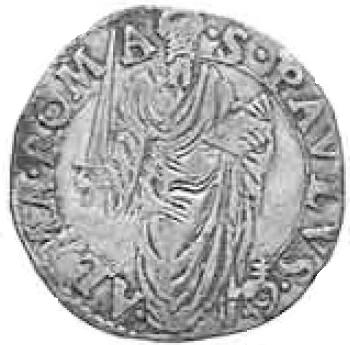 |
AG
|
 |
•SEDE•VAC | ANTE•1559 Arms of Guido Ascanio Card.Sforza, Camerlengo of the Holy Roman Church (1537-1564), surmounted by the Ombrellone, crossed keys. Berman, p. 104 #1060. |
GUIDO ASCANIO CARDINAL SFORZA (1518-1564) was the son of Bosio Sforza, Conte di Santa Fiora e Cotignola, and Costanza Farnese, the legitimized daughter of Alessandro Farnese (Pope Paul III). He became Cardinal at the age of sixteen on December 18, 1534, in his grandfather's first Consistory. He was named Bishop of Parma (1535-1560), and became Camerlengo of the Holy Roman Church in 1537 at the age of 19, a post he held until his death on October 6, 1564. He served as Legate of Bologna and the Romagna ( from 1537), and was Papal Legate in Hungary in 1540. He presided over the Interregnum of 1549-50, the two interregna of 1555, and that of 1559.
The Death of Paul IV
On February 15,1559, Paul IV held a Consistory, in which he published the Bull Cum ex apostolatus officio [Bullarium Romanum Turin edition VI, no. xxvii, 551-556], in which a vote, active or passive, in Consistory was denied to those Emperors, Kings, Princes, or Cardinals who had been accused of heresy, qui hactenus a catholica fide deviasse aut in aliquam haeresim incidisse seu schisma incurrisse aut excitasse seu commisisse.deprehensi aut confessi vel convicti fuerint:
§ 5. Et insuper qui ipsos sic deprehensos aut confessos vel convictos scienter quomodolibet receptare vel defendere aut eis favere vel credere sue eorum dogmata dogmatizare praesumpserint, sententiam excommunicationis eo ipso incurrant, efficianturque infames, nec voce, persona, scriptis vel nuncio aut procuratore aliquo ad publica seu privata officia aut consilia seu synodum vel concilium, generale vel provinciale, nec conclave cardinalium aut aliquam fidelium congregationem seu electionem alicuius, aut testimonium perhibendum admittantur, nec admitti possint; sint etiam intestabiles, nec ad haereditatis successionem accedant; nullus praeterea cogatur eis super aliquo negotio respondere.
In another Consistory on March 10, he made a decree that no Cardinal under inquisition for heresy, whether arrested or confessed or convicted, could be elected Pope (Laemmer, Meletematum, p. 209-210) These decrees were intended to influence the election of his successor, and were directed principally against Cardinal Giovanni Girolamo Morone, who was at the time imprisoned in the Castel S. Angelo, even though he had been cleared of all charges by a Committee of Cardinals (Alessandrino [Ghislieri], Pisa, Reuman, and Spoleto [Farnese]) who had been appointed to deal with his case [Cantù, 421-442; the charges and testimony are catalogued in a contemporary document compiled by the Roman Inquisition, published by C. Corvisieri (1880)]. This was fine with Paul IV, whose bull had prescribed lifelong solitary penitence even for someone who was forgiven (ex ipsius Sedis benignitate et clementia in aliquo monasterio aut alio regulari loco, ad peragendum perpetuam in pane doloris et aqua mestitiae poenitentiam retrudendi fuerint). Such were the decrees of the Grand Inquisitor who had become Pope. In terms of these decrees Morone, therefore, who had been accused of heresy and had been imprisoned, was ineligible to participate or vote in the Conclave of 1559. Fortunately, the College of Cardinals decided otherwise. According to the Bishop of Anglone, Giulio de Grandis, one of the agents of Ferrara in Rome (writing on August 18, the day of Paul IV's death), at their first Congregation the Sacred College immediately sent a committee of Cardinals (Sforza, Lenoncourt and Pisano) to liberate Cardinal Morone from S. Angelo [F. Sforza-Pallavicino, Istoria del Concilio di Trento, Book 14, chapter 10 (who erroneously states that Morone was about to be condemned to death for heresy); Petruccelli II, 118]
According to Onuphrio Panvinio, the continuator of Bartolommeo Platina's papal lives, and an official in the Vatican Library, the Pope was suffering from a lingering and fatal disease [Historia B. Platini (1568) pp. 444-445]: gravis aegritudo pontifici subsecuta est, qui aqua intercute laborans, diu in quibusdam Palatii Vaticani cubiculis reclusus medicorum consilio fuerat. Itaque crescente morbo quum eius vita desperatus esset, ad XI Kal. Septembris [sic! read XVI] hora XII Pontifex, qui sibi mortem instare sentiebat, Cardinales omnes evocare iussit, quibus in eius cubiculum convenientibus, admirabili eloquentia , qua erat praeditus, orationem habuit. The Spanish Ambassador Juan de Figueroa took note of the poor state of the Pope's health when he was finally received in July of 1159 [Hinojosa, p. 32]. The importance of the fever in killing the aged pontiff is also remarked on by Luigi Mocenigo, the Venetian Ambassador [Alberi, 50], and by Vincenzo Bello [Laemmer, Meletemata, p. 212—diary of Vincenzo Bello, Romano]:
Alli undici da Agosto si ammalò il Papa di vomito di flusso e con un poco di febre, et in otto giorni se ne mori, che fu alli XVIII.
Pope Paul IV (Carafa) finally died on Friday, August 18, 1559, at the age of 83. In the same room in which he had died, the Pope's body was opened, according to custom, its praecordia removed, and enbalmed. It was then dressed in its traditional vestments and, at the second hour, the body was placed on view in the Capella Paolina, where, the next morning, August 19, the customary Office was sung. The body lay in the chapel the entire day until the 20th hour. At that point, the Chapel was opened for the Cardinals, who were assembling for the First General Congregation, and thereupon the chapel was opened for general viewing. After the General Congregation, around the 22nd hour, the Canons of the Vatican Basilica and the Cardinals who had been created by Paul II, escorted the body to the Basilica and placed it in the Chapel of the Blessed Sacrament, where the accustomed rites were performed. The body was then carried to the Chapel of S. Sixtus, and at the second hour of the night they entombed the body.
At the last of the Requiem Masses of the Novendiales, the Funeral Oration was pronounced on September 2, 1559, by Joannes Paulus Flavius [text in Caracciolo, pp. 116-129; bibliographical notice with date in Novaes, Introduzione p. 258].
Paul IV was widely hated for his narrow-mindedness, harshness and intolerance. Rome was so excited that the body of the pope had to be interred in deep secrecy in the middle of the night [Mocenigo, Relazione, in Alberi, p. 38; Giovanni Francesco Firmano, Papal Master of Ceremonies, in Caracciolo, pp. 114-115], and guards had to be posted at the grave for some time [Panvinio, in Historia B. Platini, p. 445]. Riots ensued lasting several days, destroying the Palace of the Inquisition and liberating its prisoners; Paul's statue on the Capitoline was overturned and its head used as a football for three days before being thrown into the Tiber [letter of the French Ambassador, Philibert Babou, Bishop of Angoulême, to Cardinal de Lorraine-Guise, Prime Minister of François II, August 18, 1559; September 15, 1559; Ribier I, pp. 828-829; Pallavicino, Istoria del Concilio di Trento Book XIV. cap.ix. 7]. More than 2000 Romans watched the Palace of the Inquisition burn to the ground. The convent of Dominicans at S. Maria sopra Minerva was also attacked with the intention of setting it on fire [Giovanni Firmano, in Baronius-Theiner, Annales Ecclesiastici 34, sub anno 1559, no. 36, p. 40]:
XVIII Augusti agente in extremis Paulo IV coorta seditio, fracti carceres, Inquisitionis domus expoliata facto impetu, partimque combusta, concursumque ad conventum Sanctae-Mariae super Minervam, atque ad delendum thammis coenobium paratae faces, sed auctoritate Juliani Caesarini populi signiferi compressi seditiosi.
All insignia of the Carafa throughout Rome were ordered removed or defaced by order of the Senate and People of Rome. Cardinal Carafa, the Pope's nephew and principal minister, had to hide himself in the palazzo of Cardinal Pacheco for two days [Bishop of Anglone to Ercole II of Ferrara (August 18, 1559): Petruccelli II, 118]. The City was not finally reduced to calmness until September 1 [Pallavicino, Istoria del Concilio di Trento Book XIV. cap.ix. 9].
The Throne of Peter remained vacant for four months and seven days. Although the Cardinals appointed a Governor for the City of Rome and a Governor of the Borgo for the Conclave, the Governor of the City did nothing at all to deal with the crowds of Romans. Neither did the Caporioni. The Roman nobility, for once, was united against the Carafa [Mocenigo, Relazione, in Alberi, p. 39].
Interests of the Crowns
There had been a number of deaths in the previous year which had considerably altered the political situation in Europe. The Emperor Charles V had died at Yuste on September 21, 1558. He had retired in 1556, but his influence remained considerable. In France Henri II had met with a sudden accident (died July 10, 1559), placing a minor of fifteen, François II, on the throne, under the control of his mother and his uncles, the Guises. In England, Queen Mary had died (November 17, 1558), as had her greatest support, Cardinal Reginald Pole (November 19, 1558), and they had been succeeded by Elizabeth Tudor, who had been raised a Protestant but who was feigning conformity to the Roman Catholic Church. Most recently Duke Ercole II d'Este of Ferrara, Cardinal Ippolito d'Este's brother, had died on October 3, 1559, in the middle of the Sede Vacante; he had supported the French and Pope Paul IV in the war against the Spanish.
The political requirements of King Philip of Spain and the French Court of the new king François II (in fact under the control of Catherine de Medicis and the Guise faction) were, as usual, the determining factors in the choice of a pope. Prominent also among the deliberations and maneuvers were Cardinals Farnese (grandson of Paul III), who was in close touch with King Philip and who controlled perhaps four votes; Carlo Carafa (nephew of Paul IV), who controlled around eleven votes; and Ippolito II d' Este, the Cardinal of Ferrara, who was the leader of the French interest, which included Louis I de Guise and Lorenzo Strozzi (both of whom arrived on the 15th of September).
The Venetian Orator, Luigi Mocenigo, remarked in his relazione of 1560 to the Venetian Senate, some six months after the Conclave [Alberi, 55 and 51],
Non è dubbio alcuno ... che il Duca di Fiorenza l' ha fatto Papa, però che lui l' ha fatto poner nei nominati del Re Filippo, e poi con diversi mezzi fatto raccomandar anco dalla Regina di Francia, e finalmente guadagnatoli con grande industria e diligenza la parte Caraffesca; per effetuar la qual cosa si crede che quel Duca, oltre li boni mezzi che ha in ogni corte, abbia ancora speso in doni e subornazioni, come è suo costume di fare, molta quantita di danari; di modo che bisogna per necessità che questo Pontefice riconosce, come fa, il papato, dopo Dio, dal Duca di Fiorenza.
The Carafas' anti-Spanish policy (Paul IV was planning to invade Spanish Naples at the time of his death, and Philip II had put the Duke of Alva on alert) made King Philip II determined to influence the cardinals to elect a pope friendly to Spanish interests. The Emperor, Ferdinand I (whom Paul IV had refused to recognize), and King Philip wanted help in dealing with problems with the Protestants. But the Council of Trent, which would have greatly helped in that direction, was looked on with grave suspicion by the Emperor and kings, because the reforms which were being promoted (especially in the realm of episcopal appointments, episcopal residence, and the holding of benefices) threatened the control of monarchs over the Church, its leaders, and its finances. Philip had actually begun working on the problem of a new pope in October of 1558, when he appointed Don Juan de Figueroa as his Castellan and Governor of Milan. Figueroa was provided with letters of credence directed to Cardinal Guido Ascanio Sforza di Santa Fiora, the Camerlengo, who was also Protector of Spain at the papal court. King Philip's choices for a future pope were Rodolfo Pio de Carpi (chief of the Imperial faction), Giacomo Puteo (an eminent legalist), Giovanni Angelo de' Medici (whose brother was the Imperial general in Germany, and in Siena), and Clemente D' Olera, OFM Obs. (Minister General of his order, 1553-1557) [Hinojosa, p. 30-31].
In carrying forward his designs, King Philip relied heavily on his Ambassador (Orator) in Rome, Don Francisco de Vargas Mejía. Vargas' activities, however, were so intrusive and offensive that he became an object of loathing. The Venetian Ambassador, Luigi Mocenigo, commented on him [Alberi, p. 44]
Oltra di cio gli ambasciatori di questi principi, anco per loro affetti particolari, si mettono a favorire o disfavorir qualche cardinale, secondo che il vien voglia, come ha fatto ultimamente l' ambasciatore Vargas. che per far Carpi o Paceco pontefice, ha posto sottosopra tutto il mondo, facendo milti offizi maligni ed iniqui, come si crede, anco senza commissione del re suo, contra diversi cardinali, anzi contra ognuno che lui vedesso esser in atto di poter riuscire pontefice; e questi uffizi faceva con tanta rabbia e con tanta passione, che in vero era cosa odiosa e quasi insopportabile, come fu quello contra il cardinal Pisani, che di certo gli ha tolto il papato, però che ormai molti cardinali gli andavano a dimandar grazie come a papa già fatto.... Non passava quasi notte ch' esso Vargas non andasse alli buchi del conclave, e talvolta v' è stato fin all' alba, oltre che venivan fuori e ritornavan dentro diversi che negoziavano seco, come fecero Don Ferrante di Sanguini, l'abate di Gambara che fu mandato dal Cardinal Farnese, e Monsignor Alessandro Casale per conto del Cardinal di Carpi.
The Tridentine reformers were also promoting the reform of the Roman Curia—which certainly did not want to be reformed. They looked for a pope who would reopen the Council and move forward with the agenda of definition of disputed doctrines and church reform.
What everyone could agree on is that they did not want a pope like Paul IV. Everyone, that is, except the nephews of Paul IV, headed by Cardinal Carlo Carafa. They needed to negotiate some sort of immunity for the misdeeds of the Carafa clan and their hangers-on. Their crimes and misappropriations were already under attack. Marc' Antonio Colonna, who was the rightful owner of the fortress of Paliano, had been dispossessed by Paul IV in favor of his nephew Giovanni, the Duke of Paliano. Colonna immediately appeared before the fortress, the minute the Pope was dead, and expelled the Carafa agents, reclaiming his ancestral property. Gianfrancesco di Bagno also made the effort to claim back his Marquesate di Montebello. He was supported by the French King, who was also demanding from the Papacy the restoration of the Conte di Bagno, as well as the 80,000 ecus which the French government had spent in helping the Conte di Bagno against the illegal dispossession carried out by Paul IV. Colonna and the Roman nobility then appeared before the Cardinals, requesting permission to kill the Duke. And yet the Carafa family continued to annoy and outrage people. Paul IV had appointed his grand-nephew, Alfonso Carafa, to a newly created office, Regent of the Apostolic Chamber. The duties and powers of the Regent vis-a-vis the Chamberlain, however, were unclear, and when the Pope died, Alfonso claimed that he was in charge of the Sede Vacante. The Camerlengo, Cardinal Guido Ascanio Sforza, had no intention, however, of yielding his traditional powers and prerogatives and appealed to the College of Cardinals. The Cardinals supported Sforza, perfectly aware as they were that Sforza was a favorite of the people of Rome and that placing Carafa in charge would bring serious danger. The stupidity and greed of Alfonso Carafa can only be marvelled at [See the.letter of the French Ambassador to the French Prime Minister: Ribier, p. 828]

Duke Cosimo in Florence revealed some of his thoughts in a letter to Lottini, the secretary of Cardinal Sforza, the Camerlengo: the election of Cardinal de la Cueva would be a disaster for the Spanish and would cause a scandal; Cardinal Puteo would be another Paul IV. In a letter to Duke Cosimo in Florence, written on August 18, the Florentine Ambassador in Rome, Buongiani Gianfigliazzi, wrote that among the soggetti were Cardinals Carpi, Puteo, Medici, Montepulciano and Aracoeli. Cardinal Ercole Gonzaga was playing a prominent part. Cardinal Ippolito d'Este, the Cardinal of Ferrara, the favorite of the French Court (he judged) would not win, but he had influence with his faction [ portrait of Cardinal d' Este at left ]. Because of his enmity toward d'Este, Farnese would do everything he could for Carpi [Petruccelli II, 121]. Duke Cosimo, had his own agenda. He was interested in keeping control of Siena, which was now in Florentine hands. Cosimo and The King of Spain (who had become his feudal overlord) had an agreement about Siena, and the French were no longer direct players in Italian regional politics. But the wrong pope could look favorably on a Sienese embassy, and begin to make demands about the Patrimony of St. Peter and attempt to compel Florence to relinquish Siena. This was to be avoided at all costs [Hinojosa, 23-24]. The Venetian Ambassador, Luigi Mocenigo, remarked [Alberi, p. 59]:
Vedendo molto ben l'interesse dello Stato Ecclesiastico, quel Duca, col suo impadronirsi del Senese, dubitò assai che Papa Paolo IV, dopo conclusa la pace fra il re Cristianissimo e il Cattolico, non mettesse qualche impedimento, e non contaoperasse a tal cosa; e però fece opportunamente fare allora per il suo ambasciatore con Sua Santità quelli cosi caldi offici in questa materia, ch' io scrisse a quel tempo alla Serenità Vostra, e si sforzò finl di metter li Senesi in odio di Sua Beatiitudine con dirle che erant eretici e luterani, ma principalmente si sforzò di far capace il Pontefice che l'impedire la consegnazione del Senese a esso Duca, saria un romper quella pace, e poner di nuovo guerra in Italia.
On August 27, 1559, King François II of France wrote to his ambassador in Rome, Philibert Babou, the Bishop of Angoulême, that his first choice for pope was Cardinal Ippolito d'Este, his second was Cardinal François de Tournon, and his third was Cardinal Ercole Gonzaga of Mantua [Ribier II, 830]. On the same day, the Queen Mother, Catherine de Medicis, wrote to her cousin the Duke of Florence in favor of Cardinal d'Este and Cardinal de Tournon [Ribier, pp. 831-832]. Neither letter showed much insight. D'Este was the Royal Family's personal friend, and was favorable to France. That was sufficient for them. But he had no chance of getting elected. And the fact that five French cardinals did not bother to attend the Conclave was no help at all to the French interest. The French ambassador in Venice, Noailles, had very recently complained to Cardinal de Lorraine about the unwillingness of the French Cardinals to live in Rome, to become familiar with the other Cardinals, and to learn the ways of the Curia [Ribier II, p. 825 (August 1, 1559)]. The Cardinal of Ferrara had lived a very unreligious life at the French court, and no one thought of him as a theologian, a canon lawyer, or an adept at ecclesiastical politics—even though he was a grandson of Pope Alexander VI. He was exactly the sort of prelate that the Counter-Reformation was beginning to frown upon. His failed candidacy in 1555 may have left a bad taste in some mouths as well.
The French, likewise, seem to have taken no account of the Spanish or Imperial interests in their calculations [Hinojosa, pp. 33-36], or of other interests that were at work (Farnese, the Duke of Florence). Their actual interests are shown in the Memorandum attached to a letter of François II to the Cardinal de Guise written after the news of the election of Medici had reached France: the right of the King to nominate to benefices in France, reformation of the Church in Scotland (a Guise interest), not creating Archbishoprics or Bishoprics in Flanders, the Inquisition in France, and the rights of the Queen Mother. There were better candidates by far than D'Este, Tournon, or Gonzaga, for the good of the Church and the Faith. The French plans for D'Este and Tournon were in ruins by September 27. They then turned their support to Cardinal Ercole Gonzaga, d'Este's cousin. He was another aristocrat from a ruling family; he had held the family's bishopric in Mantua since 1521, but in all those thirty eight years down to the Conclave of 1559, it never occurred to him to have himself episcopally consecrated. Gonzaga, too, was the sort of ecclesiastic who did not fit the requirements of the Counter-Reformation. Afterwards, François II reminded Cardinal de Guise that he had also recommended the candidacy of Cardinal de' Medici; but that was after the fact.
The Cardinals
Gulik-Eubel, Hierarchia Catholica III editio altera (edited by Schmitz-Kallenburg) (Munster 1923), p. 36 n. 1. A list of the cardinals, present and absent, is provided by Eugenio Alberi, vii-viii, who lists only 52 cardinals, and marks Georges d'Armagnac and Giovanni Antonio Capizzuchi as absent; he fails to mention Antoine Sanguin de Meudon and Girolamo Dandini, who were absent (both of whom died during the Sede Vacante), nor does he include Cardinal Capodiferro, who died in the Conclave on December 1, 1559.
At the beginning of the Conclave there were fifty-five living cardinals, of whom forty-seven took part (according to Müller, 66-68). Cardinal Joannes Baptista Ghislieri Consiliarius, Cardinal Deacon of S. Lucia in Septisolio died on August 25, 1559, during the Sede Vacante, but before the Conclave had begun [Eubel-Gauchat III, p. 36 n. 5] Luigi Mocenigo, the Venetian Ambassador, estimated that 23 or 24 of the Cardinals hoped to become pope [Alberi, p. 45].
- Jean du Bellay (aged 59), Suburbicarian Bishop of Ostia e Velletri , Dean of the Sacred College of Cardinals. [voted in the first scrutiny, absent from Conclave at the final vote: Eubel III, p. 36 n. 1] (died February 16, 1560). Cardinal du Bellay was the first Dean of the Sacred College who held the Bishopric of Ostia and Velletri as a right that went with the Deanship, which was to be held by the senior cardinal bishop; this was in accordance with a bull of Paul IV, Cum venerabiles (August 22, 1555) [Bullarium Romanum (Turin edition) VI, 502-504].
- François de Tournon (aged 70), Suburbicarian Bishop of Sabina (died April 22, 1562).
- Rodolfo Pio di Carpi (aged 59), Suburbicarian Bishop of Porto e Santa Rufina, Sub-Dean of the Sacred College of Cardinals. (died 1564). "Santo Giacomo"
- Francesco Pisano (aged 65), Suburbicarian Bishop of Frascati (died June 28, 1570).
- Federico Cesi (aged 59), Suburbicarian Bishop of Palestrina. (died 1565).
- Pedro Pacheco de Villena (aged 71) [Montalban, in the diocese of Toledo], of the Condes de la Puebla de Montalban. Suburbicarian Bishop of Albano (1557-1560). He began his ecclesiastical career as Chamberlain of Pope Adrian VI. Dean of Compostela. Bishop of Mondonedo (1532-1537), presented by the Emperor Charles V [Enrique Flórez et al., España sagrada: Theatro geographico-historico de la iglesia de España, Volume 18: de las iglesias Britoniense y Dumiense (Madrid 1764), pp. 222-223]. Bishop of Ciudad-Rodrigo (1537-1539). Bishop of Pamplona (1539-1545), by royal appointment [Gregorio Fernández Pérez, Historia De La Iglesia Y Opispos De Pamplona II (Madrid 1820), pp. 250-252]. Bishop of Jaen (1545-1555) [M. de Jimena Jurado, Catalogo de los obispos de... Jaen (Madrid 1654), p. 470-476]. Bishop of Siguenza (1554-1560) He took part in the Council of Trent (May 1545). Created a cardinal by Pope Paul III on December 16, 1545, appointed Cardinal Priest of S. Balbina on March 10, 1550. Promoted Cardinal Bishop of Albano on September 20, 1557. He died suddenly and accidentally in his residence in Rome on March 5, 1560. He was buried in S. Maria in Aracoeli on March 13.
- Ercole Gonzaga (aged 53), son of Francesco II, Marchese di Mantua and Isabella d'Este, daughter of Ercole duke of Ferrara. Cardinal Priest of S. Maria Nuova (died March 3, 1563 at Trent). Bishop-elect of Mantua (not in episcopal orders).
- Niccolò Caetani (aged 33), Cardinal Priest of S. Eustachio (died 1585). Archbishop of Capua
- Robert de Lenoncourt (74 ?), Cardinal Priest of S. Cecilia (died 1561). Archbishop of Embrun
- Giovanni Girolamo Morone (aged 50) [Mediolanensis], Cardinal Priest of S. Maria in Trastevere (died 1580). Studied law at Padua. Bishop of Novara. [He was still imprisoned in the Castel S. Angelo on Paul IV's death, a victim of his malice; Cardella IV, p. 243; Moroni, Dizionario storico-ecclesiastica 46, p. 301; Artaud de Montor, Histoire des pontifes romains IV, p. 187-188] The statement of his absolution was read in Consistory on March 13, 1560 [Eubel III, p. 27 n. 5]. Pius IV had been vice-Legate of Bologna when Cardinal Morone had been Legate (from the Spring of 1544).
- Cristoforo Madruzzo (or Madruzzi) (aged 47), Cardinal Priest of S. Cesareo in Palatio (died 1578). Bishop of Trent, Bishop of Brixen [on January 16, 1560, he was transferred to S. Maria trans Tiberim, and on March 13 to the See of Albano: Eubel III, p. 28].
- Bartolomé de la Cueva de Albuquerque (aged 60), Cardinal Priest of S. Croce in Gerusalemme (died 1562).
- Georges d'Armagnac (aged 58), Cardinal Priest of S. Lorenzo in Lucina (died 1585). Bishop of Rodez. Licentiate in Canon Law.
- Otto Truchsess von Waldburg (aged 45), Cardinal Priest of S. Sabina (1550-1561), prieviously Cardinal Priest of S. Balbina (1545-1550), Bishop of Augsburg (1543-1573) He died on April 2, 1573. "Augustanus" Doctor of Theology.
- Tiberio Crispi (aged 61), [Romanus], natural brother of Costanza Farnese [Cardella IV, p. 271; Abd-el-Kader Salza, "Pasquiniana," Giornale storico della letteratura italiana (ed. Novati and Renier) 43 (Torino: Ermanno Loescher 1904), p. 200]. Cardinal Priest of S. Agata alla Suburra He began his career as Canon and Prebend of the Vatican Basilica [F. M. Torrigio, Le sacre grotte Vaticane terza impressione (Roma 1675), p. 612.]. On April 11, 1543, Pope Paul III granted him the right of making his own will; the Pope calls Tiberio cubicularius noster secretus et familiaris continuus commensalis [Cajetanus Cennius et Antonius Martinetti, Collectionis Bullarum brevium aliorumque diplomatum Sacrosanctae Basilicae Vaticanae Tomus Secundus (Roma 1750), pp. 435-436]. Bishop of Sessa Arunca (1543-1544), resigned in favor of his nephew Bartolommeo Albano. Castelan of the Castel S. Angelo (whose apartments he had decorated, June, 1542-April, 1545) [P. Pagliucci, I Castellani del Castel S. Angelo I (Roma 1906), pp. 108-114]. Created cardinal on December 19, 1544 by Pope Paul III; on January 9, 1545 he was granted the Deaconry of S. Agata dei Goti. Governor of Pieve (November 6, 1546-1548) [G. Bolletti, Notizie istoriche di Città della Pieve (Perugia 1830), pp. 255-256]. Administrator of the Bishopric of Amalfi (1547-1561). Legate in Umbria (April, 1545-September, 1548). where he engaged in reconstruction in Perugia; the "vicus juxta Sanctam Mariam de Mercato" was reconstructed as the Via del Popolo and the old Church was rebuilt as Santa Maria del Popolo; the citadel's walls were also rebuilt [Serafino Siepi, Descrizione topologico-istorica della città di Perugia. Pt. topologica, II (Perugia 1822), p. 647-648, 908]. "Il suo governo è stato molto arbitrario e tirannico." ["Ricordi di Bontempi," Archivio storico italiano XVI. 2 (Firenze 1851), p. 395]. In 1559-1560 he was governor of Volseno (Bolsena) in Tuscany, where he had the Church of S. Giovanni built [Vito Procaccini Ricci, Viaggi ai vulcani spenti di Italia nello stato Romano verso il mediterraneo, Viaggio secondo (Firenze: Calasanzio 1821) pp. 45-46]. On May 8, 1562 he was promoted Cardinal Priest of S. Maria in Trastevere. Cardinal Bishop of Sabina (since 1565) He died on October 6, 1566, at Sutri in his diocese, of a long lasting fever. A friend of the Farnese [Lettere di Caro II, 101, p. 151].
- Giovanni Angelo Medici [Mediolanensis] (aged 60), brother of the Marchese di Marignano. Cardinal Priest of S. Prisca. Doctor in utroque iure (died December 9, 1565). He had been on bad terms with Paul IV, and was living quietly at Bagni di Lucca.
- Cristoforo Ciocchi del Monte (aged 75), Cardinal Priest of S. Prassede (died 1564). Bishop of Cagli. Doctor in utroque iure. Cousin of Julius III.
- Fulvio della Corgna, O.S.Hier. (aged 41), Cardinal Priest of S. Stefano al Monte Celio Perusinus, nephew of Pope Julius III, Cardinal Priest of S. Adriano, Knight of Malta. Archpriest of the Cathedral of S. Lorenzo in Perugia. Bishop of Perugia (1550-1553) Administrator of Spoleto Bishop of Perugia again (September 10, 1564–May 5, 1574). Then Bishop of Albano (May 5, 1574–December 5, 1580). Bishop of Porto and Santa Rufina (December 5, 1580–March 4, 1583). (d. 1585)
- Giovanni Michele Saraceni (aged 60), Cardinal Priest of S. Anastasia (March 24, 1557-February 7, 1565). Archbishop of Acerenza and Matera (June 21, 1531–1556). Vice-Chamberlain and Governor of Rome (December 29, 1550) Named a cardinal on November 20, 1551. Vicar of the Vatican Basilica (1549-1552). Abbot commendatory of the Monastero Florense in Sila, Calabria (S. Giovanni in Fiore). He was one of the first members of the newly created SC on the Council of Trent (with Cardinals Morone, Cicala, Ghislieri, Dolera, Simonetta, Borromeo and Vitelozzi) [Alias nonnullas constitutiones, August 2, 1564]. Bishop of Sabina (1566–1568). He died in Rome on April 27, 1568, at the age of 69, and was interred in the Minerva [V. Forcella, Inscrizioni delle chiese di Roma I, p. 464, no. 1808].
- Giovanni Ricci (aged 60), Cardinal Priest of SS. Vitale, Valeria, Gervasio e Protasio (died 1574). ."Montepulciano"
- Giovanni Andrea Mercurio (aged 41), Cardinal Priest of S. Ciriaco alle Terme Diocleziane (died 1561). Archbishop of Messina.
- Giacomo Puteo (aged 64), Cardinal Priest of S. Maria in Via (died 1563). Archbishop of Bari. expert in civil law. Doctor in utroque iure He had been sent as Nuncio to Poland in May of 1556, to attempt to get the Polish to support the Council of Trent.
- Giovanni Battista Cicada (or Cicala) (aged 49), Cardinal Priest of S. Clemente (died 1570)..
- Bernardino Scotti, Theatin.(aged 81), Cardinal Priest of S. Matteo in Merulana (died 1568). Archbishop of Trani. Consistorial Advocate.
- Diomede Carafa (aged 67), Cardinal Priest of S. Martino ai Monti (died 1560). Bishop of Ariano.
- Scipione Rebiba (aged 55), [borgo S. Marco near Melfi in SIcily], Cardinal Priest of S. Pudenziana Cardinal Priest of S. Angelo in Pescheria (1566-1570). Doctorate in utroque iure (or in Canon Law). Archpriest of Chieti. Bishop of Amyclae in the Peloponnesus (1541-1551) so that he could serve as Auxilary Bishop of Chieti (1541-1551) for Cardinal Carafa (Paul IV). Bishop of Motola (1551-1560). Governor of Rome (1555-1556). Named a cardinal by Paul IV on 1556, and assigned the titulus of S. Pudenziana (1556-1565). Throughout his life a protégé of Paul IV, he was named Vicar (1551-1555) of Paul IV in the Archbishopric of Naples , with whose permission he introduced the Inquisition into Naples [H.C.Lea, The Inquisition in its Spanish Dependencies (New York 1922), p. 78]. On April 9, 1556 he was sent to the Netherlands as Nuncio to the Emperor Charles V and King Philip II, to arrange for the resumption of the Council of Trent [R. Hinojosa, Los Despachos de diplomacia pontificia en España I (Madrid 1896), p. 97]. Bishop of Pisa (1555-1560), Bishop of Troia (for three months in 1560), Latin-rite Patriarch of Constantinople (1565–1573). (d. July 23, 1577)
- Jean Suau de Rieumes [Reumann] (aged 56) [Rieumes in Gascony], Cardinal Priest of S. Prisca (1560-1566), previously Cardinal Priest of S. Giovanni a Porta Latina (1556-1560), then Santa Prisca (1560-1566). A canon lawyer. Auditor of the Rota. Named Prefect of the Signature of Justice by Pius IV. Bishop of Mirepoix (1555-1560). He died on September 29, 1566, of complications of kidney stones, and was buried in S. Spirito in Sassia [V. Forcella, Inscrizioni delle chiese di Roma VI, p. 397, no. 1215; Fleury, Histoire ecclesiastique 34 (Paris 1734), 385].
- Giovanni Antonio Capizzuchi (aged 43), Cardinal Priest of S. Pancrazio (died 1569). Bishop of Lodi. Doctor in utroque iure
- Taddeo Gaddi (aged 39), Cardinal Priest of S. Silvestro in Capite (died 1561). Archbishop of Cosenza
- Lorenzo Strozzi (aged 35), Cardinal Priest of S. Balbina (died 1571). Bishop of Béziers.
- Jean Bertrand.(aged 77), Cardinal Priest of SS. Nereo ed Achilleo (died 1560). Archbishop of Sens. [arrived on October 25]
- Antonio (Michele) Ghislieri, OP (aged 54), Cardinal Priest of S. Maria sopra Minerva (died May 1, 1572). Bishop of Sutri e Nepi.
- Clemente d'Olera, OFM Obs (aged 58), Cardinal Priest of S. Maria in Ara Coeli (died 1568). Former Minister General of the Observant Franciscans
- Alessandro Farnese (aged 38), Cardinal Deacon of S. Lorenzo in Damaso (died 1589). Administrator of Spoleto. Son of Pier Luigi Farnese, the son of Pope Paul III. Cardinal Protodeacon. Protector of Scotland
- Guido Ascanio Sforza di Santa Fiora (aged 40), Eldest son of Bosio II, Conte di Santa Fiora e Conte di Cotignola, Signore di Varzi e Castell’Arquato. His brother Carlo was General of the Galleys of the Knights of Malta. Cardinal Deacon of S. Maria in Via Lata (died 1564). Bishop of Parma. Son of the natural daughter of Paul III "Santa Fiore"
- Ippolito II d'Este (aged 50), Cardinal Deacon of S. Maria in Aquiro (died 1572). "Ferrara" Grandson of Alexander VI. Younger brother of Duke Ercole II of Ferrara (whose wife was a confessed Calvinist heretic).
- Giacomo Savelli (aged 36), Cardinal Deacon of S. Maria in Cosmedin (died December 5, 1587). Administrator of Nicastro.
- Girolamo (Recanati) Capodiferro (aged 57), Cardinal Deacon of S. Giorgio in Velabro Bishop of Saint-Jean de Maurienne [died on December 1, 1559, in the Conclave; Gulik-Eubel III, p. 29]. "San Giorgio"
- Ranuccio Farnese (aged 29), Cardinal Deacon of S. Angelo in Pescheria (died 1565). Archbishop of Ravenna. "Sant' Angelo" Major Penitentiary
- Giulio Feltre della Rovere (aged 26)), Cardinal Deacon of S. Pietro in Vincoli (died 1578). "Urbino"
- Innocenzo Ciocchi del Monte.(aged 27), Cardinal Deacon of S. Onofrio (died 1577). "Nephew" of Julius III.
- Luigi Cornaro (aged 42), Cardinal Deacon of S. Teodoro (1584) Knight of Malta, former Grand Prior of Cyprus. [Cardella, 330-331].
- Louis de Lorraine de Guise (aged 31), Cardinal Deacon of S. Tommaso in Parione (died 1578). Bishop of Albi.
- Girolamo Simoncelli (aged 37), Cardinal Deacon of SS. Cosma e Damiano (died 1605). Bishop of Orvieto.Grand-nephew of Julius III.
- Carlo Carafa (aged 42), Cardinal Deacon of SS. Vito e Modesto in Macello Martyrum (died 1561) Nephew of Pope Paul IV (Carafa). He was arrested on orders of Pius IV, and tried by a committee of nine cardinals—Saraceni, Capizucchi, Cesi, Cicala, Cornaro, Cueva, della Rovere, Ghislieri, and Puteo [Carlo Bromato, Storia di Paolo IV Tome II (Ravenna 1753), p. 596-597 with note]. He was strangled on orders of Pope Pius IV on March 4, 1561.
- Alfonso Carafa (aged 19), Cardinal Deacon of S. Maria in Domnica (died 1565). Grand-nephew of Paul IV. Stories of his deep education and precociosness are probably gross flattery of a papal nephew. Administrator of Archepiscopal See of Naples. Named Regent of the Apostolic Camera in 1558 (a new office); deprived of the office when arrested and imprisoned in the Castel S. Angelo in June 1560. He was condemned to pay a fine of 100,000 scudi; the College of Cardinals intervened, however, and the fine was reduced to 10,000. Finally ordained a priest in 1564, but never reached the canonical age to be consecrated a bishop. He died on September 18, 1565.
- Vitellozzo Vitelli (aged 28), Cardinal Deacon of S. Maria in Portico (died 1568). Bishop of Città di Castello.
- Claude de Longuy de Givry (Claudio di Giuri) (aged 78), Cardinal Priest of S. Agnese in Agone (died August 9, 1561). Bishop of Langres.
- Odet de Coligny de Châtillon (aged 42), Cardinal Deacon of S. Adriano al Foro (died 1571). Administrator of Beauvais
- Antoine Sanguin de Meudon (aged 66), Cardinal Priest of S. Crisogono (died in France on November 25, 1559, during the Sede Vacante: Petramellari, p. 59). Administrator of Toulouse.
- Francisco Mendoza de Bobadilla (aged 51), Cardinal Priest of S. Eusebio (died 1566). Bishop of Burgos . Doctorate in law.
- Henrique de Portugal (aged 47), Cardinal Priest of SS. Quattro Coronati (died 1580). Archbishop of Evora.
- Charles de Lorraine-Guise (aged 35), Cardinal Priest of S. Apollinare (died 1574). Archbishop of Reims. [His letter of excuse: Ribier, pp. 830-831]
- Charles I de Bourbon-Vendôme (aged 36), Cardinal Deacon of S. Sisto (died 1590). Archbishop of Rouen.
- Girolamo Dandini (aged 50), Cardinal Priest of S. Marcello. Secretary of State 1555-1559. Doctor in utroque iure Mortally ill, he died in his house at his titulus of S. Marcello on December 4, 1559, during the Sede Vacante [Eubel III, p. 33 n. 4]
Opening of the Conclave
On September 5, 1559, the Conclave opened, with forty-four cardinals in attendance. The Mass of the Holy Spirit was sung by Cardinal Ridofo Pio di Carpi in the Sistine Chapel of St. Peter's Basilica. The customary Oration de pontifice eligendo was pronounced by Giulio Poggiano [Gattico I, p. 332; Novaes, Introduzione p. 286-287]. This was eight days after the customary date of opening of a Conclave. After lunch, the ambassadors of the Powers and others swore their oaths of fidelity to the College of Cardinals. At the fourth hour of the night, the Cardinals who had been assigned the task, demanded to see all the Conclavists, and they expelled a large number of persons who were found in various places who were not on the official list. That night, some Cardinals slept inside the Conclave, some elsewhere in the Apostolic Palace, and others at their homes.
On September 6, Cardinal du Bellay, the Dean of the College of Cardinals, celebrated the Mass of the Holy Spirit in the Capella Paolina. At the 21st hour, the Cardinals assembled in the Capella Paolina, their names were checked by the Master of Ceremonies, the door was closed. This was apparently the 'Extra Omnes' ceremony. Then a Congregation was held. The beginning was casual and disorganized. Cardinal Pacheco was one of those who arrived late. The Master of Ceremonies, Ludovico de Branca, noted in his diary, "Nuntiaverunt magistro cerimoniarum adventum Rmi domini Pacecco, quem magister cerimoniarum nuntiavit quatuor deputatis cardinalibus, qui statim iverunt ad portam quae a magistro cerimoniarum aperta fuit." [G. Constant, "Les maîtres de cérémonies du XVI siècle," Mélanges d' Archéologie et d' Histoire 23 (1903), p. 177 n. 5]
On September 8, at the 22nd hour, a General Congregation took place, in which the Electoral Capitulations (which had probably been worked on during the 7th of September) were read out.
On September 9, after Mass celebrated by the Sacristan, the Bull of Julius II against Simony, Cum tam divino, was read out, and the Cardinals swore the customary oath to observe its provisions. Cardinal du Bellay and Cardinal de Cesi were not present because of illness, and they were therefore sworn by the Master of Ceremonies, Giovanni Francesco Firmano, and the Secretary of the Conclave, Pietro Gualterio, in their cells. The first scrutiny was then begun. (Diary of Giovanni Francesco Firmano, in Gattico I, p. 332). On that day the Dean (du Bellay) and Cardinal Cesi (Bishop of Palestrina) were ill, and scrutators (Cardinals Carpi, Morone, and Sforza) had to be sent to their cells to collect their votes.
No one, however, seemed to be in a hurry. Firmano remarks that the heat of the summer was oppressive, and for the first month people went about sluggishly. Had it not been for the water fountain in the Loggia, there would have been a disaster [stetimus omnes cum magno labore ac timore, praesertim in principio, cum maximi essent calores, et nisi aqua fuisset tracta in Conclave in capite Lodiae, gravius fuisset ibi stare, quod optimum fuit remedium].
On September 26, the Imperial Ambassador had an audience with the Cardinals and exhorted them to elect a pope, especially considering the spread of heresy. He was followed by the Ambassador of the King of Spain, Francisco de Vargas Mejía, with the same message. The Spanish Ambassador returned on October 13 and on December 7. The French Ambassador, the Bishop of Angoulême, appeared on November 14. On November 19 it was the Savoyard Ambassador, and the Imperial Ambassador again on November 25 (Gattico I, p. 332 n. 2). On November 26, Vargas again harangued the Sacred College, and yet again on December 8 (Hinojosa, p. 18 n.)
On September 27, Cardinals d'Este and Louis de Guise wrote to King François II to advise him that Cardinal Tournon had failed definitively in the scrutinies and that there was no hope for a French candidate; they had therefore transferring their efforts to Cardinal Gonzaga. Their breathless prose announced that the letter had to conclude because they were about to rush off to elect Gonzaga by adoration [Ribier, 834]. It was not to be. The rest of the story is told in a letter sent by Louis de Guise privately to his brothers, the Duc de Guise and the Cardinal de Lorraine [Ribier, 833-835], in which he reveals that, despite promises of votes to the number of twenty-eight, the scrutiny on the 22nd gave Tournon only fifteen votes (with five more on the accession). They then consulted Sforza on switching their efforts to Cardinal Gonzaga, d'Este's cousin. It was Sforza who had suggested to them that a scrutiny would not work in electing Gonzaga, and that they should try to elect him by acclamation (It is perfectly possible that Sforza's suggestion was intended to ruin Gonzaga's chances; Sforza, after all, was a Spanish agent). The scheme was to be carried out after dinner on the 25th, but the support was so weak, even inside the French party, that it failed. The French anger was directed, of course, at Cardinal Farnese and Cardinal Carafa, who were working against their efforts, but even more so at Cardinal Reumont [Jean Suau de Rieumes], who, as a fellow Frenchman and loyal subject of the King, ought to have followed royal instructions (which Guise had shown him during a private talk) and supported Gonzaga. Reumont's excuse of being indebted to Carafa for having been made a Cardinal just made Guise more furious. The Spanish, of course, were against Gonzaga, but Guise and his supporters continued to work on his behalf. Farnese and Carafa, nonetheless, appeared to be using the exclusiva against him; they seemed to command between eighteen and twenty-two votes in the scrutinies [Ribier II, 835, October 18, 1559]. It was Ambassador Babon's view that the Spanish Ambassador Vargas was behind the exclusiva against Gonzaga [Ribier II, 837], which was certainly true, but the instruction had come from King Philip.
Conclave Security
During the first month, and beyond, there was no security to speak of. The windows were not properly shut, and people could see and be seen, as well as pass messages. A person was noticed standing at the Rota and talking to someone outside. The Governor of the Borgo reported on October 2 that Conclavists had been sighted here and there from the Atrium of St. Peter's [Gubernator Burgi dixerat, quod multi Conclavistae fuerant visi in quibusdam fenestris stantibus supra cortile magnum S. Petri, quod erat mali exempli]. The physician of Cardinal Mercurio of Messana was actually going out of the Conclave by way of the Rota; other Conclavists were stepping out too, using some open windows; and the number of Conclavists was not regulated. Representatives of the Powers were still inside the Conclave area. The food supply was not being controlled. Inside the Conclave. Cardinals and others were eating in each other's cells in what were more like banquets than simple Conclave fare.
On that same day that the Governor made his report, October 2, Cardinal Capizzuchi left the Conclave because of illness. Cardinal de Guise slipped out the entry while it was open and quickly returned. After the ceremonies a meeting of the Cardinals was held, and a Reform Committee was organized, including the Dean, du Bellay, and Cardinals Tridentinus [Madruzzi], Tranensis [Scotti], Ferrariensis [d'Este], and Carafa. The crackdown began immediately. It was completely ineffective. Conclavists were restricted to three per cardinal, unless the Cardinal was ill, in which case he could have a fourth. The Master of Ceremonies, Giovanni Francesco Firmano, was ordered to supervise personally the intake of food at the Rota.
In addition to all this, letters were passing freely. Cardinal Pacheco wrote to King Philip II of Spain on September 20 and 27, and again on October 17 (Hinojosa, p. 18 n.). According to the French Ambassador (in December, 1558), Cardinal Pacheco hoped to become Pope, and was courting both Cardinal Carafa and the King (Ribier II, 775).
On October 9, the hammer fell on the agents of the Powers, but with little real effect. Without security the prattica continued as before. The number of Conclavists was finally reduced to approximately 170. That number, however, was more than sufficient to allow the games to go on. But by November 28, the Cardinals had finally had enough of some of their own Conclavists, in particular members of the nobility, who spent a good deal of their time engaging in electoral politics, contrary to the rules. Five of them, it was said, did nothing else. These five noblemen were expelled from the Conclave, under some protest. They included Don Garzias de Arco, the nephew of Cardinal Paceccho; Lactantius of Orvieto; Camillo Piperantius; Annibal Oricellaus; and Benedetto de Callia. Next day eighty of their number were expelled (Firmano, in Gattico I, p. 334)..
The source of the material in Conclavi for the Conclave of 1559 remarks that for months there was no serious effort in the scrutinies to elect a pope. Candidates were named and votes were given for the sake of honor, not because a candidate had the qualifications necessary for the office. The example of Cardinal de la Cueva is offered, who, in his sweet and insinuating way, importuned both the Imperial and French factions to give him their votes; he did well in the scrutiny, until Cardinal Capodiferro spoke up and invited the attention of the voters to the character of the man they were supporting, whose credentials were no more impressive than several others among them. Votes were quickly changed, and De La Cueva's candidacy ended as quickly as it had begun (Histoire, 130-131). Dirty tricks were in evidence as well. The French Ambassador, the Bishop of Angoulême, passed on the report that Cardinals Carpi and Ricci [Montepulciano] were circulating a story that Cardinal Medici was actually a Lutheran; who had said that to recover Germany it would be expedient to let priests marry and let the laity have communion in both species [Ribier II, 837, October 20, 1559].
Election of Cardinal de' Medici
On October 25, Cardinal Jean Bertrand, Archbishop of Sens, entered Conclave. Amazingly he was not in major orders, and therefore did not have the right to vote in the election.
On October 26, one of the sealed doors of the Conclave area was broken open, which caused a great uproar and a command from the Dean not to open any of the doors. At a General Congregation in the late afternoon, the matter was raised, and it was ordered that any open doors should be sealed.
On October 30, Cardinal Capizucchi. though ill, returned to the Conclave. Considering that November 1 would be the Feast of All Saints, four Penitentiarii were admitted for the purpose of hearing confessions and granting absolutions for all of the participants in the Conclave. The Penitentiarii were required to swear not to speak to any cardinal about the papal election, nor to reveal anything that was told to them in the Conclave.
On November 1, there were forty-seven Cardinals in Conclave, five of them confined to their rooms due to illness. In addition there were 170 Conclavists.
Cardinal Girolamo Capodiferro died on December 1 [Gulik-Eubel III, p.29 n. 7: 1559 Dec.1 hora X noctis sequentis obiit in conclavi et portatum ad capellam S. Mariae de febribus]. On December 5, the ancient regulation limiting the food of the Cardinals to one dish was finally put into practice, a requirement which ought to have been instituted after the third day.
On December 17, the money on hand finally ran out. The soldiers under the command of General Antonio de Gravina demanded their pay, and there was no cash to give him. The clerks of the Chamber were summoned, and instructed to make every attempt to find funds for necessary expenditures and military pay.
On December 19, Cardinal Bertrand received minor orders, and on the same day (with special written permission which had been granted him earlier) the major orders as well. He had finally become qualified to vote in a papal election. A decision was near, it seems.
On the afternoon of Christmas Day the serious prattica began (according to the Master of Ceremonies, Giovanni Firmano) toward making Cardinal Giovanni Angelo de' Medici pope. In the early evening the Cardinals began to gather in Cardinal de' Medici's rooms to congratulate him. Cardinal Carafa, however, stood at the door and tried to persuade the other Cardinals to wait until morning to take any action. But some of them surmised that he was attempting to buy time so that he could put together an exclusiva. They therefore moved forward and escorted Cardinal de' Medici to the Pauline Chapel. The Master of Ceremonies and the Secretary of the College of Cardinals had already gone ahead to prepare the materials needed for an enthronement. When all had arrived, the Cardinals proceeded to an election by acclamation (Firmano, in Gattico I, p. 335; cf. Histoire des conclaves, 136). the Cardinals asked him whether he would consent to an election by scrutiny on the next morning, and he agreed, stipulating, however, that the election of December 25 was valid and canonical. The entire business was completed by 8:00 p.m.
On the next day, December 26, after the Mass of the Holy Spirit, the choice of the previous day was ratified. A scrutiny was held, and forty-four votes were cast. Medici naturally received all the votes except his own. His ballot cast votes for François de Tournon, Rodolfo Pio di Carpi, Pedro Pacheco de Villena, Ercole Gonzaga, and Ippolito d'Este. These were, of course, complimentary votes. Cardinal Saraceni, who had been ill on the 24th and was not in Conclave, had returned to take part in the final ratification of Christmas Day. The Cardinal Dean, Jean du Bellay, was absent.
Coronation
Giovanni Angelo de' Medici was crowned on January 6, 1560, as Pius IV, by Cardinal Alessandro Farnese, the Cardinal Protodeacon [Petramellari, p. 62]. During the ceremonies, when money was being tossed to the people from the steps of the Basilica, there was a stampede and more than twenty-five people were killed in the crush [Acta Consistorialia, quoted by Eubel III, p. 36 n.3]:
1560, Jan. 6, Pius PP IV simpliciter coronatus est triplici diademate in loco, quo pontifices solent populo benedicere: quo tempore in spargendis populo pecuniis obiere in scalis S. Petri ultra homines suffocati a multitudine.
The new Pope took possession of the Lateran Basilica, his cathedral church, on January 28.
Pius IV forgave the Roman crowds for their wild and inappropriate behavior during the Sede Vacante, but he required the Senate to participate in a Mass of expiation at S. Eustachio on January 17, 1560 [Artaud de Montor, Histoire des pontifes romains IV, p. 185] On January 31, three new cardinals were created, Giovanni Antonio Serbelloni (the pope's nephew), Carlo Borommeo (the pope's nephew), and Giovanni de' Medici (aged 17, Duke Cosimo's son).
Bibliography
A. Massarelli, Diario del Conclave di Paolo IV, creazione del Pio IV e suo pontificato (manuscript Vaticanus Ottobonianus 2608) [non vidi]
Somma dei capitoli conclusi e segnati dai Cardinali in Conclave in Sede Vacante di Paolo IV di Ottobre 1559, da osservarsi dal futuro papa (manuscript Codex Vaticanus 9729) [non vidi]. Francesco Sforza Pallavicino, Relazione della morte del Card.e D. Carlo Caraffa nipote di Papa Paolo Quarto strangolato in Castel S. Angelo p(er) ordine di Papa Pio Quarto, descritta dal Card.e Pallavicino (ms. Vat. Lat. 8665) [Vincenzo Forcella, Catalogo dei manoscritti relativi alla storia di Roma I (Roma 1879), p. 242 no. 677]. [non vidi].
Giovanni Francesco Firmano (Papal Master of Ceremonies), Diary in Joannes Baptista Gattico, Acta Selecta Caeremonialia Sanctae Romanae Ecclesiae ex variis mss. codicibus et diariis saeculi xv. xvi. xvii. Tomus I (Romae 1753), pages 332-335.
Guillaume Ribier, Lettres et mémoires d' État des Roys, Princes, Ambassadeurs et autres Ministres sous les règnes de François Ier, Henry II et François II Tome II (Blois 1666).
J. J. J. von Dollinger, Beiträge zur politischen, kirchlichen, und Cultur-geschichte der sechs letzten Jahrhunderte Band I (Regensburg 186 ).
Historia B. Platini de vitis Pontificum Romanorum a D. N. Jesu Christo usque ad Paulum II Venetum Papam longe quam antea emendatior, doctissimarumque adnotationum Onuphrii Panvinii ... vitae usque ad Pium V. nunc recens adiuncta sunt (Coloniae: Maternum Cholinum 1568). Giovanni Antonio Petramellari, Ad librum Onuphrii Panvinii de summis Pontif. et S.R.E. Cardinalibus a Paulo Quarto ad Clementis Octavi annum pontificatus octavum Continuatio (Bononiae: Heredes Joahnnis Rosij 1599) 60-124. For details of the conclave of 1559, see: [Gregorio Leti], Conclavi de' Pontefici Romani nuova edizione Volume I (Colonia: Lorenzo Martini, 1691), 277-292. Histoire des conclaves depuis Clement V jusqu' à présent troisème edition Tome premier (Cologne 1703), 129-137. Francesco Sforza Pallavicino, SJ, Istoria del Concilio di Trento (ed. Francesco Antonio Zaccaria) Tomo VIII (Venezia: Giacomo Zanardi 1803), Libro XIV, Capo X, pp. 324-331. Lorenzo Cardella, Memorie storiche de' Cardinali della Santa Romana Chiesa Tomo Quarto (Roma: Pagliarini 1793). Giuseppe de Novaes, Elementi della storia de' sommi pontefici da San Pietro sino al ... Pio Papa VII third edition, Volume 7 (Roma 1822) 143-146. G. Moroni, Dizionario di erudizione storico-ecclesiastica Vol. 51 (Venezia 1851) 131; Vol. 53 (Venezia 1851) p.84-85. Alexis François Artaud de Montor, Histoire de pontifes IV (Paris 1851), pp. 184-185. F. Petruccelli della Gattina, Histoire diplomatique des conclaves Volume II (Paris: 1864), 119-170.
Antonio Caracciolo, De vita Pauli Quarti Pont. Max. collectanea historica (Coloniae Ubiorum: ex officina Joannis Kinckii 1612). Carlo Bromato [Bartolomeo Cararra], Storia di Paolo IV. Pontefice massimo 2 vols. (Ravenna: Antonmaria Landi 1748, 1753), Vol. 2. René Ancel, "L' activité réformatrice de Paul IV: le choix des cardinaux," Revue des questions historiques (Juillet 1909) 67-103. René Ancel (editor), Nonciatures de France: Nonciatures de Paul IV 2 vols. (Paris 1909-1911).
Ugo Pesci, "La politica Mediceo rispetto ai conclavi," Rivista europea 6 (Firenze 1878) 26-46. George Duruy, Le Cardinal Carlo Carafa (1519-1561): Étude sur le Pontificat de Paul IV (Paris 1882) 308-314. Miles Pattenden, Pius IV and the Fall of The Carafa: Nepotism and Papal Authority in Counter-Reformation Rome (Oxford: Oxford Univeristy Press 2013). Theodor Müller, Das Konklave Pius' IV, 1559 (Gotha 1889). R. de Hinojosa, Felipe II y el conclave de 1559, según los documentos originales, muchos inéditos (Madrid 1889). J. B. Sägmüller Die Papstwahlbullen und das staatliche Recht der Exklusive (Tübingen 1892), pp. 43-84. Paul Herre, Papsttum und Papstwahl im Zeitalter Philipps II. (Leipzig: Teubner 1907) 33-64.
Hugo Laemmer, Meletmatum Romanorum mantissa (Ratisbon 1875).
Cesare Cantù, "Il Cardinale Giovanni Morone," Illustri Italiani Volume II (Milano: Brigola 1873), 393-465 [containing both Morone's defense against the charges of heresy (421-439), and Paul's bull which refused to accept the findings of his own Commission, which exonerated Morone (440-442)]. Costantino Corvisieri, "Compendio dei processi del Santo Uffizio di Roma (da Paolo III a Paolo IV)," Archivio della Società romana di storia patria 3 (1880), 261-290; 449-471 [list of charges and testimony against Cardinal Pole, Cardinal Moroni, and many others]. Massimo Firpo, Inquisizione romana e Controriforma. Studi sul cardinal Giovanni Morone (1509-1580) e il suo processo d'eresia (Brescia: Morcelliana 2005).
Cardinal Otto Truchess: Bernard Duhr, "Die Quellen zu einer Biographie des Kardinals Otto Truchsess von Waldburg," Historische Zeitschrift 7 (München 1886) 177-209.
M. de la Jonquiere, "Le Cardinal du Bellay," Bulletin du Perche (1891)
Eugenio Alberi (editor), Le relazioni degli ambasciatori veneti al senato Volume X (Serie ii, Tomo IV) (Firenze 1857).

