LOGO    

Department of Mathematics

Graduate Programs


Introduction

Admission Requirements

Application

Courses

Thesis/Comprehensive Exam

Financial Support and Awards

Advisement

Faculty Research

Spring 2005

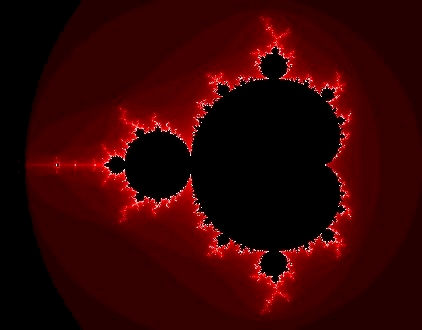
mandelbrot set

Introduction

The Department of Mathematics offers Master of Science degrees in two tracks, Mathematics and Applied Mathematics. Classes are offered in the evening and allow graduate students to continue their existing career while pursuing a graduate degree. Alumni have distinguished themselves in both academia and in industry. Some of our graduates use the master’s program a stepping-stone to the Ph.D., since some of our courses are taught at the same level as beginning Ph.D.-level courses. For instance, we offer Galois theory, Measure Theory, Calculus on Manifolds, and Introduction to Functional Analysis. For others, the master’s degree has been a terminal degree that prepared them for technically skilled jobs and for community college teaching positions. Our classes have a typical enrollment of 10-15 students, allowing the instructor to give individual attention to students.

While teaching is of primary importance in the California State University (CSU) system, there has been a strong emphasis on research in the CSUN College of Science and Mathematics, particularly in the Mathematics Department. As a result, our graduate program offers a blend of learning and research and our master’s theses are excellent preparation for the research requirements and rigors of Ph.D. dissertations.

Starting next year, the Mathematics Department will also run a Graduate Seminar, where students will freely exchange ideas and impressions, among themselves and with faculty, stimulating the intellectual atmosphere of our program. Students will be active learners and not simply passive receptors. Furthermore, graduate advisors from nearby Ph.D. institutions will be invited to speak about their programs in the seminar. From Santa Barbara to San Diego, there are seven strong research institutions offering Ph.D. programs in mathematical sciences.


Admission Requirements:

The  University requires that Applicants have an undergraduate degree with a GPA of 2.5 or higher and a GPA of 3.0 or higher in the last 60 units and that applicants meet the Upper Division Writing Proficiency Requirements.
In addition, the Mathematics Department requires that you have B's or better in the following upper division mathematics classes:
Moreover, candidates should take the Aptitude GRE test and score at or above the 50th percentile in two of the three portions. Applicants who meet all these requirements are eligible to be admitted as Classified Graduate Students. Students who miss several of the listed classes, the GRE, or some of the University requirements, may be admitted as Conditionally Classified Graduate  Students. Classified status is obtained by meeting all the University requirements and by passing the missed classes with a B or better. Conditionally classified students must satisfy these requirements in their first two semesters.

After Admission:

At admission students are assigned a graduate advisor. Students are strongly encouraged to set an appointment with their graduate advisor as soon as they hear about their acceptance in the program. A course of study will then be planned by the student and the advisor according to  the student’s availability, mathematical background and mathematical interests.

Application Procedures:

If you are interested, file an application (online) with the office of Admissions and Records . Moreover, fill out the Departmental Application Form and send it to the address below. Finally, have two letters of recommendation sent directly to:
      
       Graduate Coordinator
       Mathematics Department
       California StateUniversity Northridge
       18111 Nordhoff St.
       Northridge, CA 91330-8313

In order to recieve full consideration for the coming Fall semester, your application must be received by April 15. For admission in the spring the deadline is November 15.

The Course Work

All Graduate students must complete 30 units of course work. This consists of classes at the 500 and 600 level. However, Graduate Students may take up to 9 units of undergraduate classes at the 400 level, with prior permission from the graduate advisor. For satisfactory progress toward the degree graduate students must pass their required and elective courses with a B or better.

Option I: Mathematics

The required course work in Option I, is similar to the course work required for Master's degrees in other Mathematics Departments and comparable to the first year course work in Ph.D. programs around the country. It will provide the students with the basic knowledge in Algebra,
Real and Complex Analysis and Topology for further studies in Mathematics. It consists of the following  five courses:
A good performance in these courses will be the pre-requisite for any further study in advanced mathematics. Beyond these courses a graduate student needs to complete five elective courses in Mathematics. Students should consult an advisor in order to make suitable choices for their individual program of study.

Option III: Applied Mathematics

Unlike the pure option, this option allows the student great flexibility in the required course work. A student must complete at least four courses from the following list:
It is important, that students discuss their interests and needs with an advisor and that an individual program is designed that suits the student, before enroling tinto classes. Beyond the four required courses, students must complete six elective classes chosen with the consent of the advisor.

The Culminating Experience

The Department allows for two kinds of culminating experiences in the Masters program. Students must either complete a comprehensive exam covering material from their rwequired course list, or write a master's thesis. Students who plan to write a thesis must have a GPA of 3.4 or better in their required course work.

Comprehensive Examinations

The comprehensive exams are two part written examinations, and are offered on a regular basis three times a year. students in Track A must take the Exam in Algebra and either Analysis I (material from Math 501 and Math 655) or Analysis II (material from Math 550 and Math 650). Students in Track B have must take the exam in two of the following list of choices:

Master's Thesis

Students who are eligible to write a Master's thesis, should select a thesis advisor from the faculty of the Mathematics Department. Many of the faculty are active researchers in Algebra, Analysis, Applied Mathematics, Geometry and Statistics and students should carefully choose an advisor who represents their interests. Guidelines for theses can be found here. Upon completion of the thesis, the candidate must defend the thesis by giving a lecture on its content and answering questions about it in a public defense.

Financial Support:

The Mathematics Department has limited finacial support available for graduate students. The following links describe these modes. All financial
support is based on the performance of graduate students.

Advisors:

For further questions, please feel free to contact the graduate coordinator  at the CSUN Department of Mathematics. The following faculty members currently serve as Graduate Advisors on the Graduate Committee:

Faculty Research:

To find out more on the research interests of members of the Faculty, please visit their Websites.

Spring 2005:

This semester the Mathematics Department offers 6 Graduate Courses.