Young in America – 20th
Century U.S. Youth Culture
History 476 – Fall
2013
Tuesday/Thursday
11:00 – 12:15 Sierra Hall 288
Instructor
Dr. Thomas W. Devine
Office
Hours: Sierra Tower 624, Tuesdays and
Thursdays 2:30-3:30 and by appointment gladly given.
Email: tom.devine@csun.edu
Phone:
(818) 677-3550
Writing
Tutor: James Adams Email: jadams828@gmail.com
MAKE
AN APPOINTMENT AT THE WRITING CENTER
Spirit of the Course
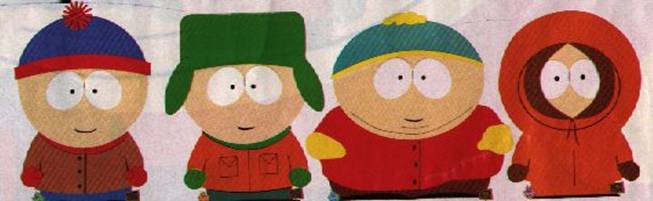
From the Katzenjammer Kids to Eric
Cartman, Americans have long been obsessed with youth – heralding it,
romanticizing it, protecting it, clinging to it, and, at times, exploiting it.
Today, just as one hundred years ago, we as a nation are seemingly preoccupied
with “what is to become of the young.”
Yet in our public discussions, we typically have no historical context –
no awareness that each generation before us argued and worried over the same
issues, often operating under the same dubious assumptions that we continue to
hold decades later. In hopes of
providing some historical context, this class will offer an overview of what it
was like to be young in
To the greatest extent possible, we
will approach our topic from the perspective of the young people
themselves. By looking at the
experiences of various kinds of youth – rich, poor, black, Latino, white,
college bound, privileged, and powerless – we will challenge the very notion of
a singular “American youth culture.” We
will also consider how society’s notions about gender and proper gender roles
played out in children’s lives. Finally,
we will examine how adults reacted to the behavior of their children. Specifically, we will focus on how they
sought to keep the nation’s youth from being “corrupted” and how young people
responded to their efforts. Indeed, as
we shall see, adults’ concerns about youth often reveal their concerns about
the changes occurring in the broader society.
Required
The
following books – listed in the order in which we will read them – are
available at the Matador Bookstore.
- David
Nasaw, Children of the City
- Grace
Palladino, Teenagers: An American History
- Anne
Moody, Coming of Age in Mississippi
- Michael
Patrick MacDonald, All Souls: A Family Story from Southie
To subvert the system and to save
yourself some money, you should buy used copies of the books. You are likely to find copies at
significantly reduced prices at the following websites: www.bookfinder.com; www.half.com; www.amazon.com.
All other readings will be distributed
in class or made available on the web syllabus.
Requirements and
Grading
Class
Participation/Quizzes/Homework --30%
Paper --20%
[Option A due Sept. 28; Option B due
Oct. 20; Option C due Nov. 2]
Midterm Examination [Thurs. 24 Oct] --25%
CLICK HERE FOR MIDTERM STUDY GUIDE
Final Examination --25%
[Tues. 17 Dec]
CLICK HERE FOR FINAL EXAM STUDY GUIDE
• All grading is based on 100 points and will be done on the
+/ – system.
• Late
assignments will be penalized. Any assignment turned in more than a week
late will not be accepted.
• Any assignment not turned in or not accepted will
receive a grade of ZERO in the calculation of the final grade.
Explanations of
Requirements
Class Participation
Though
this course will include some lectures, it is not primarily a “lecture course”
– the emphasis will be on discussion and classroom interaction rather than listening
to the professor. Class participation is important and will count heavily in
your final grade. Have the reading done BEFORE
you come to class and be ready to discuss it – simply being “present” will not
earn you a high participation grade. Since not everyone is comfortable speaking
in front of others, your performance on the quizzes, “digs,” and homework
assignments will also be considered in calculating your participation grade.
Quizzes
To reward
those who keep up with the reading, there will be frequent in-class quizzes. If
you have done the reading – or even most of it – you should have no difficulty
doing well. Doing well on the quizzes is the best way to insure you end up with
a good grade in the course.
Homework Assignments
In order
to help you get the most out of the reading and to prepare you to discuss it in
class, there will be occasional short written homework assignments that you
will complete as you do the reading. These will be collected in class. There
will also be “digs” – short
exercises that will require you to examine primary sources. Over the course of the semester there will be
four of these assignments. You may do as many as you like to accure
participation points, but you must do at least two.
Midterm and Final Examinations
The
Midterm and Final Examinations will consist of short and long essays. I will
provide you with review questions that will help you study for the exams. You
are responsible for bringing an unmarked blue book to the midterm and the
final.
Paper Assignment
The paper
assignment (1500 words) will focus on the material covered in the readings and
during class discussion. You are required to do either option A or
option B. You may do both and I will count the higher of the two grades. There
will be a choice of topics handed out well before the due date. Since the paper
topics will address issues we have previously discussed in class, it will be
useful to take note of the questions and themes that emerge from these
discussions – you will likely see them reappear in the paper topic
questions.
The Writing Center
Studies
have shown that re-writing and editing are the best ways to develop better
writing skills, which are in high demand in today’s job market. To help you
improve your writing (and your grades), the History Department has started a
Writing Center. This class is linked to the Center, so when completing the
1500-word paper assignment, you will produce a draft of your essay that a tutor
in the Writing Center will go over with you. The tutors are familiar with how
to write History papers and will be working closely with me in the process of
evaluating your work. Appointments with the tutors can be set up through the History
Department office or through the Writing Center web site (details to follow).
Surviving History
476…
Getting the Reading Done
There’s
no getting around it – this class will require extensive reading. Therefore, it
will serve you well if you figure out approximately how many pages you can read
in an hour and then calculate how many hours it will take you to read each
assignment. (Most History majors read scholarly books and articles at about
20-30 pages an hour. Memoirs and novels usually go faster.) If you know ahead of time how long it will
take to get through an assignment, you can manage your time more realistically.
Don’t read every word of the first third of an assignment but nothing
thereafter because you ran out of time. To help insure you get the reading
done, make a commitment to reading 10 pages of the next assignment as soon as
you get home from class. Once you’re into an assignment, it will be easier to
keep going. Each day you put off beginning an assignment makes it less likely
you’ll be able to finish it in time for class. If it’s clear you won’t have
enough time to complete an assignment, use the study questions to guide your
reading. Skim through the book or articles until you come across material that
is covered in the questions. Since the study questions focus on the most
important parts of the reading, if you are able to answer them, you will arrive
in class better prepared to participate in the discussion.
Attendance
Since
success in this class depends on active student participation, it is important
– and it is expected – that you will be at every session. I do take attendance. You cannot participate when you are not
present, so each absence past the first two will lower your participation
grade. If you are a person who rarely attends class and relies on copying notes
from a friend, you would be best served by registering for another class. Or, perhaps more to the point, you might
reconsider why you are in college in the first place.
Laptop Policy
I do not
allow the use of laptops in the classroom unless you have a signed medical note
stating that you must have one with you.
Common Courtesy
You are
at a university among professional people so you should try to act like you
belong here. Do not embarrass yourself by behaving badly. Please turn off and
put away all cell phones and other electronic gadgets while you are in class.
Texting or constantly playing with your phone during class is rude. I’m not
that blind; I can see you, and such behavior is very distracting. Beyond that,
it makes you look ridiculous and people – like me – will judge you accordingly.
Arrive on time and do not walk out in the middle of class unless it is an
emergency or you have spoken to me about it ahead of time. Don’t speak while
others are speaking. In short, act courteously and professionally. Try to show
some class. It’s part of being an educated person.
Academic Honesty
Do not
lie to me about why you missed class or failed to turn in an assignment. It is
unnecessary and it insults my intelligence.
Do not cheat on the quizzes or exams.
I will catch you and you will receive an automatic zero for the
assignment. Do not plagiarize from
written sources or from the web. Since plagiarism is always obvious and easily caught (I know how to use Google
too), it is better to hand in your own work and get a C than someone else’s and
get an F. Any and all plagiarized assignments will receive a grade of zero.
Beyond that, your name will also be circulated among other faculty as someone
who lacks integrity and you risk being expelled from the University. If you are
unsure what plagiarism is, please consult with me BEFORE you hand
in an assignment.
Problems
I
appreciate that many CSUN students are stretching themselves quite thin, often
working full time while taking classes. If you are feeling overwhelmed, find
yourself falling behind, or are having any problems outside of class that are
adversely affecting your performance in class, either come to see me or send an
email as soon as a problem arises and we can work something out. Do not wait
until the end of the semester when it will be too late. I am more than willing
to work with you to insure you “survive,” but I need to know you are having
difficulties. If you are struggling academically, I will gladly give you extra help.
Office Hours
Take
advantage of office hours. Students who get to know their professors not only
tend to do better in class, but are able to plug in to a professor’s network of
friends and associates. This can prove helpful after you graduate and begin
looking for work.
Schedule of Topics
& Assignments
(The reading
assignment listed for each day should be completed BEFORE you arrive at class.)
Tues. 27 Aug. Introduction: An explanation of course
objectives, mechanics, and procedures.
Thurs. 29 Aug. What is youth?
Reading: Randolph S. Bourne, “Youth” from the Atlantic
Monthly (1912)
[further information on Randolph Bourne]
Grace
Palladino, Teenagers, Introduction
D. James Romero,
“Adulthood? Later, Dude!” from the Los Angeles Times (1997)
Mike
Males, “Today’s Youth Are Always the Worst”
Tues. 3 Sept. Socially Constructing the “All-American
Boy”
Reading: Julia Grant, “A ‘Real Boy’ and Not a Sissy:
Gender, Childhood, and Masculinity, 1890-1940”
Thurs. 5 Sept. “Bad Girls” – Regulating Female
Sexuality
Tues. 10 Sept. “Newsies,
Junkers, and Little Mothers”
Reading: David Nasaw, Children of the City
QUIZ #1 – Children of
the City
Thurs. 12 Sept. “Nickel Addicts and Coney Island
Babies” – Youth, Reformers, and the New Urban Amusements
Reading: Jane Addams,
“The Spirit of Youth and the City Streets”
Film: Excerpts from Coney Island (The American Experience)
Tues. 17 Sept. “A Revolution on Campus?” – College Life and its Critics, 1900-1930
Reading: James Wechsler,
selections from Revolt on Campus
(1935)
Vincent Sheean, “The Modern Gothic” from Personal History (1937)
QUIZ #2 – College
Youth
Thurs. 19 Sept. “Flaming Youth” – Flappers, Sheiks, and
the Roaring ‘20s
Reading: F. Scott Fitzgerald,
“Bernice Bobs Her Hair”
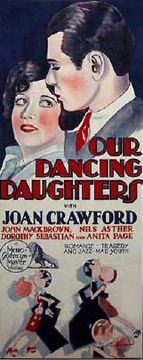
Film: “Our Dancing
Daughters” (1928)
Tues. 24 Sept. “Corn Shredders, Canceled Stamps, and
Cuddle Cooties” – Rating and Dating
Reading: Kevin White, “Modern American Male
Heterosexuality: 1920s”
Paula S. Fass, “Sex
and Youth in the Jazz Age”
Thurs. 26 Sept. “Lighting out for the Territories”
– Teenage Hoboes
Film:
Riding
the Rails
(The American Experience)
Tues. 1 Oct. “Dead End Kids” –
Teenagers, the Great Depression, and the New Deal
Reading: Thomas Hine, The Rise
& Fall of the American Teenager, Chapter 1
Grace Palladino, Teenagers, Chapter 3-4
Films:
“Dead End” (1937)
“Love Finds Andy Hardy”
(1938)
Thurs. 3 Oct. “Don’t You Know There’s a War On?” –
Young People and World War II
Reading: William
Tuttle, “Daddy’s Gone to War”
Grace Palladino, Teenagers, Chapter 5
Tues. 8 Oct. Wars at Home:
Minority Youth Countercultures during World War II
Stuart Cosgrove, “The Zoot Suit and Style
Warfare”
Elizabeth R. Escobedo, “The
Pachuca Panic”
Films:
Hellzapoppin (1941)
Thurs. 10 Oct. “Marketing Youth and the Youth Market” – Madison
Avenue Discovers the Teenager
Reading:
Kathryn Jay, “‘In Vogue With Mary’: How Catholic Girls Created
an Urban Market for Modesty”
Palladino, Teenagers,
Chapter 7
Film: The
March of Time “Teenage Girls”
Tues. 15 Oct. “Rebels Without a Cause?” – The Postwar Juvenile Delinquency Scare
Reading: James Gilbert, A Cycle of Outrage, pp 3-23
Bradford Wright,
“Youth Crisis: Comic Books and Controversy, 1947-1950”
Grace Palladino, Teenagers, Chapter
6
QUIZ #3 – Readings 10-10, 10-15
Thurs. 17 Oct. “The
Juvenilization of American Movies” –
Reading: Mark Thomas McGee and R.J. Robertson, “Brando, Dean, and Daddy-O”
Films: Wild One
Rebel
Without a Cause
Blackboard Jungle
Tues. 22 Oct. “Alienation from IT” – The Beats’ Critique of 1950s
America
Reading: Robert Holton, “‘The
Sordid Hipsters of America’: Beat Culture and the Folds of Heterogeneity”
Grace Palladino, Teenagers,
Chapter 10
Optional Reading: Allen Ginsberg,
“Howl” and “America”
Thurs.
24 Oct. MIDTERM EXAMINATION
Tues. 29 Oct. “The Devil’s
Music” – The Rise of Rock’n’Roll
Reading: Susan K. Cahn, “Would
Jesus Dance? – The Dangerous Rhythms of Rock’n’Roll”
Palladino,
Teenagers, Chapter 8
Film:That Rhythm,
Those Blues (The American Experience)
Video Clips: Janis Martin, “My Boy Elvis”
Thurs. 31 Oct. “Before Elvis,
There was Nothing” – Class, Race, Youth, and “the King”
Reading: Robert Pielke, Elvis and the Negation of
the Fifties”
Michael T. Bertrand, Race, Rock, and Elvis, Chapter 7
Film: Elvis 1956
Tues. 5 Nov. Open Date
Thurs. 7 Nov. “A Movement Led
by the Young” – The Civil Rights Struggle
Reading: Anne Moody, Coming of Age in Mississippi, Chapters 1-4; 10-12;
18-end
Tues. 12 Nov. Continue discussion of Moody, Coming
of Age in Mississippi
QUIZ #4 Moody, Coming of Age in Mississippi
Thurs. 14 Nov. Unrest
on Campus – SDS and the Student Revolt of the 1960s
Reading: David
Stiegerwald, “The Reddish Decade”
Tues. 19 Nov. “Southie:
The Greatest Place in the World”: Busing, Gangs, and Urban Poverty, 1965-80
Thurs. 21 Nov. Open
Date – continue discussion of All Souls
Quiz #5 – MacDonald, All Souls
Tues. 26 Nov. “Dazed and Confused” – Fragmentation of
Youth Culture in the ‘70s
Reading: Grace Palladino, Teenagers,
Chapter 14
Ilana Nash, “Hysterical Scream or Rebel Yell? – The Politics of
Teen-Idol Fandom”
Thurs.
28 Nov. THANKSGIVING
Tues. 3 Dec. “I’ll
Resist With Every Inch and Every Breath” – Punk, Politics, and Youth Culture at
the Margins
Reading:
Rebecca Daugherty, “The Spirit of ’77: Punk and the Girl
Revolution”
Kevin Mattson, “‘Did
Punk Matter?’ Analyzing the Practices of a Youth Subculture During the 1980s”
Thurs. 5 Dec. “Hip Hop America” –
Rap Culture and Politics
Reading:
George Lipsitz, “The Hip Hop Hearings”
Quiz #6 – Readings 12-3 and 12-5
Tues. 10 Dec. Buffy, Riot Grrrls,
and Grunge: Youth Culture at Century’s End
Reading: Sue Short, “Buffy the Vampire Slayer: Beauty and the ‘Big Bad’”