
Course Information
- Political Science 321
- Tuesdays and Thursdays, 8:00PM - 9:15PM, Sierra Hall 342
- Moodle will also be used as the course learning management system (http://moodle.csun.edu)
Course Description
Examines, compares and contrasts a range of political ideologies and their interpretation and application in contemporary societies. Attention is paid to defining the role and function of ideologies in specific contemporary states. (Available for General Education, Comparative Cultural Studies.)
Course Learning Objectives
Develop a Global Perspective – Students should demonstrate knowledge and theories relevant to global politics and policies. This includes knowledge of Western and non-Western political systems, processes, values and models of politics and patterns of interaction among them. Students should demonstrate an understanding and respect for economic, socio-cultural, political and environmental interaction of global life.
| Learning objective | Below expectation | Satisfactory | Exemplary |
| Make detailed scientific observations that allows one to organize patterns of behavior in a particular cultural context | Evidence suggests that student is unable to use social science observation methods to analyze cultural contexts | Evidence suggests that student is able to apply social science observational methods but unable to make analytical links | Evidence suggests that student applies social science observational methods effectively and is able to analyze particular cultural contexts |
Course Requirements & Grading
Discussion Lead and Participation:
Students are expected to be prepared to discuss the reading for each class meeting and to be able to lead group disussions when assigned. The reading must be completed for prior to the class meeting as indicated on the course schedule below. There will be discussions questions assigned for the chapter readings to be completed in class.
Exams:
There will be four exams in the class throughout the semester instead of having the tradtional midterm and final exams.
Attendance and Participation:
Students are expected to be on time and prepared to discuss the reading for each class meeting as well asbe able to lead group disussions when assigned. The reading must be completed for prior to the class meeting as indicated on the course schedule below. There will be discussions questions assigned for the chapter readings to be completed in class.
The grading will be broken down as follows
| Exam 1 | 20 |
| Exam 2 | 20 |
| Exam 3 | 20 |
| Exam 4 | 20 |
| Attendance and Participation | 20 |
*There will be no extra credit or make-up work available in the course. Make sure to mark your personal calendars in advance since the due dates are not negotiable.
Percentage |
Grade |
95-100 |
A |
90-94 |
A- |
87-89 |
B+ |
83-86 |
B |
80-82 |
B- |
77-79 |
C+ |
73-76 |
C |
70-72 |
C- |
67-69 |
D+ |
63-66 |
D |
60-62 |
D- |
0-59 |
F |
Course Schedule
| Tuesday January 21 | Course review and introduction |
|
Thursday January 23 |
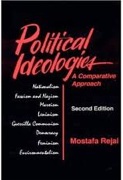
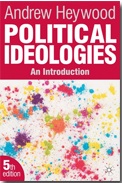
Heywood, Ch. 1 - "Ideology and Ideologies" Rejai, Ch. 1 - "Comparative Analysis of Political Ideologies" |
Tuesday January 28 |
Rejai, Ch. 7 - "Democracy" John Locke - "Treatise of Civil Government" (Moodle) James Madison et al. - Federalist Papers Nos. 10 and 51 (Moodle) |
|
Thursday January 30 |
Heywood, Ch. 2 - "Liberalism" Heywood, Ch. 3 - "Conservatism" |
Tuesday February 4 |
"American Feud: A History of Conservatives and Liberals" |
|
Thursday February 6 |
Heywood, Ch. 4 - "Marxism" Rejai, Ch. 4 - "Socialism" Marx and Engels - "The Communist Manifesto" (Moodle) |
Tuesday February 11 |
Rejai, Ch. 5 - "Leninism" Lenin - "State and Revolution" (Moodle) |
|
Thursday February 13 |
"Reds" |
Tuesday February 18 |
"Reds" (Continued) |
|
Thursday February 20 |
Rejai, Ch. 6 - "Guerrilla Communism" |
Tuesday February 25 |
G. W. Hurd - "The Political Theory of Ernesto Che Guevara" (Moodle) Peter Rosset et al. - "Zapatismo in the Movement of Movements" (Moodle) |
|
Thursday February 27 |
Exam |
Tuesday March 4 |
Heywood, Ch. 6 - "Nationalism" Rejai, Ch. 2 - "Nationalism" |
|
Thursday March 6 | Heywood, Ch. 7 - "Facism" Benito Mussolini - "Facism: Doctrines and Institutions" |
Tuesday March 11 |
"The Furies: Mussolini in Power " |
Thursday March 13 |
Rejai, Ch. 3 - "Facism and Nazism" Adolf Hitler - "Mein Kampf" (Moodle) |
Tuesday March 18 |
"Hitler and the Third Reich: The Rise of the Third Reich" |
Thursday March 20 |
"Ideologies and Evil Dictators" Jeopardy review game (Review session) |
Tuesday March 25 |
Exam |
Thursday March 27 |
Heywood, Ch. 5 - "Anarchism" Emma Goldman - "Anarchism: What it Really Stands for" (Moodle) Starhawk - "How We Really Shutdown the WTO" (Moodle) |
Tuesday April 1 |
"Anarchism in America" |
Thursday April 3 |
Rejai, Ch. 8 - "Feminism" Heywood, Ch. 8 - "Feminism" Jennifer Baumgardner and Amy Richards - "What is Feminism?" (Moodle) |
Tuesday April 15 |
Heywood, Ch. 9 "Ecologism" Rachel Carson - "Silent Spring" Al Gore - "Earth in the Balance: Ecology and the Human Spirit" (Moodle) Rejai, Ch. 9 - "Environmentalism" |
Thursday April 17 |
Exam |
Tuesday April 22 |
"Capitalism: A Love Story" Bruce Berman - "Artificial Intelligence and the Ideology of Capitalist Reconstruction" (Moodle) Kenichi Ohmae - "The End of the Nation-State: The Rise of Regional Economies" (Moodle) |
Thursday April 24 |
Manfred Steger - "Ideologies of globalization" (Moodle) Benjamin Barber - "Jihad vs. McWorld" (Moodle) Imam Khomeini - "Lectures on the Supreme Jihad" (Moodle) |
Tuesday April 29 |
Heywood, Ch. 10 - "Religious Fundamentalism" Edward Said - "Origins of Terrorism" (Moodle) Andrew Vincent - "Fundamentalism" (Moodle) |
Thursday May 1 |
Heywood, Ch. 11 - "Multiculturalism" Samuel Huntington - "The Clash of Civilizations" (Moodle) |
Tuesday May 6 |
Heywood, Ch. 12 - "Conclusion: A Post-Ideological Age" Rejai, Ch. 10 - "Recapitulation" |
Thursday May 8 |
Exam |
At any time this syllabus may be amended or revised. Students will be notified if any changes are made.