Woo Lab | Programmable Molecular Systems — Paradigm Concept

DNA nanotechnology · synthetic biology · molecular engineering

Programming molecules to study, sense, and build biology.

We develop DNA-based molecular tools as a platform technology for biological studies and biomedical applications.

Principal Investigator
Sungwook Woo, Ph.D.
Department
Chemistry & Biochemistry
Institution
California State University, Northridge

Our premise

Biology operates through molecular interactions. DNA gives us a stable, biocompatible, sequence-programmable material for engineering those interactions with precision.

Research

Three directions, one molecular toolkit

Our work connects chemistry, nanotechnology, biophysics, biosensing, and biomaterials through programmable molecular design.

01

Molecular recording & landscape mapping

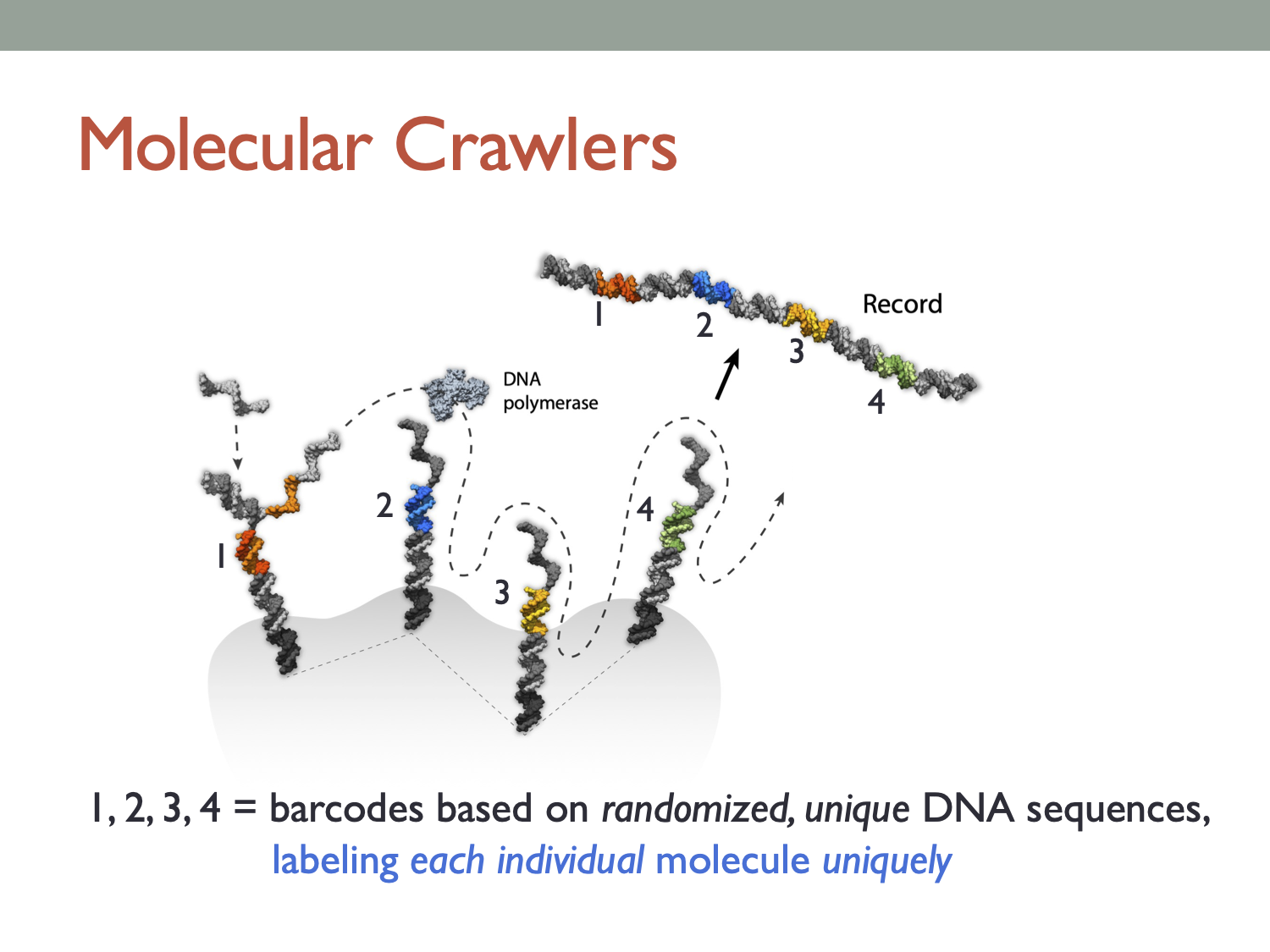
We create molecular agents that survey local environments, retrieve spatial information, and support non-destructive, repeated molecular recording.

  • DNA nanoscope and proximity recording
  • Molecular robotic and swarm agents
  • Information retrieval from molecular landscapes
02

Programmable biomolecular assembly

We use DNA nanostructures as nanoscale “lab benches” and programmable seeds to control the organization and growth of biological materials.

  • DNA origami and higher-order assembly
  • Controlled microtubule growth and geometry
  • Spatially organized protein interactions
03

Biosensing & molecular intelligence

We engineer recognition, computation, and response at the molecular scale, including geometry-controlled sensing and DNA-based computing concepts.

  • Programmable molecular recognition
  • Aptamer-based biosensing
  • DNA logic, dynamics, and computation
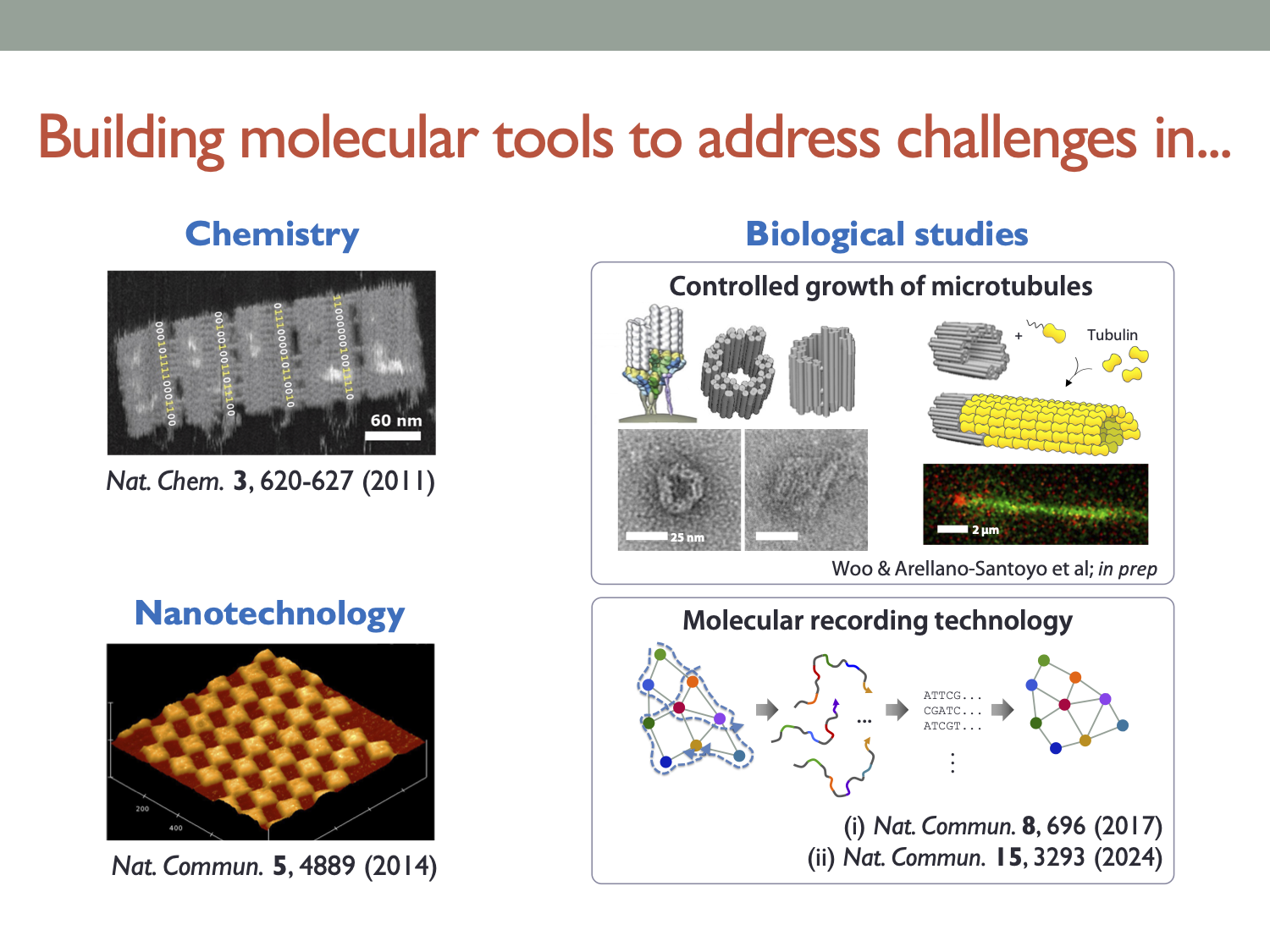
Research overview showing chemistry, nanotechnology, microtubule control, and molecular recording
DNA-based molecular tools address challenges across chemistry, nanotechnology, and biological studies.
Recording with unique labels allows extreme multiplexing, down to individual molecules.

Why it matters

From average measurements to programmable, molecule-by-molecule studies.

Ensemble methods can obscure molecular variation, while conventional single-molecule methods often trade throughput for detail. Our goal is to build custom molecular tools that combine specificity, multiplexing, and scalable information collection.

High specificityNanoscale addressabilityParallel operationBiological compatibility

Join the lab

Build the next generation of programmable molecular tools.

Students interested in DNA nanotechnology, molecular engineering, biosensing, biophysics, synthetic biology, or interdisciplinary research are encouraged to get in touch. Include a brief description of your interests and relevant experience.

Email Dr. Woo

sungwook.woo@csun.edu
Department of Chemistry & Biochemistry
California State University, Northridge
18111 Nordhoff St, Northridge, CA 91330-8262