English 155-16: Freshman Composition
“World, Self, and Monster”
Fall 2007
Sierra Hall 307
T R 9:30-10:45 AM
Office Hours: T R 2:00-3:00, W 4:00-5:00
Texts:
Austin: Reading the World
Gilman: "The Yellow Wallpaper" and Other Stories
Pomerance: The Elephant Man
Wiesel: Night
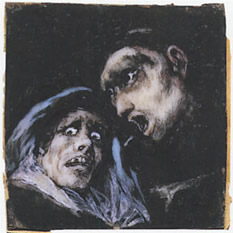
This introductory writing course considers the discourse of monstrosity, the language and socioeconomics that produce normality and alterity, self and other. We will examine monstrosity in literature, film, and theoretical texts from the perspective of disciplines such as history, sociology, philosophy, and biology. Writing and talking about these texts as well as our own experiences will illustrate how and why “the monster” has become the criminal, sinful, foreign, and insane self.
This course will help us acquire writing and critical thinking skills so that we might do well in the intellectual environment of the university. To that end, we will workshop essays that develop various aspects of the academic writing process such as close reading, textual analysis, and the use of sources. These activities, along with student-instructor conferences and roundtable discussions, will demonstrate the social nature of writing and signal our entry into scholarly discourse.
English 155 is a workshop of peers. Our success depends on our willingness to share ideas and review each other’s work.
Our Goals:
This is an intensive course dealing with the organization and development of ideas in coherent, interesting, and effective essays. We will improve our writing by work in the following areas:
The process of writing (invention, composition, revision)
The methods of writing (narration, description, comparison/contrast, argument/persuasion)
The larger elements of writing (structuring essays and paragraphs, using sources)
The smaller elements of writing (spelling, grammar, syntax, style)
Our goals, then, are to
- develop competence in writing an academic essay—that is, a thesis driven text that is characterized by reason, logic, and analytic thinking;
- understand that writing in an academic context means becoming knowledgeable about the subject, indicating awareness of the ideas of others, basing claims on logic and credible evidence, and using language in such a way as to appear truthful and fair;
- view writing as a recursive process—which includes invention, drafting, and revision;
- gain facility in various contexts for writing, including timed writing, and develop rhetorical strategies appropriate to audience and purpose;
- develop critical reading strategies and apply them to both print and visual texts. In this context, students will become aware of different texts, including those that reflect multicultural images and voices;
- develop fluency and style by practicing sentence variety, increasing vocabulary, and using the conventions of edited American English;
- develop proficiency in research and documentation techniques;
- understand how to use writing and reading as a means of participating in democracy and social change.
Participation:
Class participation includes discussions, WebCT posts, student-instructor conferences, and workshop activities. Everyone has something to contribute to the class, and there is always an opportunity to learn from each other. If you do not feel comfortable speaking in class you may participate in other ways. Although participation grades will not be distributed, I will be happy to discuss any questions you have about your progress.
Papers:
The bulk of your grade will be based upon finished essays and exercises that you will submit over the course of the term. Each item will be assigned a specific due date as well as instructions regarding drafting, conferences, peer group work, and use of the Writing Center. Out-of-class papers must be composed and revised at the computer. Please print a copy of each draft before you revise it.
NOTE: Late papers will not be accepted unless you have obtained an extension from me ahead of time. You must submit your essay even if you miss class on its due date.
WebCT:
In addition to our main projects, everyone is required to post weekly journal responses on the course WebCT. These posts should address class discussions, readings, and classmates’ posts. Begin here: https://webteach.csun.edu.
Writing Portfolio:
Your portfolio is a compendium of every piece of work you have prepared in E155. The portfolio includes graded and ungraded work, quick prompts written in class, responses to the work of peers, and other materials you develop as part of your reading and writing in the course. All work, including formal papers, will be kept in your portfolio for final assessment. Papers have not been "completed" until you receive a passing grade. It is impossible to pass this course if any work is missing from your final portfolio.
Policies:
This is a participatory, collaborative workshop-style writing class and attendance is absolutely essential to our success. Grades are therefore dropped a letter after two absences. An F is given after four. You are responsible for completing and submitting any work due for a day that you miss and you must come prepared with any work required for the following class. Please feel free to contact me or see me during my office hours to learn what you missed and how to prepare for the next session.
Grades:
I grade holistically, so no grades will be given until your portfolio is assessed in its entirety at the semester’s end. Until then, I’ll write comments and suggestions on your papers, WebCT posts, and discuss your progress in person. Please feel free to come by my office, email, or phone me if you have concerns. To pass this course, you must complete all work in a timely fashion and receive a passing grade on your portfolio.
Academic Honesty:
It is important for you to be scrupulously honest in documenting the work that you have drawn from others. Like other institutions, CSUN maintains a strict academic honesty policy.
Plagiarism is illegal and dishonest. All cases of academic dishonesty must be reported to the Dean, who may suspend or permanently dismiss you from CSUN. You will receive a course grade of F if you plagiarize in E155.
English 155-16
Fall 2007 Syllabus
Please note that all course requirements and policies are subject to change. Work is due on the date it appears.
R 8/23
Introduction: “Bananas, the Real, and You”
T 8/28
Discuss syllabus
Choose essays, partners, and discussion strategies
Joel Stein’s “In Defense of Domination”
R 8/30
Rivkin and Ryan’s “The Politics of Culture”
Signs of Advertising
MADNESS AS MONSTER
T 9/4
Foucault’s Madness and Civilization and de Beauvoir’s The Second Sex
R 9/6
MLA Workshop: Documenting Sources
T 9/11
Group 1: Pizan’s The Treasure of the City of Ladies, 122-29
R 9/13
Freud, Bettelheim
Fairy Tale Analysis
T 9/18
Gilman’s “The Yellow Wallpaper”
R 9/20
Group 2: Benedict’s “The Individual and the Pattern of Culture,” 56-67
DISEASE & DISORDER AS MONSTER
T 9/25
Darwin, Spencer, and Gould
R 9/27
Group 3: Carson’s “The Obligation to Endure,” 421-28
T 10/2
Pomerance’s The Elephant Man
R 10/4
The Elephant Man cont’d
T 10/9
Draft 1, Essay I
NATION & CLASS AS MONSTER
R 10/11
Group 4: Anzaldua’s “How to Tame a Wild Tongue,” 604-15
T 10/16
Draft 2, Essay I
Group 5: Roy’s “Come September,” 253-67
R 10/18
Introduction to Rhetoric
T 10/23
Foucault’s Discipline and Punish
R 10/25
Group 6: Paz’s The Day of the Dead, 346-52
T 10/30
Marx, Althusser, Eagleton
R 11/1
Group 7: Ghandi’s “Economic and Moral Progress,” 337-45
T 11/6
Wiesel’s Night
R 11/8
Wiesel’s Night
T 11/13
Canaday's "Peale and Bellilli Families"
Library Visit
R 11/15
Student-Instructor Meetings
Draft 1, Essay II
T 11/20
Draft 2, Essay II
R 11/22
Thanksgiving Break
T 11/27
Library Visit
R 11/29
Draft 1, Essay III
T 12/4
Draft 2, Essay III
T12/11
Portfolios Due
Reading the World: Ideas that Matter:
7 Anthology Essays for Class Discussion
Discussion leaders facilitate discussions (not lectures) through interesting and creative ways that engage the class. Discussion leaders should
- Help the class draw important connections between the text and contemporary issues
- Help the class recognize the essay’s intended audience
- Help the class recognize the essay’s rhetorical strategies
- Help the class recognize the essay’s thesis and the larger implications suggested by that thesis
Possible strategies include asking meaningful questions, group activities, textual connections, and film clips.
Please note that everyone is responsible for a 250-word WebCT rhetorical analysis the day an anthology essay is due. A rhetorical analysis illustrates an essay’s main idea, larger implications, writing techniques, intended audience, and overall significance—why does this essay matter to you?
T 9/11 Group 1: Pizan’s The Treasure of the City of Ladies, 122-29
FOUR DISCUSSION LEADERS:
R 9/20 Group 2:Benedict’s “The Individual and the Pattern of Culture,” 56-67
FOUR DISCUSSION LEADERS:
R 9/27 Group 3: Carson’s “The Obligation to Endure,” 421-28
FOUR DISCUSSION LEADERS:
R 10/11 Group 4:Anzaldua’s “How to Tame a Wild Tongue,” 604-15
FOUR DISCUSSION LEADERS:
T 10/16 Group 5: Roy’s “Come September,” 253-67
FOUR DISCUSSION LEADERS:
R 10/25 Group 6: Paz’s The Day of the Dead, 346-52
FOUR DISCUSSION LEADERS:
R 11/1 Group 7: Ghandi’s “Economic and Moral Progress,” 337-45
FOUR DISCUSSION LEADERS: