Molecular Genetics of Cell Death
__________________________________________________________
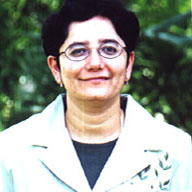
Rheem D. Medh
Professor
Department of Biology
California State University at Northridge
Ph.D. :
University of Texas Medical Branch
|
 |
|
__________________________________________________________
Courses Taught:
Biol 360: General Genetics
Biol 375: Emerging Issues in Regenerative Medicine
Biol 468: Human Genetics
Biol 564: Human Biochemical Genetics
Biol 571: Molecular Diagnostics
Biol 580/L: Cellular Physiology Lecture and Laboratory
Biol 655D: Seminar in Genetics
Research Interests :
Understanding the mechanism of chemotherapeutic agent evoked apoptosis, and resistance to it, in leukemic lymphoblasts is important for improving therapeutic efficacy and developing novel treatment strategies for leukemias; one of our long term goals. We are currently researching the molecular pathways that drive antileukemic therapy. Currently we are focusing on a class of antileukemic agents know as glucocorticoids (GCs). We are studying GC-evoked apoptosis in a set of GC-sensitive and resistant human leukemic lymphoblastoid cell lines. Transcriptional profiling by microarray analysis has identified about 40 genes that are specifically upregulated by GCs in GC-sensitive cells, but not in GC-resistant cells. We have selected three of these genes for further studies:
The role of the transcriptional repressor, E4BP4/NFIL3A in apoptosis:
E4BP4 (adenovirus E4 binding protein 4), or NFIL3 (nuclear factor, interleukin 3 regulated) is classified as a mammalian basic leucine zipper (bZIP) transcription factor and is closely related to the PAR (proline and acid rich) sub-family of bZIP transcription factors, including the C. elegans Ces-2 gene, the D. melanogaster Vrille gene, and the X. laevis Gene8 and Gene9, which are known to have crucial functions in apoptosis, morphogenesis, and tail resorption. E4BP4 has been implicated in diverse functions, including regulation of circadian rhythms, osteoblast function, motoneuron survival, T- cell apoptosis, protection of B cells from apoptosis induced by IL-3 deprivation, IgE class switching, and NK cell development. Interestingly, E4BP4 has been shown to exhibit both pro-apoptotic and pro-survival functions in a cell- and stimulus-specific fashion. We are investigating the role of E4BP4 in inducing pro-apoptotic gene expression and in modulating responsiveness to antileukemia therapy.
The role of the antiproliferative gene, BTG1 in apoptosis of lymphoid cells:
One of the genes that is consistently up regulated specifically in those cells undergoing apoptosis, but not in apoptosis resistant cells, is the antiproliferative B-cell Translocation Gene 1 (BTG1), which has been shown to arrest cells in the G1 phase of the cell cycle. BTG1 belongs to a family of antiproliferative genes, whose protein products are highly unstable and are degraded via the ubiquitin-proteasome system. While both cytoplasmic and nuclear localization has been reported, antiproliferative activity requires nuclear localization. BTG1 has been shown to bind to and modulate the activity of various regulatory proteins, including nuclear hormone receptors. We are studying how BTG1 influences the function and activity of the glucocortiocid hormone receptor (GR). This is important because GR is a key transcription factor that alters expression of several pro- and anti-apoptotic genes in response to GCs. We are expanding these studies to include additional chemotherapeutic agents that are used for leukemia therapy.
The contribution of RCAN1, a regulator of calcium signaling, in apoptosis:
Located in the Down Syndrome Critical Region on chromosome 21q22.1-q22.2, RCAN1 (Regulator of Calcineurin 1), is upregulated by GCs in leukemic T- and B-cells and myeloblasts in correlation with apoptosis. RCAN1 is alternatively spliced to give rise to two major transcripts, RCAN1-1 and RCAN1-4, of which RCAN1-1 is the target of GC-evoked upregulation, and RCAN1-4 is induced by calcium. RCAN1 binds to calcineurin, and alters/inhibits calcineurin phosphatase (PP3C) activity. RCAN1 has recently been shown to bind to various signaling intermediates to modulate intracellular signaling pathways. Since we are interested in understanding how GCs modulate leukemic cell apoptosis, it is important to delineate the role of RCAN1 in this pathway.
Recent Publications:
Beach J.A., Nary, L.J., Hirakawa, Y., Holland, E., Hovanessian, R. and Medh, R.D. E4BP4 facilitates glucocorticoid-evoked apoptosis of human leukemic CEM cells via upregulation of Bim. Journal of Molecular Signaling, 6:13, 2011.
Hirakawa Y, Medh, R.D. and Metzenberg, S. Quantitative polymerase chain reaction analysis by deconvolution of internal standard.BMC Molecular Biology11:30. doi:10.1186/1471-2199-11-30, 2010.
Hirakawa, Y, Nary, L.J., and Medh, R.D. Glucocorticoid evoked upregulation of RCAN1-1 in human leukemic CEM cells susceptible to apoptosis, Journal of Molecular Signaling, 4:6 doi:10.1186/1750-2187-4-6, 2009.
Priceman, S. J., Kirzner, J. D., Nary, L. J., Morris, D., Shankar, D. B., Sakamoto, K. M., Medh, R. D.. Calcium-dependent upregulation of E4BP4 expression correlates with glucocorticoid-evoked apoptosis of human leukemic CEM cells Biochem. Biophys. Res. Commun. 344: 491-499, 2006.
Knockout mouse models for bone studies (as part of the series: Genetically Modified Animals in Endocrinology) Endocrine Reviews, 24: 836-839, 2003 (Compiled by Medh, R.D.)
Medh, R. D., Webb, M. S., Miller, A. L., Johnson, B. H., Fofanov, Y., Li, T., Wood, T. G., Luxon, B. A. and Thompson, E. B. Gene expression profile of human CEM lymphoid cells sensitive and resistant to glucocorticoid-evoked apoptosis. Genomics, 81: 543-555, 2003
Medh, R.D., Thompson E.B. and Thompson, A.E. Glucocorticoid-induced apoptosis. Encyclopedia of Hormones, Editors-in-Chief: Henry H.L. and Norman A.W., Academic Press, Volume 1: 165-170, 2003.
Medh, R. D. Southern blotting for the analysis of human disease. Encyclopedia of Life Sciences, Nature Publishing Group (www.els.net), 2002.
Medh, R.D. Microarray-Based Expression Profiling of Normal and Malignant Immune Cells (Review) Endocrine Reviews 23: 393-400, 2002.
Miller, A. L., Johnson, B.H., Medh, R. D.,Townsend, C. M., and Thompson, E. B. Glucocorticoids and polyamine inhibitors synergize to kill human leukemic CEM cells. Neoplasia, 4: 68-81, 2002.
Medh, R. D., Wang, A., Zhou, F., and Thompson, E. B. Constitutive expression of ectopic c-Myc delays glucocorticoid-evoked apoptosis of human leukemic CEM-C7 cells, Oncogene, 20: 4629-4639, 2001.
Medh R. D. and Thompson E. B. Hormonal regulation of physiological cell turnover and apoptosis (Invited Review). Cell and Tissue Research, 301: 101-124, 2000.
Zhou F., Medh, R. D. and Thompson, E. B. The delayed induction of c-jun in apoptotic human leukemic lymphoblasts is primarily transcriptional J. Steroid Biochem. Mol. Biol., 75: 91-99, 2000.
Zhou, F., Medh, R. D. and Thompson, E.B. Glucocorticoid mediated transcriptional repression of c-myc in apoptotic human leukemic CEM cells. J. Steroid Biochem. Mol. Biol., 73: 195-202, 2000.
Johnson, B. H., Russell, M. J., Krylov, A. S., Medh, R. D., Ayala-Torres, S., Regner, J. L. and Thompson, E. B. Structure: apoptotic potency evaluation of novel steroids using human leukemic cells. Lipids, 35: 305-315, 2000.
Thompson, E.B., Medh, R. D., Zhou, F., Ayala-Torres, S., Ansari, N., Zhang, W, and Johnson, B. H. Glucocorticoids, oxysterols, and cAMP with glucocorticoids each cause apoptosis of CEM cells and suppress c-myc. J. Steroid Biochem. Mol. Biol. 69: 453-461, 1999.
Medh R.D., Saeed M.F., Johnson B.H., Thompson E.B. Resistance of human leukemic CEM-C1 cells is overcome by synergism between glucocorticoid and protein kinase A pathways: correlation with c-Myc suppression. Cancer Research. 58(16):3684-93, 1998.
Medh, R.D., Lay, R., and Schmidt, T.J. Agonist-specific modulation of glucocorticoid-mediated transcription by immunosuppressants. Mol. Cell. Endocrinol., 138: 11-23, 1998.
Medh R.D., Schmidt T.J. Trans-retinoic acid and glucocorticoids synergistically induce transcription from the mouse mammary tumor virus promoter in human embryonic kidney cells. J. Steroid Biochem. Mol. Biol., 62(2-3):129-42, 1997
Medh R.D., Santell L., Levin E.G. Stimulation of tissue plasminogen activator production by retinoic acid: synergistic effect on protein kinase C-mediated activation. Blood. 80(4):981-7, 1992