History 111 Professor Addison Group #6 10/15/2009
Latin
America
Group #6
Contributors: Adi, Benjamin Atayee, Nazir Brown, Kailoni Hernandez, Carlos Hunter, Sydney McCabe, Christopher Miranda, James Reinhard, Brett Sigaran, Jennifer
Revolutions
By: Christopher McCabe
The Latin American Revolution was
greatly influenced by the American and French revolutionary wars.
American
Revolution
- With the victory of the French and Indian war, war
debts became costly to the British, at the end of the war in 1763 King
George III began to tax the Americans to pay off the war costs. This
started with the stamp act of 1765, and the Boston tea party of 1773. The
Boston tea party involved 3 ships that were carrying tea. The tea was
going to be sold off to the colonies, but ended up having their cargo
dumped into the waters. This was due to the anger of the people in the
colonies because of the tax that was placed on them by the British.
- Once the news was brought back to King George, he
quickly sent an army to enforce the tax on the colonists.
- The American Revolution was started at the battle of
Lexington and Concord on April 19, 1775, with over three thousand
troops. The commander in chief of the Continental army was led by
George Washington.
- The Declaration of Independence was signed in 1776 and
sent to the British authorities. This enraged King George.
- In 1777 the Battle of Yorktown in Virginia seemed to be
the last major battle of the Revolutionary War.
- In 1781 the French helped the Americans to fight off
the British. The French set up a blockade around the British army. This
helped stop the British from retreating.
- The war ended in 1783 and the Americans got their
independence.
French
Revolution
- The French were partly influenced by the American Revolution
- There was a shortage of agriculture, however France’s
population continued to grow. People began to starve and the peasants were
beginning to get angry about paying taxes to the government and the
church. The nobility and clergy paid almost nothing while the peasants
were paying more and more.
- The French revolution started in 1789.
- On July 14, 1789 insurgents seized the Bastille prison
killing Marquis Bernard de Launay. Only 7 people were released from the
prison, four forgers, two lunatics, and one sexual offender, but this
didn’t matter to the mob as long as they saw something come out of the
battle.
- During this time the assembly continued to work on
developing a constitution.
- In the Year 1790 three regiments including the king’s
personal regiment, began to revolt against their chiefs. But General
Bouillé was able to control the situation.
- The king tried to flee in 1791 but was caught and he
agreed to sign the new constitution in late 1791.
- Starting in the year 1795 General Napoleon Bonaparte
was ordered to suppress the riots in the streets and any other groups that
tried to revolt against the government.
- The French Revolutionary War Ended in the year 1799.
Since the end of the American
Revolution many countries began to get tired of their own corrupt government
and wanted the same type of results, and that was to be treated equally.
The American Revolution clearly influenced the French to change their own
system of government. The Latin American countries were also influenced by both
the Americans and the French, “It can also be said that there is no way the
Latin American revolutions would have been possible, or maybe even they
wouldn’t have needed to occur, if prior revolutions hadn’t exerted their
influence over the situation” (Latin America). Countries including Mexico,
Venezuela, and Brazil were all influenced by the actions of the 13 colonies and
the French Revolutionary wars. Without these countries revolutions each country
would still have the same government and the same problems within the
government.
Spanish Conquest
By Jennifer Sigaran
The Incan Empire:
Francisco Pizarro was a
Spanish explorer and conqueror. He went to the country of Peru and conquered
The Inca Empire and claimed most of South America. He opens an entrance for
Spanish culture. Within the Incan Empire a civil war broke out between Huascar
Capac and Atahualpa Capac; two brother that fought over the Inca Empire.
Huascar Capac:
1502-1532. He was
a ruler of the Inca Empire after his father dies. He was in charge of the
capital city of Cuzco. Cuzco was the center of the kingdom. This city was a
large city, approximately the entire Inca Empire.
Atahualpa Capac:
The last of the native
lords of the Inca Empire. He was blackmailed by Francisco Pizarro while abiding
to the Inca Empire.
The whole story behind
the civil war of the two brothers was the over newly dominated territory. As
their father Huayana Capac wanted to split his empire the brothers didn’t agree
with this because they wanted to rule the whole empire. Atahualpa was able to
overthrow his brother Hausar and rule the Inca Empire. Francisco Pizarro with
his first attempt to enter Peru he failed. The second attempt became a success he
was able to dominate and recruit soldiers. The soldier he began with were just
a few, he was able to recruit loyal soldiers of Huasar and created a large
group of native allies. He marched to where Atahualpa was located and told him
that he and his people should convert. If Atahualpa refused they would be
considered an enemy of the Church and Spain. Atahualpa indeed refused and gave
Pizarro a reason to begin an attack on the Inca people. The attack would be
justified in the name of Christianity. Then Atahualpa was captured and sent to
prison, with his brother Huasar still alive he worried that he no longer was
needed. He eventually died and it would be the end of the Inca Empire.
Disease spread
throughout Central America:
As the end of the Inca
Empire came about the Indians became enslave. There were differences between
both the Spaniards and the Indians that the Spanish enslaved them. They became
workers to dig for gold to provide the Europeans. They became infected by the
newcomers with tuberculosis, measles, and smallpox. They were also forced to
convert in religion they did not believe in. They were seen as uncivilized, and
cannibals.
Encomienda System :
The encomienda system of
land allocation puts Spanish/European landowning system in New World. This
system worked as favor in return of the Spaniards. The Spaniards educated the
Indians of their Christian religion and as a measure of paying for this
education were unpaid labor for the Indians. This was benefiting only Spaniards
because they wanted to dominate Latin America into a religious Christian
religion only while the Indians didn’t believe in this religion but still were
tortured and enslaved.
Incan Empire
By Brett Reinhard
Between 1200 and
1535 AD, the Inca population lived in the part of South America extending from
the Equator to the Pacific coast of Chile. The beginning of the Inca rule
started with the conquest of the Moche Culture in Peru. The Inca were warriors
with a strong and powerful army. Because of the fierceness of their army and
their hierarchical organization, they became the largest Native American
society. The height of their reign in the 15th century came to a brutal end in
1535 when the Spanish conquistadors took over their territory.
Inca Road System
- Over 14,000 miles of road
- It connected mountain people with lowland population
- Even though the Inca never had access to the wheel,
they built a sophisticated road system to connect the villages.
- Paved the roads with stone and created walls so that
travelers would not fall of cliffs
- Greatly increased trade, communication, and transport
- Rest stops were created along the road systems
Inca Social Life
- The Incas are known for their success in taking over
neighboring kingdoms.
- Some territories were taken by force, others peacefully
allied with the Incas.
- The conquered kingdoms were allowed to keep their
culture, though they were subject to Inca labor taxes.
- By the time of the Spanish conquest, the Incas
controlled about 12 million people along the entire length of western
South America.
- Inca diet consisted mostly of potatoes, grains,
berries, fish, vegetable, maize, nuts
- Ate alpaca, guinea pig, and other wild animal meat
- Road system aided the success of the farming community
- The Incas had no form of writing, but developed a
system of record-keeping.
- The Inca society was arranged by a strict hierarchical
structure.
- There were many different levels with the Sapa, high
priest or ruler, and the army commander at the top.
- Family members were councilors to the Sapa and even
women had authority in the Inca hierarchy.
- The temple priests, architects and regional army
commanders were next.
- The two lowest classes consisted of artisans, army
captains, farmers, and herders.
- Farmers provided most of the subsistence for the rest
of the population.
- They had to pay tax in the form of gold, which were
distributed to the higher classes.
- Recent excavations of the Inca sites has revealed
mummified bodies of the Inca royalty.
- The Incas demonstrated a high degree of engineering
ability in the construction of roads, bridges, farming terraces, and
cities.
- The chief crop was maize, but cotton, potatoes, an
edible tuber called oca and a grain called quinoa were also cultivated.
- Coastal people grew gourds, squash, chili peppers,
fruit and legumes.
- Fishing from boats, the people used hook and line as
well as nets and harpoons to gather marine life.
- Inca social life was based on status which was set for
life.
Revolution Leaders
By Sydney Hunter
1.
Toussaint L’Ouverture
- Haiti (1804)
- Former slave
- Led slaves in a fight for freedom
- Found Independent country of Haiti
2.
Miguel Hidalgo
- Mexico (1810)
- He was a Ciollo Priest
- Encouraged Mexicans to take their land back from Spain
- "Cry of Dolores” (Grito de Dolores) was the
battle cry of the Mexican War of Independence
3.
Agustin de Iturbide
- Mexico (1821)
- Criollo and army officer
- Helped lead the fight for independence
- Declared Mexico Indedpendent
4.
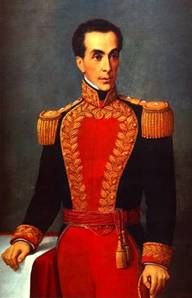
Simon Bolivar
- Gran Columbia, Peru (1807-1822)
- A young and wealthy aristocrat
- Led a major military campaign in the North to free
Venezuela, Colombia, Ecuador, Peru, and Bolivia
- Liberated South America from Spain
- Bolívar contacted Miranda and arranged for him to
return to Caracas, where Miranda took control of the movement
- Bolívar arrives in New Granada in 1812 and fought
against the royalist forces
- In 1813 he took a small army into Venezuela, broke the
royalist defenses, and on August 6, 1813, entered Caracas in triumph
- Established Venezuela’s Second Republic
- In 1820 troops stationed at Cádiz rebelled and were
soon joined by army units from all over Spain, demanding a return to the
liberal constitution of 1812
- Ferdinand, avoiding a revolt, accepted the 1812
constitution which created a limited constitutional monarchy
- To liberate it Quito from royalist control, Bolívar
chose General Antonio José de Sucre who defeated the royalists in the
Battle of Pichincha
5.
Francisco de Miranda
- (1806)
- Venezuelan who fought in the American and French
revolutions
- Launched an invasion of Venezuela from the United
States, but was defeated by the Spanish colonial regime.
6.
Jose de San Martin
- Argentina, Chile, Peru (1817-1821)
- Argentine who lived in Spain and fought for the
Spanish Army
- Fought for independence in Argentina, Chile, Bolivia,
and Peru
- Led the Liberation of the Southern region of South
America
7.
Don Pedro
- Brazil-1822
- Son of the King of Portugal who had been left to rule
the colony
- Sided
with the nationalist element and even supported the Portuguese
Constitutionalist movement that led to the revolt in Porto in
1820
- Declared Brazil independent without fighting a war
Brazil & Bourban Reforms
By Benjamin Adi
Economy & Society
- 16th century the Brazilians sugar
industry begins an upswing that leads to it being the world’s
largest producers of sugar in the 17th century
- The more the industry prospered, the more it attracted
Portuguese immigration, and the more it could afford African slaves as
workers.
- Cuba and Puerto Rico did not participate in the sugar
boom.(self supplied by northern Europeans nations)
- Around the mid-18th century silver
production increased especially in Mexico.
- Second half of the 18th century the
Cuban economy grew rapidly on the basis of tobacco
- Cuba starts to move in the direction of large-scale
sugar export after French Haiti revolt in 1791
The Bourbon Reforms
- By the late 18th century individuals
had created societies in America producing, journals and books.
- Enlightenment policies bores government
- Rational, unified, efficient and free of church
influence
- It affects policy makers for the Spanish crown and
activists
- 1780s major bourbon reform takes place
- Creation of large districts called intendancies
- Both headed by officials called intendant (responsible
for the crown in spain)
Gold in Brazil
- In the late 17th century the
exploration of Paulistas leads to discovery of Gold in Brazil (Rio De Janeiro)
- Became known as the Minas Gerais
- The mining district flourished during the time of the boom
- Generating a network of settlements where none had been before and a local culture that included the
now-renowned architectural style of its small churches
More importantly for Brazil as a whole,
Rio de Janeiro began to become an important urban centre in the usual mold, and
the institutional component thickened, just as it had earlier on the basis of
mineral wealth in the old Spanish-American central areas.
By 1763 Rio had become the capital of
Brazil, replacing Salvador in the northeast. Although the northeastern sugar
industry continued to export more by value than the gold region, the latter had
newer wealth and perhaps a higher profitability, and distant regions began to
orient themselves to it in important ways.
Napoleon Conquest
By Carlos Hernandez
Napoleon Conquest
A) The fist signs of the
declination of the Iberian rulers were during the conquest of Napoleon.
Napoleon was able to conquer Spain and Portugal. This led the government in a
state of disorder. Without a solid ruler powering the
homeland the question of who ruled came into question. This was the perfect
opportunity for the colonists of the Americas to develop a revolution.

Royal Family of Portugal
B) During the
conquest of Portugal of 1807 led by Napoleon the Braganzas (the royal family of
Portugal) fled to Brazil with the escort of the British navy. They brought
their court and bureaucracy with them. Because of them heading towards Brazil
mercantilism was dissolved in the country of Brazil. The country now had opened
its ports with British trade. Manufacturing was encouraged, a higher school
system was established and a new army was formed. When napoleon was defeated in
the year 1815 and later Brazil was to be considered a co-equal kingdom. In the
year 1821 the encouraged king Joao to return to Portugal and continue the
process of mercantilism. King Joao and his son Pedro believed that there was
too much change within Brazil to go back to the way it was. In September 7.
1822 Pedro created a government and announced independence or death. 3 months
after we were crowned as the emperor of brazil.
Miguel de Hidalgo
C) In the year 1808 Spain was invaded by the French
forces. They where able to overthrow the king of Spain who in that time
was Ferdinand VII. They replaced him with Napoleons brother Joseph Bonaparte.
Some Spanish officials where not in favor of the new king. Some of them set up
secret societies to support Ferdinand and some where supporting independence.
Miguel de Hidalgo was a Mexican Creole priest who was an instigator of
independence. He was part of one of the secret societies. On September 16, 1810
he rang the church bell of the city of Dolores. While ringing the bell he
shouted and declared a revolution against the Spanish. He created a alliance
that consisted of peasants, Indian, and artisans. He supported the idea of
ending abuse, denouncing bad government and called for redistribution of
wealth. Their alliance captured Guanajuato and other big cities west of Mexico
City. The encircled Mexico City as well but did not capture it. His alliance
had soften do to the uprising of the royal armies. Hidalgo was defeated in
Calderon on January 17, 1811. He tried to flee north towards the United States
but was captured. He was degraded from priesthood and executed.
Augustin de Iturbide
By Kailoni Brown
General Augustin de Iturbide
- Was a soldier in the Spanish Army
- Was asked to repress Mexican independence
Movement, but met with its leader, Vicente Guerrero, and signed the Plan
de Iguala.
- The Plan de Iguala called for Mexico's
independence and proposed equal rights for its citizens. (1821)
- The Spanish viceroy recognized Mexico's
independence with the Treaty of Cordoba. (August 1821)
- Became Emperor of Mexico after being crowned
Augustin I by the Mexican congress.
- Disagreements between Iturbide and the country's
representatives led to to the dissolution of the Mexican constituent
congress
- Iturbide is forced to resign. (1823)
- Southern republics of Mexico break away and
become south American countries, which eventually leads to the
Mexican-American war in 1846.
The Dutch-Portuguese War over Brazil(1630-1654)
- February 1630- A fleet of Dutch vessels arrives
off the coast of Pernambuco (Recife) , attacks the Portuguese defenses,
and gain control of the Recife by March of the same year.
- 1636- Johan Maurits, a relative of the Dutch
magistrate, is appointed governor general.
- 1638- Maurits takes Porto Calvo and launches and
unsuccessful attack on Salvador de Bahia.
- 1645- The Dutch are able to repel an attack
against the island of Itamaraca by the Portuguese during a revolt.
- 1654- The Recife surrenders to Portuguese
forces. Under the Capitulation of Torbada, places such as Itamaraca,
Paraipa, Rio Grande Norte and Ceara, are turned over to the Portuguese.
Minas Gerais
-1639- Gold is discovered at Minas Gerais, a hard
to reach area of mountains separated from Sao Paulo and Rio de janiero,
by the bandeirantes.
-Early 1700's- People from Brazilian areas flock
to the mines, and the legislature in Lisbon has to stop the Portuguese
from immigrating.
1708 -1710: There are fierce combats between the
bandeirantes from São Paulo, who claimed rights over the discovered
mines, and the Portuguese and other Brazilians (that the bandeirantes referred
to as emboabas), who wanted to get a share of the gold; the episode was
known as War of Emboabas. Because of
the poor techniques used to mine god, a large proportion was lost and
Portugal was more concerned with taxation than with exploring gold. By
1760, the production of gold was in rapid decline. For a short
period, the production of diamonds surpassed the production of gold;
during this period, the region around the city of Diamantina flourished.
However, Portugal showed the same lack of care they did with gold,
and diamond production vanished.
Slavery in Portugal
African slaves in Brazil resisted domination and fought for their freedom
and independence. The slaves worked on sugar plantations and coffee was a
main crop sold in Europe. Escaped slaves, or maroons, formed communities
like those they were forced to leave in Africa. These free communities
were called quilombos, and the most famous of these communities was called Palmares. The
community existed from 1630- 1697 and fought off several attempts by
Portuguese and Dutch colonizers to destroy it.
Venezuela
By James Miranda
I.
Colonial Economics
A.
Animal hides and other
animal extracts quickly became a major export for Venezuela.
B.
Other exports included tobacco,
cotton, coffee & cacao.
C.
After decades of
economic expansion, these products made up over 30 percent of Venezuela’s
exports; cacao became the most popular export and soon accounted for over 60
percent of exports alone.
D.
Under Spanish control in
the late 1700’s, Venezuela mainly sold their exports to Spain who usually only
bought the products at cheap prices and would sell imports at expensive prices.
E.
The conflict of interest
between the creoles (Spaniards born in America) and the Spanish increased political
antagonisms among them and forced producers in Venezuela to use the metropolis
or smuggle goods via contraband.
II.
Problems
A.
Creoles lacked the
ability to gain power in legal institutions though they had opportunities in
education and the church.
B.
The creoles grew
frustrated and began to feel threatened by the socio-racial policy of the
metropolis and the influence it had in the courts.
C.
In 1789, the Spanish
government issued a slave law trying to improve conditions in slave compounds
but creoles rejected the law and tried fighting it until it was procured in
1794.
III.
Rebellion Begins
A.
In 1795, Negros and
pardo revolt in the city of Coro, the center of the sugar-cane industry. Three
hundred slaves also rebelled and proclaimed “The Law of the French”, the republic,
freedom of slaves, suppression of sales and other taxes.
B.
The Rebellion consisted
of killing land owners and taking over haciendas, but it was easily put to an
end and started the movement of Negro communes away from white authority.
C.
The creoles finally
accepted Spanish rule as the best form of government around 1795 until 1797
when their loyalty to the Spanish began to fade.
D.
As Spain grew
increasingly unstable at home as well as everywhere else, in 1810, the creoles
decided to try and gain complete power instead of just sharing it like they had
been.
E.
The French arrived at
Caracas and the Creoles immediately requested to establish an independent junta
to decide the political position of Venezuela, unfortunately for them, the
authorities either imprisoned or exiled its officers and spread propaganda
among the pardos.
F.
The creoles survived
attempts to depose the Spanish Captain-General Vicente Emparan but couldn’t
control the events happening in Spain.
IV.
New Government
A.
In February 1810, a
junta (committee) dissolved in Spain. Once Venezuela heard about this they
decided to take action in April 1810. The Captain-General still refused to take
part in the creation of the Venezuelan committee, so revolutionaries took
matters into their own hands.
B.
The Junta Conservadora
de los Derechos de Fernando VII, was formed from the committee of
revolutionaries and became the new government of Venezuela.
C.
Early actions of the
committed abolished export duties and sales taxes on essential consumer goods,
decreed freedom of trade, and proscribed the slave trade. Elections in all the
towns under its control were also held as part of the new government.
V.
Simon Bolivar
(1783-1830)
A.
Born of a very wealthy
Venezuelan family and educated in the Enlightenment movement.
B.
He was an Atheist that
believed religion was only necessary for government.
C.
Bolivar claimed loyalty
to Fernando VII in 1810.
D.
He proclaimed national
independence on July 4, 1811; the next day the first Venezuelan republic was
established though it only lasted one year.
E.
At age 29, Bolivar made
his first major statement, “The Cartegena Manifesto” which analyzed the
failings of the first republic in 1811.
F.
Bolivar led a small army
of seven hundred to invade Caracas in 1813 and was successful in freeing 4
other revolutionary leaders.
G.
In December 1815,
Bolivar went to Jamaica and tried to interest Britain in the quest for
independence.
H.
Bolivar realized he
wouldn’t achieve independence in Jamaica so he moved to Hiati in hopes that the
president would aid him in freeing the Haitian slaves in Venezuela.
I.
In 1816, Bolivar returns
to Venezuela with military aid from the pardos, and the slaves against the
King.
J.
In February of 1819
Bolivar presented an outline of a constitution to his national congress. The
constitution was adopted in August 1819 after Bolivar was elected president of
the republic.
K.
While trying to liberate
the surrounding countries from Spain’s rule as he had done with Venezuela, he
becomes president of Colombia and helps liberate Ecuador, Grand Columbia, New
Granada, Quito, Panama, and Peru.
L.
Bolivia was named after
Simon Bolivar, the Commander in Chief of the Liberation Army.
Social Struggle After Political Revolution
By Nazir Atayee
Social Struggle
-
Social struggle was among Indians, Mestizos, slaves, and whites
-
Fortunes of planters and merchants were threatened by militartized
populace
-
Andean Indians fled the mines and occupied the great estates
-
Province fought their neighbors
-
Armies that defeated Spain in the 1820’s were now engaging in
civil wars
-
The rift was mostly over postcolonial order in South America
-
In the 1840’s and 50’s old viceroyalties had broken up
New States & Ideals
-
New states, common myths of sacrifice, and collective identitites
of nationhood emereged
-
Social elite’s were created due to narrow political communities.
-
In these political communities many myths were contradictory
-
Simon Bolivar urged followers to become American
-
This was all in part of a larger, pan-creole ideal
-
He tried to influence the liberated countries to unite into a
Latin American confederation.
-
In particular urging Peru and Bolivia to join Venezuela, Ecuador,
and Columbia in the “Gran Colombia”
-
This never came to fruition because local identities continued to
take precedence over Spanish-American unity.
-
National Republics took over Bolivar’s dream of a United States of
South America
-
Bolivar met his end surrounded and hounded by his enemies
-
San Martin die in exile
Spanish America Legacy
-
The real heirs to independence were not slaves, Indians, or even
republican national leaders
-
Local military chieftains called Caudillos
-
They often forges alliances with landowners
-
The legacy of the revolutions of Spanish America was contradictory
-
It was the triumpth of wealthy and powerful elites under a banner
of liberty
-
Unfortunately this was almost always at the expense of poorer,
ethnic, and mixed populations
Works
Cited
Tignor,
Robert, Jeremy Adelman, Stephen Aron, Stephen Kotkin, Suzanne Marchand, Gyan
Prakash, and Michael Tsin. Worlds Together Worlds Apart. Second ed. Vol.
2. New York, NY: Norton. Print.
"Latin America." Trinity College. Web. 14 Oct. 2009.
<http://www.trincoll.edu/classes/hist300/group3/latin.htm>.
"History of Latin America ."
Encyclopedia Britannica. 2009. Encyclopedia Britannica Online. 13 Oct.
2009.
<http://www.britannica.com/EBchecked/topic/331694/Latin-America/60877/The-independence-of-Latin-America#>.