Pan African Studies 350
Advanced Writing
Spring Semester 2009
Ticket #11487
Instructor: Johnie H. Scott, M.A.,
M.F.A.
Units: 3
Associate
Professor of Pan African Studies
MWF, 11:00am-11:50am
PAS Writing Program
Director
Sierra Hall 287 Santa
Susanna Bldg., Room 210
Email
Office
Hours: MW, 1:00pm-2:30pm or
Webpage
By
Appointment
Telephone:
818-677-2289
Course Description:
Prerequisite
– completion of the lower-division writing requirement. Advanced course emphasizing alternative strategies in
expository writing skills development. Focuses on such purposeful forms of
discourse as reports, the research paper, critiques, the essay examination, and
selected forms of correspondence. Cursory review of grammar, mechanics and
syntax is offered as needed. More intensive review of such basics is available
on an individualized basis in the
Required Textbooks:
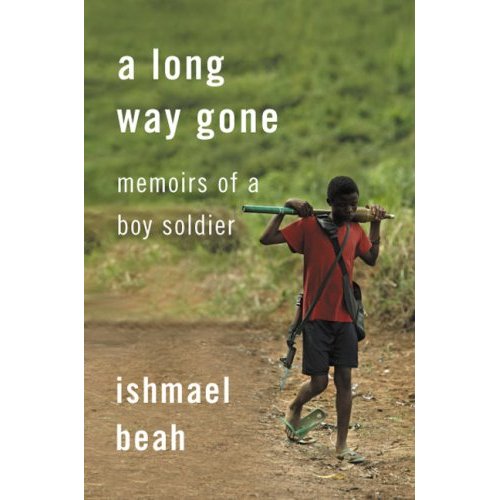
1. Beah, Ishmale, a long way
gone: Memoirs of a Boy Soldier, Sarah Crichton Books, Farrar, Strauss and
Guriux, New
2. Gibaldi, Joseph, The MLA
Handbook for Writers of Research Papers/Sixth Edition, Modern Language
Association of
3. Rottenberg, Annette and
Donna H. Winchell, Elements of Argument: A Text and Reader/Ninth Edition,
Bedford/St. Martin’s Press, New York, NY, © 2009.
Course Objectives:
The PAS 350 Advanced Writing
student meets ten (10) primary objectives in taking this course. Those
objectives are:
ü
The course will
increase the student’s ability to analyze and comprehend university-level
texts;
ü
The course will
expand and enhance, through culturally diverse readings, the awareness of
rhetorical strategies as well as the abuses and uses of
language;
ü
The course will
increase the critical reasoning skills as they reflect the interdependence of
critical thinking and written discourse;
ü
The course will
build confidence, reduce writing anxiety, and strengthen personal
voice;
ü
The course will
reinforce the theory and practice of writing as a recursive
process;
ü
The course will
help students understand the many contexts for writing, including timed writing,
and develop appropriate strategies for the writer’s multiple purposes and
audiences;
ü
The course will
develop fluency and style by encouraging word and sentence variety, increasing
vocabulary, and using Edited American English;
ü
The course will
increase proficiency in research techniques required by various University
disciplines and familiarizes students with appropriate style
sheets;
ü
The course will
definitely facilitate the use of basic computer applications – word processing,
email, and Internet access – and other technological media including HyperNews
and PowerPoint; and
ü
The course will
promote writing as a means of participation in democracy and as a tool for
social change.
Student Learning Outcomes for PAS
350:
The
PAS 350 Advanced Writing student will realize 18 outcomes as a direct
result of meeting the stated objectives for this course. Those outcomes include
the following:
ü
A developed
facility at examining explicit relationships that exist between general concepts
and specific details;
ü
An enhanced
understanding of the relationships among sentence structures, word choice, and
meaning;
ü
The ability to read
critically about ideas and issues, including multicultural perspectives; analyze
and synthesize information; draw inferences from data; draw conclusions from
arguments; and distinguish fact from fiction;
ü
The ability to
analyze message, audience, language choice, tone, purpose, and author’s ethos in
selections from a text;
ü
The ability to
comprehend and critically assess writings that reflect multicultural images and
perspectives;
ü
The ability to
recognize logical fallacies, biased language, idioms, slang, jargon, and
tone;
ü
The ability to
develop ideas with logical support, including the use of informed opinion,
facts, and their interpretations;
ü
The ability to
write critically about ideas, including multicultural perspectives; analyze and
synthesize information; draw inferences from data; draw conclusions from
arguments; and distinguish facts from opinion;
ü
The ability to
write both independently and in collaboration with others;
ü
The ability to
assess and address appropriately the character and needs of an explicit
audience;
ü
A facility in using
different genres in writing (e.g., autobiography, position, problem-solution,
argumentative and case studies) for different academic disciplines or discourse
communities;
ü
The ability to
apply the concepts of subordination/coordination; abstract/concrete words;
general/specific examples; and cohesion;
ü
Development of
vocabulary appropriate to the subject and/or topic;
ü
The ability to
effectively use the syntactic and mechanical conventions of Edited American
English (.g., grammar, usage, mechanics, and diction);
ü
The ability to
integrate one’s own ideas with those of others, using appropriate
documentation;
ü
The ability to use
a style sheet consistently, such as MLA or APA style
sheets;
ü
An awareness and
appreciation of diverse cultures and contexts of human
experience;
ü
The ability to show
ways that writing can contribute to society and be an instrument for change;
and
ü
Lastly, the student
will be able to demonstrate the ability to write for possible
publication.
Student Information Competence (IC) Outcomes for PAS
350:
The
PAS 350 Advanced Writing student may expect to experience four specific
outcomes as a direct result of meeting the stated objectives for this
course. Those outcomes include the following:
ü
The ability to
effectively use library and online resources individually and in concert with
others;
ü
Knowledge and
mastery of basic word processing, email, WebCT, PowerPoint and the
Internet;
ü
The ability to
integrate one’s own ideas with those of others, using appropriate documentation
with the varied formats of information technology; and
finally,
ü
The ability to use
computer technology in the writing process, including research and
documentation.
How Met (Assessment):
- Pre-Semester, Midterm and Common Timed Essay
Examinations;
- Objective Quizzes, Midterm Objective Examination and
Exit Essay Examination on grammar and mechanics of writing;
- Formal Homework Assignments submitted via
electronic mail (i.e., Information Technology);
- Advanced Writing Group Presentations using Power
Point to discuss Grammar and
Mechanics of Writing (e.g., The Structure of Sentences) , formats for
documenting research (e.g., Modern Language Assn.) with these Group
Presentations providing another method for assessing information technology
skills;
- Four expository papers involving various modes
of written communication including personal narrative, evaluative, position
and problem-solution essays;
- The Write Time Discussion Forums afford for
students to become orientated to the WebCT and HyperNews at same time they are
learning additional Information Technology skills through an ongoing learning
process.
Course Requirements:
- Essay
Examinations: One of the objectives
in this course is for the student to achieve a mastery of the timed essay
examination. To this end, there are four (4) timed essay examinations in this
course. Those examinations are all taken by the student using a large (i.e., 8
½”x11”) Blue Book. Each examination is timed at 60 minutes, i.e., the same
amount of time as the Upper Division Writing Proficiency Examination (UDWPE)
required of every CSUN student prior to actual graduation. The essay
examinations in this class include the Pre-Semester, Midterm,
12-Week and Common Essay. The Pre-Semester Examination does not
count towards the final course grade. The remaining three essay exams, on the
other hand, are averaged together and count as one of the primary grade
factors for the class. These essay examinations are scored using the same
rubric as the UDWPE. It is expected that each student will show improvement in
matriculating through the course, as each essay examination is progressively
more challenging in demands on writing skills. The Pre-Semester and Common
Essay serve as one of the assessments for this course.
- Objective
Examinations: Students in this class
are assessed in regards to the skills taught and/or reviewed in regards to
college study skills, grammar and mechanics, and the various writing
conventions. The assessments of those skills taught in the class take the form
of an Objective Quiz, a two-part Midterm Objective Examination
and an Exit Examination. These objective examinations are averaged
together in forming the second of the primary grading factors in the
class.
- Critical
Comprehension Homework Assignments:
There are formal homework assignments in this class which are based upon
improving and increasing the student’s critical thinking and reading
comprehension skills. These assignments are all to be submitted using email
and are averaged together in constituting the third primary grading factor for
the course. It is to be noted the homework assignments are all due as noted
by the course instructor, and that no “late” homework assignments will be
accepted for grading. Accordingly, an assignment due at 10:00am and not
submitted for grading until 11:00am, i.e., one hour later, will be judged as
“failing” in that the student failed to meet the submission deadline. It is to
be understood that developing a work ethic in which students successfully meet
deadlines is part of the assignment, and the course itself.
- The Write
Time Discussion Forums: Located
within WebCT, the Write Time Discussion Forums provide students with
opportunity to develop and enhance information competence skills by using the
very latest in distance learning technology. The Write Time Discussion Forums
find students engaged as learning communities with the course instructor,
employing critical thinking skills with discourses about specific subjects
that demand development of argumentative writing skills in Forums built around
central issues and concerns in the African American community and, by
extension, the world community. Students have 3-4 weeks on the average in
which to respond to a writing prompt posted by the instructor as well as the
responses made to that same prompt by any two of their classmates for a total
of three (3) postings per Write Time Forum. Each of these Forums is valued at
up to 4.0 possible points, i.e., with up to two points for the writing prompt
itself and one point each for responding to the two classmates. The four (4)
Write Time Discussion Forums are then averaged together in comprising the four
primary grade factors for the Student Portfolio. Postings made outside the
stated deadlines will not be counted for grade points as, again, an emphasis
on meeting deadlines under girds the course methodology;
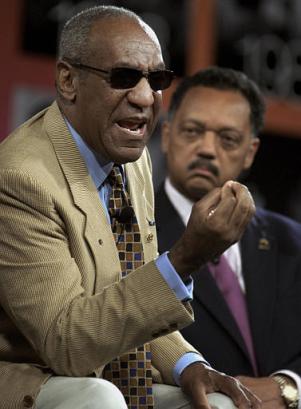
Noted
philanthropist and comic Bill Cosby shocked the nation with “Pound
cake”
Speech given
on 50th anniversary of Supreme Court’s Brown v. Board of Education
decision
Outlawing
school segregation. Speech serves as centerpiece for Write Time discussion
forums
- Advanced
Writing Group Presentations: Each
student participates in two (2) AW
Group Presentations. The presentations consist of 5-6 class members
working jointly together on an assigned topic which is presented to the class
using Power Point and complete with a formal handout for each student in the
class. The presentations are drawn from the Elements of Argument course
textbook in focusing on grammatical and mechanical conventions as well as in
regards to protocols for preparing and documenting the research paper. The
individual grade is based upon the student’s preparation and presentation as
well as the group’s overall effectiveness. These presentations are averaged
together in forming the fifth primary grade factor.
- Writing Topics: Students in this class will write and submit a total
of four formal essays within the modes of discourse – the personal narrative,
evaluative, problem-solution and the argument. Papers are developed according
to the recursive writing process of prewriting, rough draft, editing and
revision, then final draft with peer critiques and one-on-one conferencing as
needed. The papers are written in standard manuscript format, typewritten,
double-spaced with cover pages. The papers constitute the sixth factor in
grading for the class;
- The Capstone Paper: The assigned book for this course is author Ishmael
Beah’s a long way hone” Memoirs of a Boy Soldier. The Advanced Writing
student prepares a critical analysis of this collection of essays as the
capstone paper. The paper is to be no less than 2,500 typewritten,
double-spaced words (i.e., ten pages). It must have no less than fifteen
formal citations including four (4) drawn from no less than three (3) outside
references such as published book reviews that are, preferably, peer-reviewed.
The Capstone paper must have a “Works Cited” section. Citations and “Works
Cited” are to be done according to Modern Language Association guidelines.
Due as noted in the course schedule, no student shall receive a grade of
“B” or higher in this class who fails to submit this paper which constitutes
the seventh and final primary grading factor for the course – no
exceptions!

“A Long Way
Gone is a wrenching, beautiful, and
mesmerizing tale. Ishmael Beah’s (shown above) amazing saga provides a haunting
lesson about how gentle folks can be capable of great brutalities as well as
goodness and courage. It will leave you breathless.” – Walter Isaacson, author
of Einstein: His Life and Universe.
Grading Policy:
Grades in this class are administered on a “Plus-Minus”
basis. The final course grade in based on the average of the primary grade
factors listed under “Course Requirements” combined with any bonus points
earned by the student. Grades are
based on the following valuations, as is the final grade that a student receives
for work completed in the course. The Bonus points include the utilization of
the Writing Specialists in either the
“A+” =
4.3;
“A” = 3.71 -
4.0;
“A-“=
3.5-3.7;
“B+” = 3.3 –
3.49;
“B” = 3.0 –
3.29;
“B-“= 2.7-
2.99;
“C+” = 2.3-
2.69;
“C” = 2.0-
2.29;
“C-“= 1.7-
1.99;
“D+” = 1.3-
1.69;
“D” = 1.0-
1.29;
“D-“= 0.7-
0.99; and
“Fail” = 0.00
– 0.69.
While a student cannot receive a final course grade of
“A+” at this time, that grade can be applied to individual assignments (e.g., a
writing assignment, a group presentation, a posting in The Write Time, etcetera)
presented by the student during the semester in this class. The course final
grade represents the cumulative grade point average achieved by the student for
the seven primary grade factors described under the “Course Requirements.” To
wit, Essay Examinations, Objective Examinations, Advanced Writer’s Group
Presentations, Write Time Discussion Forums, Homework Assignments, Writing
Assignments (i.e., Papers), and the Capstone Paper.
.In
addition, the cumulative grade point average earned in this course shall also
reflect any earned “Bonus” points by the student to include exceptional in-class
performance, outstanding attendance, extra-credit assignments and special
projects. Those “Special Projects” include, but are not limited to, the student
memorizing and then reciting in class any one of the following poems (with bonus
points indicated in parenthesis following the particular work mentioned): Maya Angelou, “And Still I Rise (1.25
points) (1.0 points); Nikki
Giovanni, “Ego Tripping” (1.25 points); Langston Hughes, “The Negro Mother”
(2.0 points) and Margaret Walker,
“For My People” (2.0 points). To qualify for bonus points where one of the
aforementioned poems is concerned, the student must contact the course
instructor at least two class meetings prior in requesting opportunity to
present the poem which must be fully memorized as no credit will be given for
partial recitations.
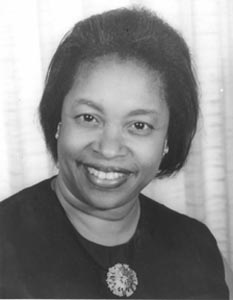
Acclaimed poet
and educator Margaret Walker (July 7, 1915 – November 30,
1998)
Lastly, the course policy with regards to the grade of
“Incomplete” is that stated in the CSUN
Catalogue with special emphasis that, “An incomplete shall not be
assigned when a student would be required to attend a major portion of the class
when it is next offered. “In this instance, the incomplete grade shall not be
offered to any student whose semester performance has been at “C-“ or lower or
who has failed to complete “a substantial portion of the class
requirement.”
In
short, the grade of “Incomplete” shall only be given to the student whose
cumulative grade point average in the class is 2.3 or higher and is able to
provide a verifiable reason for missing one (1) important element in the class;
e.g., the Term Paper, the Exit Essay Examination, the Common Essay Examination
due to unforeseen circumstance and cannot make said grade factor up within the
actual semester. The grade of “Incomplete” will not, under any circumstances, be
awarded to a student doing below average work in the class or who stops
attending class with no verifiable, acceptable cause. The “Incomplete” Grading
Policy in this instance is the same as that stated in the 2006-2008
Undergraduate/Graduate Catalog of
In the event there are violations of the Student Conduct
Code with regards to Academic Dishonesty, the student(s) shall be liable to any
sanctions delineated in Section 41301, Title V, and California Code of
Regulations, for which any offending student may be expelled, suspended, or
given a less serious disciplinary sanction. "Academic dishonesty is an
especially serious offense and diminishes the quality of scholarship and
defrauds those who depend upon the integrity of campus programs." ("Academic
Dishonesty," CSUN Undergraduate and Graduate Catalogue).
Classroom Protocols:
All students are to read “What
A Professor Expects from Students: Survival Motions for Successfully Getting
Through College.”
Course
Schedule
“You were
never expected to aspire to excellence. Instead, you
were to make
peace with being mediocre.”
-- James Baldwin, from “My Dungeon
Shook”
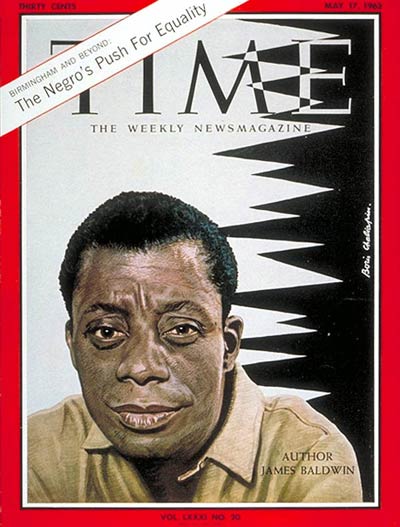
James Baldwin
Week One
(January 19th-January 25th, 2009) The
Journey Begins
Wednesday, January 21st, 2009 Lecture:
Orientation to Course Requirements
PAS
350 Checking-In Assignment (Students to email instructor
with
“PAS 350 Checking In” to verify email address)
Friday, January 23rd, 2009
PAS
350 Checking-In Due (To be completed by or before 10:00am via
email)
Lecture/Presentation:
Orientation: Faculty Policy on Academic Dishonesty
Note: Monday,
July 19th, Campus Closed due to National
Tuesday,
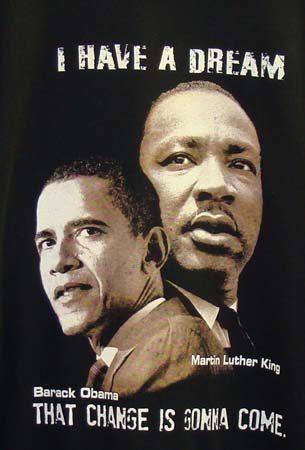
January 20th, is date set for the Inauguration of Barack Hussein
Obama as 44th President of the
Week Two
(January 26th-February 1st, 2009) Pre-Semester
Testing
Monday, January 26th, 2009 Pre-Semester
Essay Examination (Large Blue Book Required)
Write Time #1: “On the Inaugural Speech
of Barack Obama”
(Opens as of 4:00pm with students having
through 4:00pm, Monday,
February 2nd, in
which to post response to original writing prompt)
HW#1:
“Making Choices: The 9-Step Time Management Program” (Key Concepts
and
Discussion
Questions)
Wednesday, January 28th, 2009 HW#1
Due (Via email using Microsoft Word as of 10:00am)
Pre-Semester
Diagnostic Test: Logical Relations (Scan-Tron Form 882
Required)
Friday, January 30th, 2009 Pre-Semester
Diagnostic Testing: Usage (Scan-Tron 882)
HW#2:
“The 13 Keys to Successful Listening and Note-Taking” (Key Concepts &
Discussion Questions)
Chapters 2-3 from A Long Way
Gone.
Week Three
(February 2nd – February 8th, 2009)
Monday, February 2nd, 2009 HW#2
Due (Via email as Microsoft Word attachment by 10:00am)
Lecture/Presentation:
“The 9-Step Time Management Plan”
Wednesday, February 4th, 2009 Lecture/Presentation:
“Listening and Note-Taking Skills”
Write Time #1 (Student have until
4:00pm, Wednesday, February 18th, in which to read and
post responses to the postings made by any two classmates on the original
writing prompt)
HW#3:
Opening and Closing Essay Gambits (Key Concepts & Discussion
Questions)
Friday, February 6th, 2009 HW#3
Due (Via email as Microsoft Word attachment by 10:00am)
Lecture/Presentation:
Pre-Semester Testing Results with Selected Essay Examination
(Return of Pre-Semester Essays to students for revisions to be done in
Reading:
Chapters 4-5 from A Long Way
Gone.
HW#4:
Chapter 2, Assignments for
Elements of Arguments.
Week Four
(February 9th-February 15th, 2009) The Principle of Unity
in Writing
Monday, February 9th, 2009 Lecture/Presentation:
“Opening and Closing Essay Gambits”
Wednesday, February 11th, 2009 HW#4
Due (Via email as Microsoft Word attachment by 10:00am)
Lecture/Presentation: “The Principle of
Unity in Paragraphs”
HW#5:
The Power Vocabulary
Friday, February 13th, 2009 HW#5
Due (Via email as Microsoft Word attachment by 10:00am)
Pre-Semester Essay Exam Rewrites Due (At
start of class with Blue Book & Writing Specialist
Signature)
Lecture/Presentation:
“The Principle of Unity in Essays and Other Composition”
Chapters 6-7 from A Long Way
Gone.
Week Five
(February 16th – February 22nd, 2009) The Principle of Coherence in
Writing
Monday, February 16th, 2009 Lecture/Presentation:
The Stage of Writing: Creating by Looping
Wednesday, February 18th, 2009 Lecture/Presentation:
“The Principle of Coherence; From Key Terms to Transitional Words
and
Phrases”
HW#6:
The Looping Technique (On assigned topic)
Write
Time #1 Closes (As of
4:00pm)
Write
Time #2 Opens: “Reflections on the Role
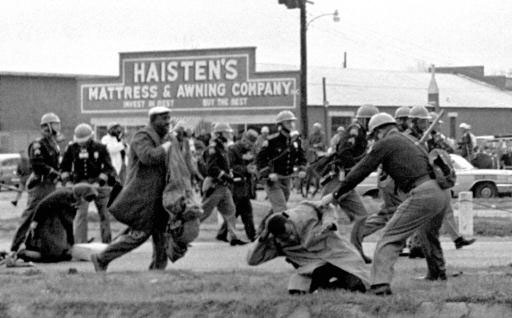
of the Civil Rights Movement in the Election of
Barack
Hussein Obama as President of the
4:00pm. Students have one full week up until 7:00pm Thursday,
February 26th, to respond to the original
prompt)
Friday, February 20th, 2009 HW#6
Due (Handwritten using blue or black ink only – due at start of class
period)
Lecture/Presentation:
“The Principle of Coherence: Synonym Reference”
Lecture/Presentation:
“The Stages of Writing: Creating by Cubing”
8-9 from A Long Way
Gone.
HW#7: The Cubing Technique (Key Concepts
with Technique on assigned subject)
Week Six
(February 23rd-March 1st, 2009) Sentence Clarity & the
Narrative Mode
Monday, February 23rd, 2009 HW#7
Due (Handwritten at start of class, using blue or black ink
only)
Lecture/Presentation:
“Sentence Clarity” (Power Point)
Wednesday, February 25th, 2009 Lecture/Presentation:
“The Modes of Discourse: Narration”
WA#1:
To do Looping Technique on assigned topic and 750-word Personal Narrative
Essay
Write
Time #2: (As of 7:00pm Thursday, students
have through 7:00pm Wednesday, March 18th, in
which to reply to two classmates’ postings concerning topic.)
Friday, February 27th, 2009 Objective Quiz #1 (45
Minutes)
Reading:
Chapter10 from A Long Way
Gone.
Week Seven
(March 2nd-March 8th, 2009) Group
Presentations
Monday, March 2nd, 2009 1st
Round of Presentations: Group 1 (Each group with 20-25
minutes)
Wednesday, March 4th, 2009 WA#1 Due (At start of class with
Creating Techniques attached)
1st
Round of Presentations: Groups 2-3 (Each group with 20-25
minutes)
Friday, March 6th, 2009 1st
Round of Presentations: Group 4 (Each group with 20-25
minutes)
Reading:
Chapter 11 from A Long Way
Gone.
HW#8:
Chapter 5, “
Week Eight
(March 9th – March 15th, 2009) Midterm
Examinations
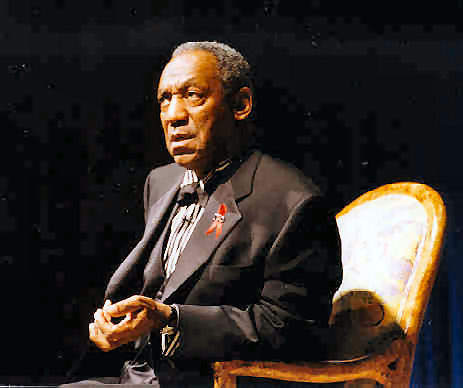
It took a reflective, genuinely concerned and outspoken
Bill Cosby raising questions in his “Pound Cake” speech
given on the 50th Anniversary of Brown v. Board of Education to turn the
heads of Black Americans
around in taking a good, hard look at the way in which
dysfunctionality is fast becoming the norm in
communities from one end of the nation to the
other.
Monday, March 9th, 2009 HW#8
Due (Via email by 10:00am as Microsoft Word attachment)
Midterm Essay Examination (Large Blue
Book Required)
Wednesday, March 11th, 2009 Midterm Objective Exam – Part 1,
Terminology (40minutes)
Friday, March 13th, 2009 Return
of WA#1 for Revisions
Midterm Objective Exam – Part 2, Writing
Conventions (45 minutes)
from
A Long Way
Gone.
Write
Time #2 Closes (As of
4:00pm)
Write
Time #3 opens: “Something Had to be
Said: Commentary on Bill Cosby’s ‘Pound Cake’
Speech” (As of 4:30pm. Students have up until 4:30pm Friday, March
20th, in
which to respond to the original Writing Prompt)
Week Nine
(March 16th – March 22nd, 2009)
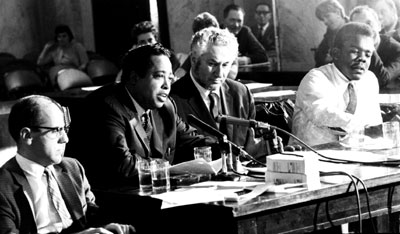
Shown here testifying to the United States Senate
Subcommittee on Urban Affairs is, second from left, playwright and writer Harry
Dolan, Academy Award winner Budd Schulberg (On the Waterfront) and, far right,
Emmy Award-winning poet and author Johnie Scott as these three original members
of famed Watts Writers Workshop came to Washington D.C. as participants in the
1966 White House Conference “To Fulfill These Rights” called by then-President
Lyndon Baines Johnson.
Monday, March 14th, 2009 Peer
Critiques – Midterm Essay Examinations with selected readings (Return of Midterm
Essays for
revisions in
HW#9:
“Letter from a
Discussion Questions 1-6, pg. 206 from Elements of
Argument.
Wednesday, March 18th, 2009 HW#9
Due (Via email by 10:00am as Microsoft Word attachment)
Midterm
Status Reports: Essay and Objective Exams, Group Presentations and Homework
Averages.
Lecture/Presentation:
“The Key Terms in Argumentation”
Bonus
Assignment: To do 750-word Analytical Essay on The Angry Voices of Watts
based upon assigned
prompt.
Friday, March 20th, 2009 WA#1
Revisions Due (At start of class with original draft attached and Writing
Specialist’s signature)
Lecture/Presentation:
“The Key Terms in Argumentation – Part 2”
A Long Way
Gone.
Write
Time #3: (As of 4:30pm today, students
have through 4:30pm Friday, April 3rd, in which to reply to
two classmates’ postings concerning topic.)
Week Ten
(March 23rd – 29th, 2009) Critical Thinking and the
Evaluative Process
Monday, March 23rd, 2009 Midterm
Essay Exam Revisions Due (At start of class with original Blue Book and Writing
Specialist’s
signature)
Lecture/Presentation:
“Organizing the Argumentative Essay” (Power Point)
Screening:
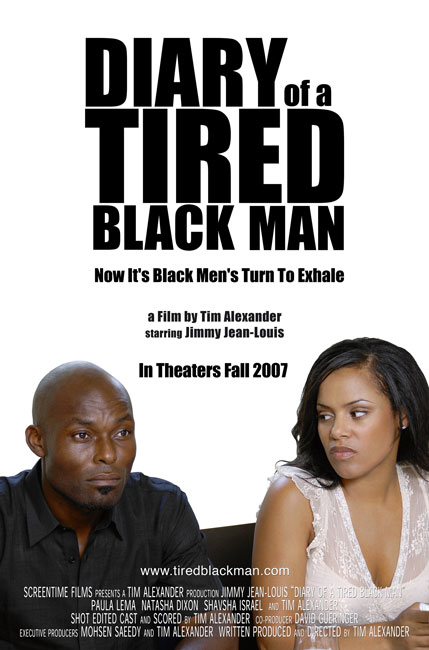
Diary of a Tired Black Man (July, 2007)
WA#2:
To do Looping and Cubing Techniques on assigned topic for 1,000-word Evaluative Essay
on Diary of a Tired Black Man)
Wednesday, March 25th, 2009 Bonus
Assignment – The Angry Voices of Watts – Due (Via email as of 10:00am
using Microsoft
Word)
Lecture/Presentation:
“The Use of Evidence and Opinion as Support in Writing
Argumentation”
2nd
Round of Presentation Assignments: Modern Language Association Guidelines, Group
1:
“Research and Writing;”
Group 2: “The Mechanics of Writing,” Group 3: “The Format
of the Research Paper,” and
Group 4: “Documentation: Preparing the List of Works
Cited”
(Note: Each group to have 45 minutes for presentation)
Friday, March 27th, 2009 Lecture/Presentation:
“Criteria Used in Evaluating Evidence and Opinion in Argumentative
Writing”
Week Eleven
(March 30th – April 5th, 2009) Argumentation and
Persuasion
Monday, March 30th, 2009 WA#2 Due (At start of class with
Creating Techniques attached)
Lecture/Presentation: “The Appeals to
Needs and Values”
Wednesday, April 1st, 2009 Bonus
Assignment – The Angry Voices of Watts – Due (At start of
class)
Peer
Critiques – Readings of Selected Evaluative Essays (Return of WA#2 for revisions
to be done at
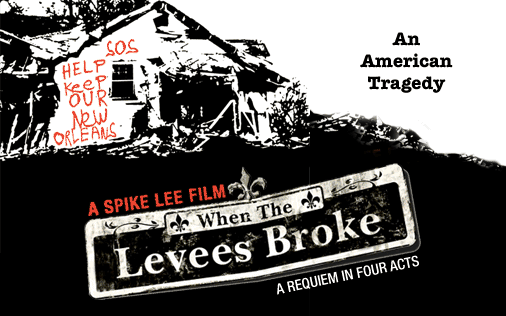
Screening: When the Levees
Broke: A Requiem in Four Acts (2005)
Friday, April 3rd, 2009 In-Class Essay Examination (Large Blue
Book Required)
WA#3: To do Looping and Cubing on
When the Levees Broke & 1,500-word Argumentative Essay
on
Topic based upon Hurricane
Katrina and FEMA Foul-up in aftermath
16-18 from A Long Way
Gone.
Note: Spring
Break is April 6th – 12th, 2009. Campus is closed. No
classes
scheduled.
Week Twelve
(April 13th – April 19th, 2009) Writing the
Annotated Bibliography
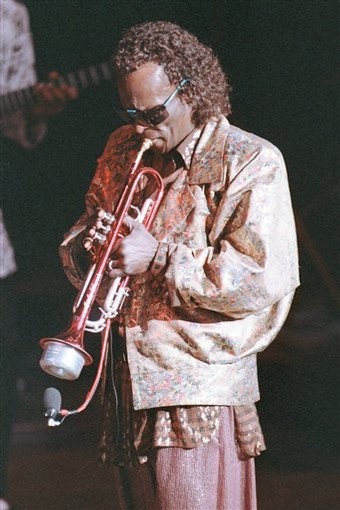
Iconoclastic Miles Davis, shown here, was referred to by
many as the “Picasso of Jazz.”
Monday, April 13th, 2009 Lecture/Discussion:
“Directive Verbs Used in Essay Examinations”
Peer
Critiques: Selected In-Class Essay Examinations
Final Write Time #4 Opens: “My Two
Cents’ Worth: The Role to Be Played by Students in Building
a Strong
Black Studies Movement” (As of 4:00pm. Students have
through 4:00pm, Wednesday,
April 22nd, in which to respond to the
original
writing prompt))
Wednesday, April 15th, 2009
Lecture/Presentation: “Writing the
Annotated Bibliography: Guidelines and Protocols”
Write Time #3 Closes (As of
4:30pm)
WA#4:
Annotated Bibliography Groups: (a) Zora Neale Hurston, (b) Melvin B. Tolson, (c)
Miles Davis,
and (d) Adam Clayton Powell, Jr.
WA#5: The
Annotated Bibliography with each group being responsible for 9-12
annotations (i.e., three
annotations by each student in the group) on assigned personality along
with 500-word
biographical statement and Works Cited with no less than three sources
(Note: Wikipedia
is never an acceptable source – no
exceptions for this and any other writing assignment! Using
Wikipedia in any paper will result in automatic “Fail”
grade.) Friday, April 17th, 2009 WA#4 Due (At start of class with
Creating Techniques attached)
Lynn Lampert, Sr. Research Librarian, Oviatt Library with class session
taking place
at the Oviatt Library in Room TBA)
Reading:
Chapters 19-20 from A Long Way
Gone.
Week Thirteen
(April 20th – April 26th, 2009) MLA
Guidelines
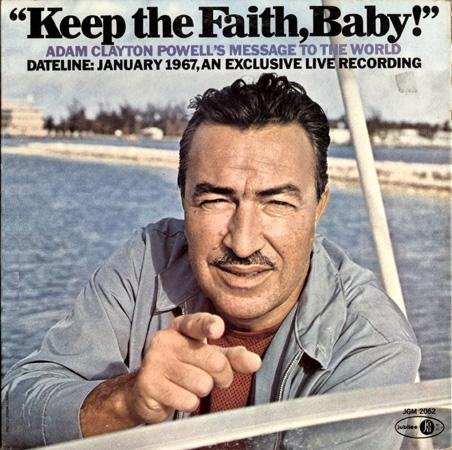
Charismatic Harlemite Rev. Adam Clayton Powell, Jr. was
a major force in Congress for many years.
Monday, April 20th, 2009 Lecture/Discussion:
“Considerations: Developing the Thesis Statement for Capstone Papers and Other
Major Writing Tasks”
Wednesday, April 22nd, 2009 WA#4
Due (At start of class)
Return
of WA#3 for Rewrites and Revisions (To be done at the
2nd Round of Presentations:
Group 1 (Note: Each group has 45 minutes)
Reading:
Chapter 21 and Epilogue from A Long Way
Gone.
Write
Time #4: (As of 4:30pm today, students
have through 4:30pm Friday, May 8th, in which to reply to
two classmates’ postings concerning
topic.)
Friday, April 24th, 2009
2nd
Round of Presentations: Group 2 (Note: Each group has 45
minutes)
Week Fourteen
(April 27th – May 3rd, 2009) Writing the Capstone
Paper
Monday, April 27th, 2009 2nd
Round of Presentations: Group 3 (Note: Each group has 45
minutes)
Wednesday, April 29th, 2009 2nd
Round of Presentations: Group 4 (Note: Each group has 45
minutes)
Friday, May 1st, 2009 WA
#3 Revision Due (At start of class with original draft
attached)
Lecture/Presentation: “Considerations in
Writing the Capstone Paper: A Deconstructive Approach”
Week Fifteen
(May 4th – May 10th, 2009)
Post-Assessments
Monday, May 4th, 2009 Departmental Common Essay (Large Blue
Book Required)
Wednesday, May 6th, 2009 Post-Semester
Diagnostic Tests: Logical Relationships and Usage (Scan-Tron Form 882
Required)
Friday, May 8th, 2009 Library Assignment: Capstone Paper
Research: Source References
Final
Write Time #4 Closes (As of
4:30pm)
Week Sixteen
(May 11th – May 17th, 2009) Finals
Week
Students to check the University Calendar for Date and
time of all Final Examinations
The Capstone
Paper is Due on Thursday, May 14th (Via email as a Microsoft Word Attachment as of 4:30pm
– Missing the deadline will be equivalent to “failing” to submit the document) –
no exceptions!)

African American family taking Sunday
stroll.