Pan African
Studies 337
“Black Images
on the Silver Screen”
Spring Semester
2004-2005
Ticket No. 18964
Johnie
H. Scott, M.A., M.F.A.
Wednesday, 7pm-9:50pm
Associate
Professor
GE,
Applied Arts & Sciences
Faculty
Ofc. Bldg. Rm. 210
Sierra Hall Rm. 160
(818)
677-2289
Three Units
Email
Homepage Office Hours: W,
5:30pm-6:30pm
Course Syllabus
Description:
Prerequisite: Completion of the Lower-Division (i.e.,
PAS 155 or equivalent) writing requirement. An in-depth exploration of the
history and criticism of the Black image on in Cinema and television and the
social and political background from which the African American image has
developed. Technical (how a film is composed) and critical (the meaning that can
be drawn from those compositions) perspectives will be emphasized. At the same
time, there will be collaborative learning projects and extensive media
interaction. Available for General
Education, Section E, Applied Arts & Sciences.
Required
Textbooks
- Alexander, George, Why We Make Movies: Black
Filmmakers Talk About the Magic of Cinema, Harlem Moon/Broadway Books, an
imprint of Random House, Inc (2003), 528 pages paperback, ISBN #
0767911814;
- Bogle, Donald, Bright Boulevards, Bold Dreams: The
Story of Black
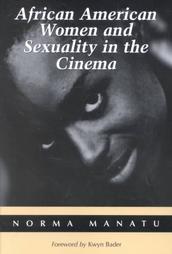
- Manatu, Norma and Kwyn Bader, African American
Women and Sexuality in the Cinema, McFarland & Company (November 25,
2002), 245 pages paperback, ISBN # 0786414316;
- Watkins, S. Craig, Representing: hip hop culture
and the production of black cinema, The University of Chicago Press
(1998), 314 pages paperback, ISBN # 0226874893; and
- Van Peebles, Melvin, Sweet Sweetback’s Baadasssss
Song: A Guerilla Filmmaking Manifesto, Thunder’s Mouth Press (September 9,
2004), 176 pages paperback, ISBN # 1560256338; and
Strongly Recommended Textbooks
- Diawara, Manthia, African Cinema: politics &
culture, Indiana University Press (1992), 192 pages, ISBN #
0253317045;
- Gray, Herman, Watching Race: Television and the
Struggle for “Blackness,” University of Minnesota Press (1995), 202 pages
paperback, ISBN # 0816622515; and
- Rocchio, Vincent L., Reel Racism: Confronting
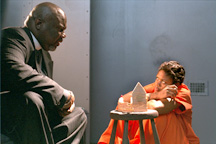
- Yearwood, Gladstone, Black Film As a Signifying
Practice: Cinema, Narration and the African American Aesthetic Tradition,
Africa World Press (January 1, 2000), 284 pages paperback, ISBN #
0865437157.
Objectives:

thought-provoking parody of Black stereotyping, feature
film Bamboozled.
Students enrolled in and completing this Pan African
Studies course on Black Cinema and Cinematic Images may fully expect to achieve
certain objectives. Those objectives include, but are not limited to, the
following:
ü
Develop an
understanding of how political-social-historical-cultural factors have
influenced and shaped perspectives of the images associated with the African
American and Pan African Diaspora Experience, including key individuals,
organizations, concepts and fundamental literature;
ü
Develop the ability
to critical examine and evaluate the philosophical ideals and beliefs that
motivated and enabled African Americans to mount not only a resistance to
negative stereotyping and demonizing of a race but, in effect, to develop a new
“Cinema of Liberation”;
ü
Develop a working
knowledge, through individual and collaborative research, of seminal works of
critical, scholarly inquiry into Pan African Cinema which addresses those issues
most basic to the development of African American culture and the challenges
faced by Black people, and the ways in which those challenges were promulgated
by the mass media in the United States and abroad;
ü
Develop appropriate
skills in research design and methodology through evaluative essays, applied
utilization of web-based technology, and formal documentation in preparing a
Case Study used in examining the various areas of the Pan African Cinema in
general, and those images directly associated with and evolving out of the
African American Cinema in
particular; and
ü
Develop a basic
knowledge of the broad cultural, political, social, psychological, economic and
historical contexts in which the African Image on the Silver Screen (i.e.,
motion pictures, documentary films and television) has evolved to its present
state.
Requirements:
In
meeting these five stated course objectives, students enrolled in this Pan
African Studies 337 Black Images on the Silver Screen course are expected to
fulfill certain, specific course requirements. The requirements all carry weight
with regards to course assessment and grading. They include the
following:
Ø
Each student is expected to have an activated email
account with either CSUN or their personal computer. The email
account is to be used specifically for the forwarding of designated course
assignments unless otherwise noted by the course instructor. The student is to
immediately notify the instructor of any change(s) in their email account, and
to maintain an electronic folder of all coursework submitted for review and
grading;
Ø
Formal evaluations of films screened in
the class including documentaries, feature films and videos. These evaluations
are to be done according to the criteria specified by the instructor and must be
emailed unless otherwise indicated. The evaluations are to be no less than 500
words and no more than 750 words in length. The evaluations are due at the time
indicated in this course syllabus. No late evaluations will be accepted for
grading (No exceptions!) unless the student presents the instructor with a
valid, documented reason for the same in a timely manner. No student may expect a grade higher than
“B” for the course who fails to maintain at least a 2.30 (“C+”) grade average
for the film evaluations. These film evaluations constitute the first of
the primary grade factors for the course;
Ø
The African American Cinema
Journal: document is
based upon the Journal format described by the instructor and is to be
maintained in a single-subject green
spiral notebook. Entries in the Journal are those listed in this syllabus and
are assigned by the instructor. Students are encouraged to make additional,
personal entries as they relate to experiences in the class. The Journal is
graded twice during the semester – once at Midterm and again near the end of the
term – with the two gradings averaged together in constituting the second
primary grade factor. The Journals are due as noted in the course syllabus
and no “late” Journal(s) will be accepted for grading unless the student
provides a valid, documented reason that is acceptable to the instructor. No student may expect a grade higher than
“B” for the course who fails to develop and submit an African American Culture
Journal (No exception!);
Ø
As one of the
purposes of the class is to develop and expand proficiencies in research and oral presentations, each student
will be assigned to participate in an
African American Images Learning Project (AAILP). The ILP
consists of a formal 80-minute presentation based upon an assigned work drawn
from the list of “Required” and “Highly Recommended” textbooks. The ILPs make
use of film clips, videos, transparencies (to include PowerPoint), sound
recordings and other resources in presenting an in-depth discussion of the
topic. No student will receive a grade of
“B” or higher who fails to participate in the CLPs (No exceptions!). The
ILP constitutes the third primary
grade factor for the class;
Ø
Examinations:
There will be two course-based
examinations in this class: the Midterm and Exit Essay Examinations.
The Midterm Examination consists of a “Take-Home” and is to be done using
large (i.e., 8 1/2”x11”) Blue Books only (No typewritten examinations will be
accepted – absolutely no exceptions!). No “late” Midterm will be accepted for
grading (No exception!). The Midterm and Exit Essay Examinations are averaged
together in comprising the fourth primary grade factor;
Ø
The Critics’ Circle
(Bulletin Board): For each week of the
course up through “Review Week,”
students will have the opportunity to “rap” with one another in ”The Critic’s
Circle,” an electronic bulleting board setting which is much like a Chat Room.
The exception is that the instructor will post one topic every 2-3 weeks taken
from today’s headlines and course subject matter where Black Cinema is concerned
in developing a dialogue that the students in the course can respond directly
to. “The Critics’ Circle” provides
the student with an opportunity to post a first response to a discussion prompt
provided by the course instructor with the class having done selected readings
and viewing of specified films. Within each “Critics’ Circle,” the
student makes a total of three (3) postings. The first posting responds to the
question posed to the entire class by the course instructor and is valued at up
to .50 points. The student then receives up to .25 points per reply to the
postings made on the same prompt by two other students for a total of 1.0 points
per “Rap Time.” There are a total of four (4) of these “Critics’ Circles” during
the term with a total possible 4.0 points (i.e., on a 4.0 grade scale) to be
obtained. Each Critic’s Circle provides students with a 2-3 week time span in which to make that
initial posting and reply to comments made by others in the class. The Critics’ Circle constitutes the
fifth primary grade component in the course; and
lastly
Ø
Case
Study: The sixth and final primary
grade factor consists of the formal Case
Study based upon an identified and approved topic grounded within the
subject area of Pan African Cinema. The Case Study requirements include the
following: it must be no less than 1,500 words in length with no less than
twelve (15) formal citations. The student must build from either Donald Bogle's Bright Boulevards, Bold Dreams, Norma Manatu's African American Women and Sexuality in the Cinema, or S. Craig Watkins’
Representing: hip hop culture and the production of black cinema as the primary text reference. The Case Study is to be written strictly according to the guidelines prescribed by the Modern Language Association of America (see
The MLA Style Manual/2nd Edition). It is to contain a “Works
Cited” section that has, at least three source references (i.e., essays, journal
articles, books, films, film reviews, etcetera). Any Case Study failing to meet
at least the minimum requirement will be marked as “Fail”: failing to meet the requirements. The
paper must be written using standard manuscript guidelines including being
typewritten, double-spaced. No handwritten paper(s) will be accepted and no
“late” paper will be accepted! No student will receive a grade higher than
“B” for the course who fails to submit the term paper (No
exceptions!).
Grading:
Grading for this PAS 337 class will
done on a “Plus/Minus” basis as described in the CSUN 2004-2006 Undergraduate
and Graduate Catalogue (56). The final course grade is based upon the cumulative
grade point average of the seven primary factors. In addition, student may earn
“Bonus” points for meeting any or all of the following: (1) “Perfect Attendance”
including “No absences or tardies” will merit .5 pts.; and (2) the three Bonus
Opportunities listed in the Course Syllabus. Final course grades will be
assigned as follows:
“A” =
3.7-4.0;
“A-“ =
3.56-3.69;
“B+” =
3.3-3.55;
“B” =
3.0-3.29;
“B-“ =
2.7-2.99;
“C+” =
2.3-2.69;
“C” =
2.0-2.29;
“C-“ =
1.7-1.99;
“D+” =
1.3-1.69;
“D” =
1.0-1.29;
“D-“ =
.7-.99;
and
“Fail” =
0.0-.69.
“Incompletes” will only be available to those students
with a 3.0, i.e., “B” or better cumulative grade point average in the class who miss submitting either the term paper
or sitting for the final examination with the following note from the CSUN
Catalogue: “It is the responsibility of the student to bring pertinent
information to the attention of the instructor and to determine from the
instructor the following course requirements which must be satisfied to remove
the incomplete.” (56) This course places a premium upon collegiality and
integrity. With that in mind, all students are expected to be knowledgeable of
the CSUN policy on “Academic Dishonesty” as described in the Undergraduate
and Graduate Catalogue (531-532). With this in mind, any student who
knowingly submits work for credit that has been plagiarized or is not their own
will receive a “Fail” for that assignment and the class with direct referral to
the Assistant Vice President for Student Life – there will be a “Zero Tolerance”
level for any form of academic dishonesty in this class. The student can earn
“Bonus” points based upon specified assignments listed in this
syllabus.
Course Schedule
Week 1
An Issue of
Power: Defining the Black Image on the Silver Screen
1)
Wednesday, February 2, 2005
1.0 Course Orientation: Goals and
Objectives
1.1 Discussion: “Classic Black Images on the Silver
Screen”
1.2 Presentation/Discussion: “Writing the Film
Evaluation: Format and Guidelines”
1.3 Presentation/Discussion: “The Black Images Journal:
Format and Guidelines”
1.4 Screening: Ethnic Notions (1987)
1.5
1.6 Activate email account and send message “Checking
In” to course instructor.
1.7a Journal Entry #1: “Why Did I Enroll in this
Course?”
1.7b Journal Entry #2: “Reflections: On the Classic
Images of African and African American Peoples”
1.7c Journal Entry #3: “Ossie Davis: In Celebration of a True Black Cinema Giant”(Make note to include news clipping on actor's death and photo with this entry)
Week 2
Oscar
Micheaux and the “Race”Movies
2)
Wednesday, February 9, 2005
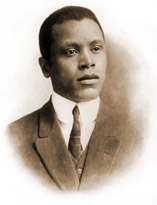
2.0 Screening: Midnight Ramble:
Oscar Micheaux and the Story of the Race Movies (The American Experience,
1994)
2.1 Presentation: African American Images Learning Project (AAILP)
Assignments
2.2
2.3 Journal Entry #4: “My List of the Ten Best Black
Films of All-Time”
2.4 Journal Entry #5: “What Did I Know About Oscar
Micheaux Before Taking This Course?”
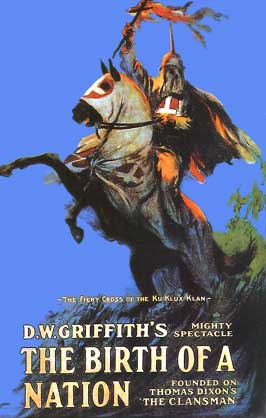
2.5 Journal Entry #6: “An Open Letter to DW Griffith:
‘What Inspired You to Make Birth of a Nation?’”
2.6 Bonus
Opportunity #1: To watch feature film
Menace II Society at
2.7 The
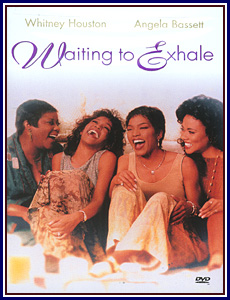
1st Critics’ Circle: A Response to Waiting to Exhale
(Note: Opens as of 4:00pm February 9th and closes as of 4:00pm on
Tuesday, March 1st. Students for this first Critics’ Circle are
expected to base their responses on having seen the film Waiting To Exhale and readings from
Norma Manatu’s African American Women and Sexuality in the
Cinema)
Week 3
Setting the Foundation
– The Early Black Paradigm of the Exotic Black
3)
Wednesday, February 16, 2005
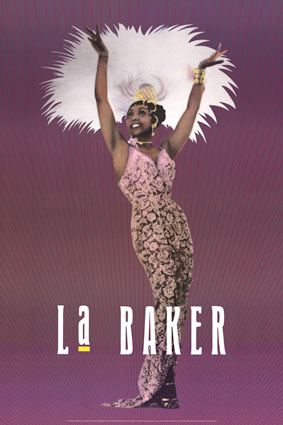
3.0 Black Film Evaluation #1 Due – Midnight Ramble: "Oscar Micheaux and the Story of the Race Movies" (Via email as of
Saturday, February 19th, 5:00pm)
3.1 Presentation: “The Black
Colossus”
3.2 Screening: That’s Black Entertainment
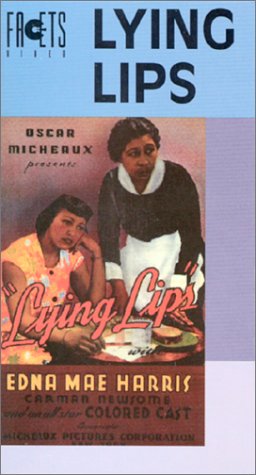
(1990) & Lying Lips (1939)
3.2
3.3 Journal Entry #7: “What Did I Know About Paul
Robeson Before This Course?”
3.4 Journal Entry #8: “My Response to Robert HIlburn of the LA Times: 'Ray Charles & The Grammys: Is The Media Out to Cheapen His Triumph?'”
3.5 Journal Entry #9: “What Contemporary Black Artists
Are Continuing the Traditions First Set by Robeson” (Note: Try to include a
photograph of one or more of the Actors/Actresses You mention in this
entry)
3.6 Bonus
Opportunity #2: To watch feature film
Dead Presidents at
Week 4
Hollywood

4.0 Black Film Evaluation #2 Due – That’s Black Entertainment & Lying Lips (Via
email as of Wednesday, February 23rd, 5:00pm)
4.1 Screening: Cabin In The Sky
(1943)
4.2
4.5
Journal Entry #10: "Am I Getting My
Money's Worth?" (Note: This Journal entry to reflect on special Black History Month recognition of and salute to the controversial set of twin brothers whose debut film Menace II Society set American on its ear -- The Hughes Brothers)
4.3 Journal Entry #11: “Black Film: A
Definition”
4.4 Journal Entry #12:
“Reflections: The High and Low Points of the 77th Academy Awards Held February 27, 2005”
4.5 Bonus
Opportunity #3: To watch feature film
American Pimp at

Week 5
Civil
Rights Finds a New Neighborhood to Move In: Hollywood
5
Wednesday, March 2, 2005
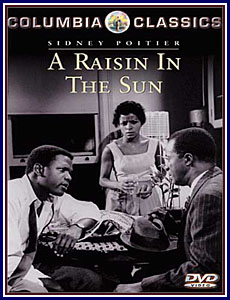
5.0 Black Film Evaluation #3 Due – Cabin In The Sky (Via email as of
6:00pm, Friday, March 4th -- Extended)
5.1 Black Film
Oral Project #1: African American Women and Sexuality in the
Cinema
5.2 Screening: Raisin in the Sun
(1961)
5.3
5.4 Journal Entry #13: “Looking Back: Of the Laundry
List of Black Caricatures Developed by Me and My
Classmates”
5.5 Journal Entry #14: “What Are the Aesthetic Qualities
and Production Values That Make Raisin in
the Sun a Cinema Classic?”
5.6 Journal Entry #15: “What I Will Most Remember from This Year's Academy Awards (And Why)”
5.7 The
2nd Critics’ Circle: A Response to Spike Lee’s She’s Gotta Have It (Note: Opens as of 4:00pm on March 2nd and closes as of
4:00pm on Friday, March 18th. Students in this Critics’ Circle are
expected to see the film She’s Gotta
Have It and to draw upon reading of Manatu’s African American Women and
Sexuality in the Cinema in developing their responses to the question from
instructor and comments by classmates.)

Week 6
“Sweet
Sweetback!” – Blaxploitation or Black Breakthrough?
Wednesday, March 9, 2005
6.0 Black Film Evaluation #4 Due – A Raisin in the Sun (Via email as of
Wednesday, March 9th, 5:00pm)
6.1 Black Film
Oral Project #2: Watching Race: Television and the Struggle for
"Blackness"
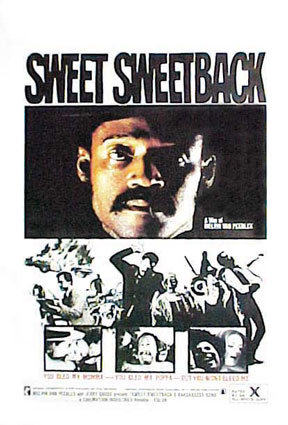
6.2 Screening: Sweet Sweetback’s Baadasss Song
(1971)
6.3
6.4 Journal Entry #16: “What Are the Qualities that Make
Sweet Sweetback A Revolutionary
Film?”
6.5 Journal Entry #17: “Between Jamie Foxx and Don Cheadle: My Choice Between These Two for the Best Acting Performance of the Year (And Why)?’
6.6 Journal Entry #18: “My Two Cents’ Worth:
Qualities That Must Be Present in a Good Performance”
Week 7
“It’s All Good!”: A Salute to the Legends of
African American Cinema
Wednesday, March 16, 2005
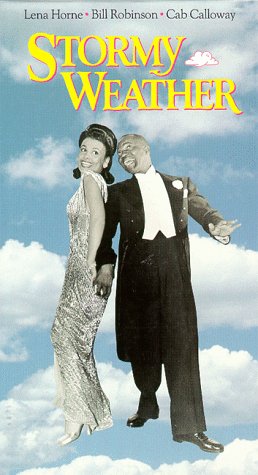
7.0 Black Film Evaluation #5 Due – Sweet Sweetback’s Baadasss Song (Via
email as of Wednesday, March 16th, 6:00pm)
7.1 Screening: Stormy Weather (1943)
7.2
7.3 Journal Entry #19: “Five Nominees to My Personal
Black Filmmakers Hall of Fame” (Note: Actors and Actress, Not Films –
JS)
7.4 Journal Entry #20:
“Five Nominees to My Personal Black Filmmakers Hall of Fame” (Note: Directors,
Not Films – JS)
7.5
Journal Entry #21:
"My Fifty Cents' Worth: "A Response to the "Keepin' It Pimpin Award' Controversy" (Note: Be certain to include 'Letters to the Editor' news clipping from Daily Sundial of this same date)
7.6 Submit Black Film Journal for Midterm Grade Check
(Due by or before 4:30pm on Friday, March 18th – No "Late" Journals Accepted)
Special Note –
Spring Break runs from March 21st-26th, No
Classes
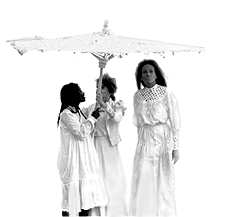
Week 8
Daughters
of the Dust: The Haunting Vision of Julie Dash
Wednesday, March 30, 2005
8.0 Black Film Evaluation #6 Due – Stormy Weather (Via email as of
6:00pm, Wednesday, March 30th)
8.1 Midterm Examination: Instructions to Be Posted on Email as of 6:00pm Monday, March 28th
(Take-Home Essay Examination, Large Blue Books Mandatory)
8.3 Screening: Daughters of the Dust
(1991)
8.4 Black Film
Oral Project #3: Sweet Sweetback’s
Baadasssss Song: A Guerilla Filmmaking
Manifesto.
8.5
Reading: “Julie
Dash,” pgs.232-243 from Why We Make Movies: Black Filmmakers Talk About the
Magic of Cinema; Part Two – “Producing the Spike Lee Joint,” pgs. 122-136
from Representing: hip hop culture and black
cinema; and "the Forties," pgs. 184-286 from Bright Boulevards, Bold Dreams: The Story of Black Hollywood.
8.6 Journal Entry #22: "Reflections: What I Learned from
Listening to My Classmates' Journals?
Week 9
New Kid on the Block: The
Black Arts Movement Comes to Hollywood
Wednesday, April 6, 2005
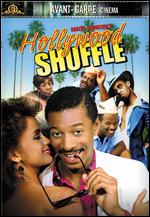
an insider’s look at Tinseltown but opened up the doors
for new wave of creative, imaginative black
filmmakers ranging from Keenan Ivory Wayans to Wesley
Snipes in the process.
9.0 Midterm Examination Due: By or before 4:30pm Friday, April 8th, in Instructor's Office or PAS Main Office, FOB Room 221. 9.1 Black Film Evaluation #7 Due – Daughters of the Dust (Via email as of
6:00pm, Wednesday, April 6th) 9.2 Black Film
Oral Project #4: Reel Racism: Confronting Hollywood's Construction of Afro-American Culture (Thinking Through Cinema)
9.3 Classmates’
Journals” 9.4 Journal Entry #23: “What Did I Know of Julie Dash
Before this Class? 9.5 Journal Entry #24: “New Perceptions this Course Has
Provided In Assessment and Evaluation of the Black Image on Television and the
Silver Screen” Week 10
Paradigm Shift: The
Documentarians As the New Truth Tellers 10)
Wednesday, April 13, 2005
10.0 Midterm Examination Results with Selected Essay Topic Readings
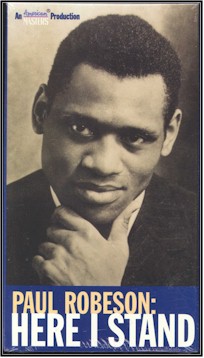
(To include Midterm Grade Progress Report) 10.1 Screening: Paul Robeson: Here I Stand
(1999) 10.2 10.3 Journal Entry #25: “Reflections: Of the Midterm
Report and My Plans for an Honor Grade in this Course” 10.4 Journal Entry #26: “Sex, Race and the Black Male
Image Onscreen” 10.5 Journal Entry #27: “A Film Concerning Black Life
I’d Like to See Reach the Silver Screen” 10.6 The
3rd Critics’ Circle: A Response to Boyz N The Hood (Note:
Opens as of 4:00pm on April 13th and closes as of 4:00pm on Tuesday,
April 26th. Students for this Critics’ Circle are expected to have
viewed John Singleton’s classic Boyz N
The Hood and to draw upon readings from Representing: hip hop culture and
the production of black cinema in developing their responses to the lead
question and the comments by classmates. )
11)
Wednesday, April 20, 2005
11.0 Black Film Evaluation #8 Due – Paul Robeson: Here I Stand (Via email
as of 6:00pm, April 20th) 11.1
Preliminary Black Film Case Study Proposal Due (Via email as of
6:00pm 11.2
Special Guest Presentation: "The Producer's Role in Hollywood" (Guest Lecturer: Mr. Robert Mitas, PAS 337 alumni and CSUN Graduate, 1993 and
Executive Assistant to Michael Douglass, Film & Television Projects) 11.3 Black Film
Oral Project #5: African Cinema: politics &
culture
11.4
11.5 Journal Entry #28: “From Tarzan to Amistad: Comments on the African Image
Seen on the Silver Screen”
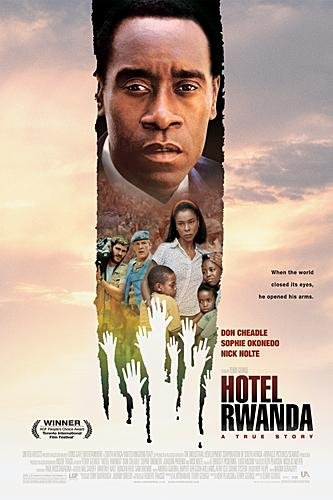
11.6 Journal Entry #29: “Hotel Rwanda: What Are the Truths We Can Learn from Our Filmmakers with a True Sense of Black Consciousness?”
11.7 Journal Entry #30: “Reflections: Is This Class Giving Me My Money's Worth (A Comment on the Guest Speakers)”
11.8 Bonus Opportunity #4: To
watch either the feature film Sankofa
(available on reserve at the Oviatt Library Media Center on 2nd
Floor or Hotel Rwanda and then prepare 500-750 word Evaluative Essay, due via email as of
9:00pm, Saturday, April 30th)
12)
Wednesday, April 27, 2005 the feature film written and developed by Bishop T.D.
Jakes which has opened the door to a plethora of creative possibilities where filmmaking and the Black
Religious Community is concerned. 12.0
Presentation/Discussion: “The Black Images Case Study: Format
and
Guidelines” 12.1
Screening: Woman Thou Art Loosed
(2004) 12.2
12.3
Journal Entry #31: “Did She’s Gotta Have It Make My List of
All-Time
Black Films?” 12.4 Journal Entry #32: “Should T.D. Jakes and the
Religious Community Leave Serious Filmmaking to Serious Filmmakers?: A Response
to Woman Thou Art
Loosed” 12.5 Journal Entry #33: “Can a Black Film Be Made
Without a Rap Soundtrack and Still Do Well?” 12.6 The
4th Critics’ Circle: Hip Hop and the Future of Black Cinema
(Note: This fourth and final Critics’ Circle opens as of 4:00pm April
27th and closes as of 4:00pm Tuesday, May 17th. For this
final Critic’s Circle, students are expected to have seen and to comment upon
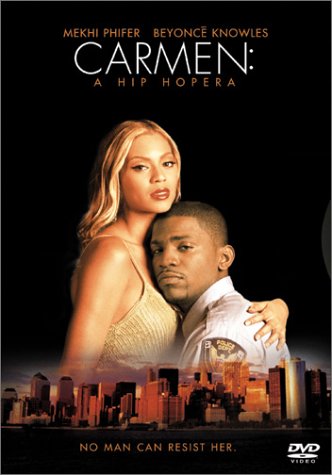
Carmen: The Hip Hopera featuring Mos Def and Beyonce or Brown Sugar as well as drawing upon
their readings from Representing: hip hop culture and the production of black
cinema as they respond to the major question and the comments of their
classmates.)
13)
Wednesday, May 4, 2005 13.0
Black Film Evaluation #9 Due – Woman Thou Art Loosed (Via email as of
6:00pm) 13.1
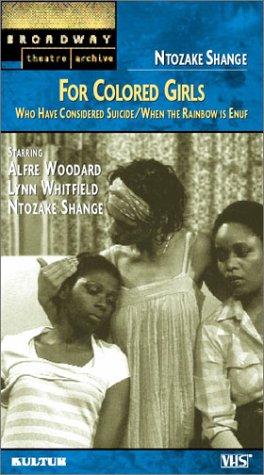
Screening: For Colored Girls Who Have Considered
Suicide/When The Rainbow Is Enuf (1982) 13.2 Black Film
Oral Project #6: Black Film As a Signifying Practice: Cinema, Narration and the African American Aesthetic Tradition 13.3
13.4
13.5 Journal Entry #34: “What Do My Friends Think About this
Course?” 13.6 Journal Entry #35: “Key Elements in Developing a Ghettocentric
Perspective” 13.7 Journal Entry #36: “My New and Revised List of the
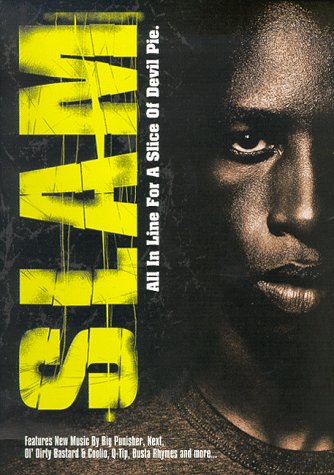
Top Ten Black Films of All Time (and the Reasons Why)” 13.8 Final Bonus
Slam (1998) (Due by Saturday,
May 14th, as of 9:00pm) 14)
Wednesday, May 11, 2005
14.0 Black Film Evaluation #10 Due – For Colored Girls Who Have Considered
Suicide/When The Rainbow Is Enuf (Via email as of Wednesday, May 11th at or before 6:00pm)
14.1 Special Guest Lecture/Presentation: "The Director as Planner and Visionary, or What Do To When You're Given a Chance to Work With Ntozake Shange" (Guest Lecturer: Oz Scott, Director, For Colored Who Have Considered Suicide When the Rainbow Is Enuff) Ray
(2004)
14.2 Screening: Ray
(2004) biopic Ray (2004) that earned kudos from
all segments of the public including the 2005 "Best Acting" Oscar to Foxx.
14.3 14.4 Journal Entry #37: “What Constitutes a Black Film:
Revisiting the Definition” 14.5 Journal Entry #38: “Reflecting On The Thoughts and Words of Oz Scott:" What Are the Social,
Political and Cultural Responsibilities of the Contemporary Black
Filmmaker?” 14.6 Journal Entry #39: “If I Were Teaching this PAS 337
Course…” 15)
Wednesday, May 18, 2005
15.0 Final Black Film Evaluation #11 – Ray Due (Via email as of
6:00pm, May 18th.) 15.1 Final Bonus 15.2 Discussion/Presentation: 15.3 15.4 Journal Entry #40: “What Has Been the Highlight of
this Course for Me?” 15.5 Prepare Cover Page, Table of Contents, Preface and
Final Journal Entry #41: “A
Letter to My Classmates: ‘Now That We’ve Scratched the
Surface’”
(Note: Black Film Journals are due at the start of class on Wednesday,
May 18th)
16)
Wednesday, May 25, 2005
16.0 Course Final Examination
(Note: Class Meets from 8:00pm-10:00pm) 16.1 Return and Review of Black Film
Journals 16.2 Exit Essay
Examination (Large Blue Book Required) 16.3 Black Film
Case Study Due (In PAS Main Office as of 4:30pm
Friday, May
27th. For early grade notification, enclose self-addressed
grade
Postcard with Case Study – No “Late” Case Study will be accepted –
JS) Important
Dates:
1)
Black Film Oral Project #1: African American Women and Sexuality in the
Cinema, Wednesday, February 23rd, 2005 2)
Black Film Oral Project #2: Watching Race: Television and the Struggle for
“Blackness,” Wednesday, March 2nd, 2005 3) Black Film
Images Journal Midterm Grade Check – Wednesday, March 30th
4) Midterm
Examination Due: Wednesday, October 29th 5)
Black Film Oral Project #3: Sweet Sweetback’s Baadassss’ Song: A Guerilla
Filmmaking Manifesto, Wednesday, March 30th 6)
Black Film Oral Project #4: Black Film
As a Signifying Practice: Cinema, Narration and the African American Aesthetic
Tradition
Wednesday, April 6th 7)
Black Film
Oral Project #5: African Cinema:
politics & culture, Wednesday,
April 20th 8)
Black Film
Oral Project #6: Black Film As A Signifying Practice, Wednesday, April 27th 9)
PAS 337 Exit Examination (Large
Blue Book Required): 8:00pm-10:00pm, Wednesday, May 18th
10)
PAS 337 Black Images Case Study
Due: 4:30pm, Friday, May 20th
Week 11
The
African Consciousness in African American Cinema
Production

Week 12
Beyond
the Black Experience to Issues Affecting All Humanity

Week 13
A
Liberated Black Female Sensibility Comes to the Silver
Screen
Week 14
Towards
a Cinema of Liberation

Week 15
Social
Realism and Black Images on the Silver Screen
Week 16
Finals