Pan African Studies 350
Advanced Writing
Spring Semester 2007-2008
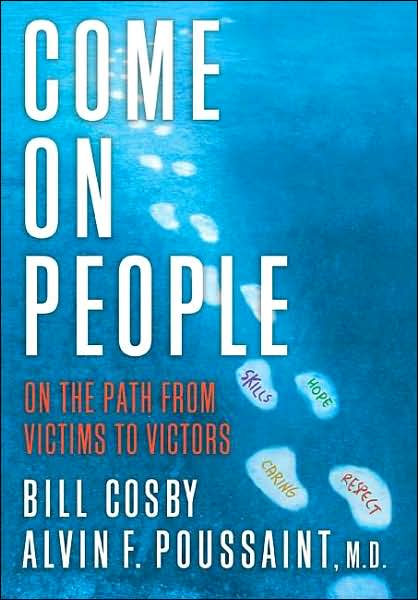
“Ever
since Bill Cosby delivered what might be called the historic Ghettoesburg
Address in
Ultimately, in a cultural war, you have to pick a side, and I suspect that most parents who truly love their children will consider straight talk of this nature not only appropriate but downright necessary in the face of the degeneracy directed daily at African-American youth in the battle for their bodies and minds.” – Kam Williams, Dallasblack.com on the book that the PAS 350 Advanced Writing students at CSU Northridge will be researching, analyzing and debating for the spring semester 2007.
Ticket #14850
Instructor:
Johnie H. Scott, M.A., M.F.A.
Units: 3
Associate
Professor of Pan African Studies
MWF, 11:00am-11:30am PAS
Writing Program Director
Manzanita 124
Santa
Susanna Bldg., Room 210
Email Office
Hours: MWF, 1:00pm-2:30pm or
Webpage By
Appointment
Telephone: 818-677-2289
Course Description:
Prerequisite – completion of the
lower-division writing requirement.
Advanced course emphasizing alternative strategies in expository writing skills
development. Focuses on such purposeful forms of discourse as reports, the
research paper, critiques, the essay examination, and selected forms of
correspondence. Cursory review of grammar, mechanics and syntax is offered as
needed. More intensive review of such basics is available on an individualized
basis in the
Required Textbooks:
1. Connelly, Mark, The
Sundance Writer/A Rhetoric, Reader, Handbook/3rd Edition,
Thomson Wadsworth, A part of the Thomson Corporation, Boston, MASS, © 2007;
2. Cosby, William and Alvin
Poussant, M.D., Come On People: On the Path from Victims to Victors,
Thomas Nelson,
3. Gibaldi, Joseph, The
MLA Handbook for Writers of Research Papers/Sixth Edition, Modern Language
Association of
Recommended:
4. Stern, Linda, What
Every Student Should Know About Avoiding Plagiarism, Pearson Longman, New
York, NY: © 2007 by Pearson Education;
Course Objectives:
The PAS 350 Advanced
Writing student meets ten (10) primary objectives in taking this course. Those
objectives are:
ü The course will increase the student’s ability to
analyze and comprehend university-level texts;
ü The course will expand and enhance, through culturally
diverse readings, the awareness of rhetorical strategies as well as the abuses
and uses of language;
ü The course will increase the critical reasoning skills
as they reflect the interdependence of critical thinking and written discourse;
ü The course will build confidence, reduce writing
anxiety, and strengthen personal voice;
ü The course will reinforce the theory and practice of
writing as a recursive process;
ü The course will help students understand the many
contexts for writing, including timed writing, and develop appropriate
strategies for the writer’s multiple purposes and audiences;
ü The course will develop fluency and style by
encouraging word and sentence variety, increasing vocabulary, and using Edited
American English;
ü The course will increase proficiency in research techniques
required by various University disciplines and familiarizes students with
appropriate style sheets;
ü The course will definitely facilitate the use of basic
computer applications – word processing, email, and Internet access – and other
technological media including HyperNews and PowerPoint; and
ü The course will promote writing as a means of
participation in democracy and as a tool for social change.
Course Requirements:
- Essay Examinations: One of the objectives in this course is for the
student to achieve a mastery of the timed essay examination. To this end,
there are four (4) timed essay examinations in this course. Those
examinations are all taken by the student using a large (i.e., 8 ½”x11”)
Blue Book. Each examination is timed at 60 minutes, i.e., the same amount
of time as the Upper Division Writing Proficiency Examination (UDWPE)
required of every CSUN student prior to actual graduation. The essay
examinations in this class include the Pre-Semester, Midterm,
12-Week and Common Essay. The Pre-Semester Examination does
not count towards the final course grade. The remaining essay exams, on
the other hand, are averaged together and count as one of the primary
grade factors for the class. These essay examinations are scored using the
same rubric as the UDWPE. The Pre-Semester and Common Essay serve as
one of the assessments for this course.
- Objective Examinations: Students in this class are assessed in regards
to the skills taught and/or reviewed in regards to college study skills,
grammar and mechanics, and the various writing conventions. The
assessments of those skills taught in the class take the form of objective
quizzes, a two-part Midterm Objective Examination and an Exit
Examination. These objective examinations are averaged together in forming
the second of the primary grading factors in the class.
- Critical Comprehension Homework Assignments: There are formal homework assignments in this
class which are based upon improving and increasing the student’s critical
thinking and reading comprehension skills. The majority of the assignments
are to be submitted using email. They are averaged together in
constituting the third primary grading factor for the course. It is to
be noted the homework assignments are all due as noted by the course instructor.
No “late” homework assignments will be accepted for grading.
Accordingly, an assignment due at 10:00am and not submitted for grading
until 11:00am, i.e., one hour later, will be judged as “failing” in that
the student failed to meet the submission deadline. It is to be understood
that developing a work ethic in which students successfully meet deadlines
is part of the assignment, and the course itself.
- The Write Time Discussion Forums: Located within WebCT, the Write Time
Discussion Forums provide students with opportunity to develop and enhance
information competence skills by using the very latest in distance
learning technology. The Write Time Discussion Forums find students
engaged as learning communities with the course instructor, employing critical
thinking skills with discourses about specific subjects that demand
development of argumentative writing skills in Forums built around central
issues and concerns in the African American community and, by extension,
the world community. Students typically have three (3) weeks in which to
respond to a writing prompt posted by the instructor as well as the
responses made to that same prompt by any two of their classmates for a
total of three (3) postings per Write Time Forum. Each of these Forums is
valued at up to 4.0 possible points, i.e., with up to two points for the
writing prompt itself and one point each for responding to the two
classmates. The five (5) Write Time Discussion Forums are then averaged
together in comprising the four primary grade factors for the Student
Portfolio. Students are graded for three postings per Write Time only,
with those being the first three made. Any postings beyond that will not
be counted – no exceptions! Postings made outside the stated deadlines
will not be counted for grade points as, again, an emphasis on meeting
deadlines under girds the course methodology;
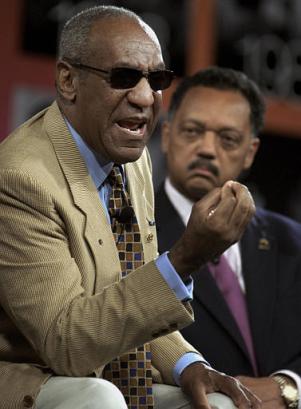
Noted philanthropist and comic Bill Cosby shocked the
nation with “Pound cake”
speech given on 50th anniversary of Supreme
Court’s Brown v. Board of Education
decision
outlawing school segregation. Speech is a centerpiece
for Write Time discussion forums.
- Advanced Writing Group Presentations: Each student participates in two (2) AW Group Presentations. The
presentations consist of 5-6 class members working jointly together on an
assigned topic which is presented to the class using Power Point and
complete with a formal handout for each student in the class. The
presentations are drawn from The Sundance Writer course textbook in
focusing on grammatical and mechanical conventions as well as in regards
to protocols for preparing and documenting the research paper. The
individual grade is based upon the student’s preparation and presentation
as well as the group’s overall effectiveness. These presentations are averaged
together in forming the fifth primary grade factor.
- Writing Topics: Students in this class will write and submit a
total of four formal essays within the modes of discourse – the personal
narrative, position, evaluative critique, and the problem-solution. In
addition, students learn the techniques of researching and writing the
Annotated Bibliography with what becomes a fifth formal writing
assignments. All of the papers are written according to the recursive
writing process of prewriting, rough draft, editing and revision, then
final draft with peer critiques and one-on-one conferencing. The papers
will be written in standard manuscript format, typewritten, double-spaced
with cover pages. The papers constitute the sixth factor in grading for
the class;
- The Capstone Paper: The assigned book for this course is Come On
People: On the Path from Victims to Victors by Bill Cosby and Alvin
Poussant. The Advanced Writing student prepares a critical analysis of
this work as the capstone paper. The paper is to be no less than
2,500 typewritten, double-spaced words (i.e., ten pages). It is to have no
less than fifteen (15) formal citations including four (4) drawn from
at least two (2) outside references such as published book reviews in
scholarly journals that are peer-reviewed. The Capstone paper must have a
“Works Cited” section. Citations and “Works Cited” are to be done
according to Modern Language Association guidelines. Due as noted in
the course schedule, no student shall receive a grade of “B” or higher in
this class who fails to submit this paper which constitutes the seventh
and final primary grading factor for the course – no exceptions!
Grading Policy:
Grades
in this class are administered on a “Plus-Minus” basis. The final course grade
in based on the average of the primary grade factors listed under “Course
Requirements” combined with any bonus points earned by the student. Grades are based on the following valuations,
as is the final grade that a student receives for work completed in the course.
The Bonus points include the utilization of the Writing Specialists in either
the
“A+”
= 4.3;
“A”
= 3.71 - 4.0;
“A-“=
3.5-3.7;
“B+”
= 3.3 – 3.49;
“B”
= 3.0 – 3.29;
“B-“=
2.7- 2.99;
“C+”
= 2.3- 2.69;
“C”
= 2.0- 2.29;
“C-“=
1.7- 1.99;
“D+”
= 1.3- 1.69;
“D”
= 1.0- 1.29;
“D-“=
0.7- 0.99; and
“Fail”
= 0.00 – 0.69.
While
a student cannot receive a final course grade of “A+,” that grading can be
applied to individual assignments (e.g., a writing assignment, a group
presentation, a posting in The Write Time, etcetera) presented by the student
during the semester in this class. The course final grade represents the
cumulative grade point average achieved by the student for the seven primary
grade factors described under the “Course Requirements.” To wit, Essay
Examinations, Objective Examinations, Advanced Writer’s Group Presentations,
Write Time Discussion Forums, Homework Assignments, Writing Assignments (i.e.,
Papers), and the Capstone Paper.
In
addition, the cumulative grade point average earned in this course also reflects
any earned "Bonus" points by the student to include exceptional in-class
performance, outstanding attendance, extra-credit assignments and special
projects. Those "Special Projects" include, but are not limited to, the student
memorizing and then reciting in class any one of the following poems (with
bonus points indicated in parenthesis following the particular work mentioned):
Maya Angelou, "Still I Rise (1.0
points) or "Phenomenal Woman" (1.0 points); Nikki Giovanni, "Ego Tripping" (1.0 points); Langston Hughes, "The Negro Mother" (2.0 points) or "Mother to Son" (1.0 points) and Margaret Walker, "For My People" (2.0
points). To qualify for bonus points where one of the aforementioned poems is
concerned, the student must contact the course instructor at least two class
meetings prior in requesting opportunity to present the poem which must be
fully memorized as no credit will be given for partial recitations.
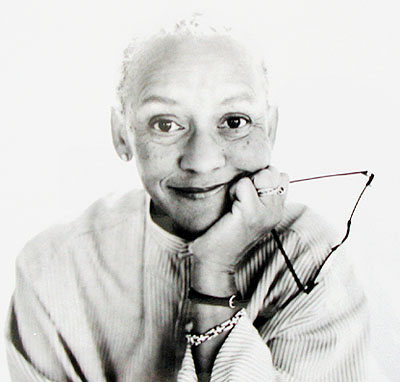
Acclaimed poet and educator Nikki Giovanni is among
those major writers PAS 350 students
Are given opportunity to not only study but gain
empowerment from through works such as
“Ego Tripping,” one of the poems students can learn
and use for bonuses in the class.
Lastly,
the course policy with regards to the grade of “Incomplete” is that stated in
the CSUN
Catalogue with special emphasis that, “An incomplete shall not be
assigned when a student would be required to attend a major portion of the
class when it is next offered. “In this instance, the incomplete grade shall
not be offered to any student whose semester performance has been at “C-“ or
lower or who has failed to complete “a substantial portion of the class
requirement.”
In
short, the grade of “Incomplete” shall only be given to the student whose
cumulative grade point average in the class is 2.3 or higher and is able to
provide a verifiable reason for missing one (1) important element in the class;
e.g., the Term Paper, the Exit Essay Examination, the Common Essay Examination
due to unforeseen circumstance and cannot make said grade factor up within the
actual semester. The grade of “Incomplete” will not, under any circumstances,
be awarded to a student doing below average work in the class or who stops
attending class with no verifiable, acceptable cause. The “Incomplete” Grading
Policy in this instance is the same as that stated in the 2006-2008
Undergraduate/Graduate Catalog of
Classroom Protocols:
All students are to read
“What A Professor Expects from Students: Survival Motions for Successfully
Getting Through College” found in the Appendix to The Effective Writer (Scott,
2005), pgs. 191-192 for in-depth discussion on this issue.
Course Schedule
“You were never expected to aspire to
excellence. Instead, you
were to make peace with being mediocre.”
-- James Baldwin, from “My Dungeon Shook”
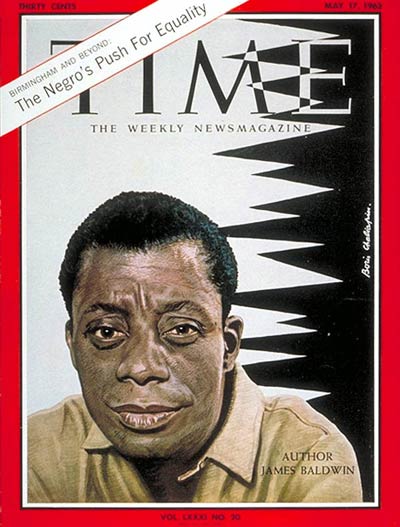
James Baldwin in 1958 (photograph by Mottke Weisman).His
seminal collection of essays
The Fire Next Time is among those works students in this course have an opportunity to
Learn from in studying the craft of writing with insight
and power.
Week 1 (January 22nd-26th,
2008) Orientation
1.
Wednesday, January 23, 2008
Orientation:
“Course Requirements”
2.
Friday, January 25, 2008
Orientation:
“The PAS 350 Grading System”
Announcement:
The Color Purple (Special Guest: Christopher Aston,
Office of Student Affairs and International Programs)
Week 2 (Jan. 28th-Feb. 2nd,
2008)) A Black History Month Treat
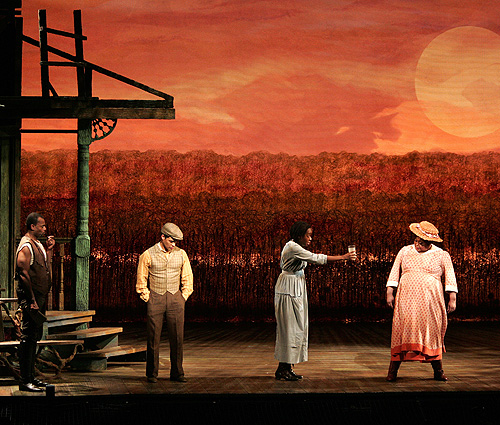
This scene comes from THE COLOR PURPLE, the
on February 1st and subsequently writing
Evaluative Essays on the experience underwritten by Discovery, Inquire and Grow
in Los Angeles (DIGLA) Program which has made it possible to enhance instruction
in Pan African Studies be exposing students in Writing Program to first-rate,
professional Black Theater.
3.
Monday, January 28, 2008 Pre-Semester
Essay Exam (Large Blue Book Required)
4.
Wednesday, January 30, 2008 Lecture:
“The Stages of Writing: Stage One – Creating”
Homework
#1: "Making Choices: The 9-Step Life Management
Protocol,"
Key Concepts and Discussion Questions.
An Overview,” pgs. 11-19 from The
Sundance Writer.
Write
Time #1 Opens (As of 10:00am with response to Writing
Prompt due
to be posted by/before 10:00am Wednesday,
February 6th and
responses to the same
postings by any two classmates due
by/before
10:00am Wednesday, February 20th.)
5.
Friday, February 1, 2008
HW#1
Due (Via email as of 10:00am)
Lecture:
“The Evaluative Mode of Discourse”
Homework
#2: The Looping Technique on "The Worst Commercial Ever Made"
Topic
– “The Worst Commercial Ever Made”
On People; Chapter 3, “The Writing Context,”
pgs. 21-36 from The
Sundance
Writer.
Writing Assignment #1: To do Looping
and Cubing techniques + 1,000-word
Evaluative Essay on The Color Purple – The
Musical (Note: Students to
leave at 5:30pm this same
Friday evening from CSUN to attend performance
of The
Color Purple at the Ahmanson Theater in
downtown
Week 3 (February 4th-9th,
2008) Stage One of Writing: The
Creating Techniques
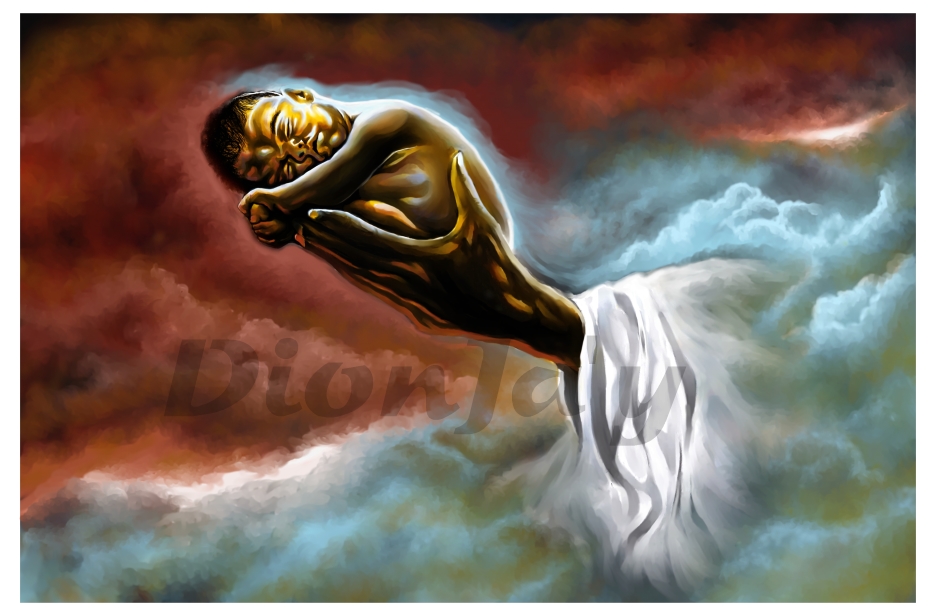
Each week in PAS 350 Advanced Writing course finds
students progressing from one stage to the next not only in terms of writing
abilities, but consciousness and self-realization as well.
6.
Monday, February 4, 2008 HW#2 Due (Handwritten at start of class)
Lecture/Presentation:
“The John Wooden Philosophy of Success and
How It Translates to Advanced
Writing”
Homework
#3: "The Cubing Technique" (Key Concepts
assigned by instructor)
7.
Wednesday, February 6, 2008 HW#3
Due (Key Concepts via email as of 10:00am with Cubing
to be handwritten and submitted at start of
class)
Lecture/Presentation: “The Creating
Techniques”
1st
Round Group Presentation Assignments: Group 1 – “Strategies for
Detecting
& Revising Fragments/Strategies for Detecting &
Revising Run-Ons and Comma Splices,” pgs..
842-845;
Group 2 – “Strategies for Detecting & Revising Faulty
Parallelism/Strategies for Revising Sentence Problems,” pgs.
847-852; and Group 3 –
“Strategies for Overcoming
Problems
with Subject-Verb Agreement/Strategies for
Avoiding Sexism
in Pronoun Use,” pgs. 853-859 (Note: All
presentations based upon The Sundance Writer
with each
group having 40-45 minutes in which to make presentation)
Reading:
Part 1 – “What’s Going On With Black?,” pgs. 16-30
from
Come On People “Critical Thinking: Seeing with a Writer’s
Eye,” pgs. 45-58 from
The Sundance Writer.
8.
Friday, February 8, 2008
Writing Assignment #1 Due (At start of class)
Lecture: “Considerations in Evaluative
Writing: Assessment with an
‘Insider’s Perspective”
Homework
#4: "Attention Grabbers: Essay Gambits" (Key Concepts & Discussion Questions)
Gambits” (Key Concepts & Discussion Questions)
Sundance Writer.
Week 4 (February 11th-16th,
2008) Fundamental Writing
Principles
.jpeg)
From John Singleton’s seminal Boyz in the Hood
to Will Smith’s the Pursuit of Happyness and on through Bill Cosby’s Come
On People, there can be no mistaking the importance of strong, positive
male adult role models in the growth and development of healthy, responsible
black male youth which is one of the themes
undergirding the teaching of this course preparing
students majoring in Pan African Studies and looking to take on roles of
responsibility in Black communities across the nation.
- Monday, February 11,
2008 Homework
#4 Due (Via email as of 10:00am)
Lecture:
“Basics of Evaluative Writing: Moving from Protagonist to
Antagonist”
Homework #5: Effective Listening and Note-Taking Techniques
(Key Concepts and Discussion
Questions”
On People.
Faculty-Student
Clinical Conferences
9.
Wednesday, February 13, 2008 Homework
#5 Due (Via email as of 10:00am)
Lecture:
“The Principle of Unity in Writing: Focus on Paragraphs”
Homework
#6: "The Power Words"
Sundance Writer.
Faculty-Student Clinical Conferences
10.
Friday, February 15, 2008
Homework
#6 Due (Via email as of 10:00am)
Lecture:
“The Principle of Unity in Writing – Levels of Support”
Homework
#7: Writing Activities 1-5, pg. 88 from The Sundance
Writer.
from Come On People; “Developing and Supporting a
Thesis,” pgs.
88-91 from The Sundance Writer.
Faculty-Student Clinical Conferences
Week 5 (February 18th-23rd,
2008) Writing Principles –
Unity and Coherence
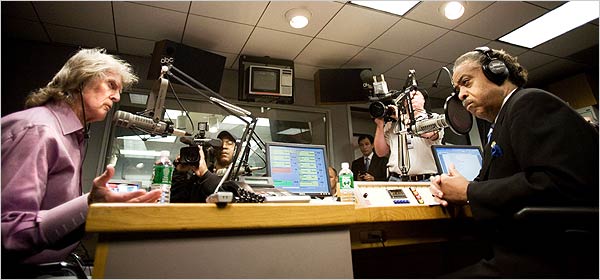
Talk radio “Shock Jock” Don Imus, left, is shown here
appearing on Rev. Al Sharpton’s program in aftermath of the controversial,
racist remarks made by Imus about the Black members of the Rutgers University
NCAA women’s basketball team after that group’s 2nd place finish in
the NCAA’s women’s championship tournament where he referred to these young
ladies as “nappy-headed ho’s.”
11.
Monday, February 18, 2008
Homework
#7 (Due via email as of 10:00am)
Lecture:
“The Principle of Unity in Writing: Levels of Support in Longer
Compositions”
Homework
#8: "The Fire This Time" by Johnie, Key Concepts &
Discussion Questions.
Sundance Writer.
12.
Wednesday, February 20, 2008
HW#8
Due (Via email as of 10:00am)
Lecture:
“The Principle of Unity in Writing: From Topic Sentences to
Thesis Statements”
Return of Pre-Semester Essay Examinations
for Revisions in
Closing of Write Time #1 (As of
10:00am)
13.
Friday, February 22, 2008 Lecture:
“The Principle of Coherence in Writing: The Clarifying Devices”
Write Time #2: “The Power of Language: Of
Don Imus and the Political
Correctness
in Using the N Word” (Opens as of 1:00pm,
Friday, February 22nd and closes as of 1:00pm, Saturday,
March 15th, 2008)
Homework
#9:“Letter to Ho Chih Minh, April 10, 1967 by President Lyndon
Baines Johnson and “A Short Story about the Vietnam War
Memorial,” pgs. 37-41 followed by answering Questions
1-6,
pg.
42 from The Sundance Writer.
People.
Week 6 (February 25th-March 1st,
2008) Critical Reasoning and Writing
in Problem-Solving
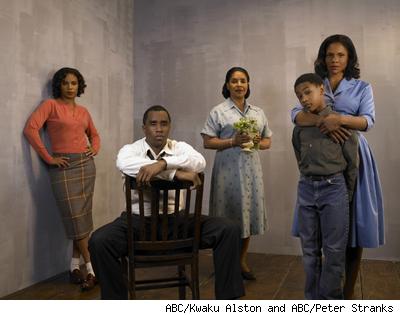
Monday night, February 25th, finds ABC-TV
having a World Premiere showing of play Raisin In The Sun starring Sanaa
Lathan, Phylicia Rashad and Sean Combs in 2004 production which received 11
Tony Award nominations for Lorraine Hansberry’s searing examination on the
trials and tribulations facing African American families with PAS 350 students
viewing the film and then writing Problem-Solution analyses of the work and
issues contained therein.
14.
Monday, February 25th, 2008 Homework
#9 Due (Via email as of 10:00am)
Lecture/Presentation:
"The Problem-Solution Mode of Discourse"
Writing
Assignment #2: Looping and Cubing Techniques + 1,000-word
Problem-Solution Essay on Raisin in the Sun
(ABC-TV World Premiere, Feb. 25,
2008).
Reading:
Chapter 4, “Critical Thinking: Seeing With A Writer’s
Eye,” pgs.
45-49 from The
Sundance Writer.
15.
Wednesday, February 27th, 2008
Pre-Semester
Essay Exam Rewrite Due (At start of class with Blue Book
and
Writing Center Tutor’s Signature)
pgs.
50-53 from The Sundance Writer.
Homework
#10: Writing Activity #2, pg. 56 from The
Sundance Writer.
16.
Friday, February 29th, 2008
Lecture/Presentation:
"Organization" (Power Point)
On People; Chapter 4, “Critical
Thinking: Common Errors in
Critical Thinking,” pages. 54-56 from The
Sundance Writer. Week 7 (March 3rd-8th,
2008) The Argumentative Mode of Discourse In The Miseducation of the Negro, Noted
historian Carter G. Woodson noted that “The Negro has been so enslaved in the
mind until he instinctively looks for the back door rather than the front. And
where there is no back door to enter, he will make one.” These are the
psychological chains that PAS 350 seeks to break. 17.
Monday, March 3rd, 2008 HW
#10 Due (Via email as of 10:00am)
1st
Round – Group Presentations: Group 1, "Strategies for Fragments, Run-
Ons and Comma Splices" (Anthony Douglas, Shanna Hudson
and Von McGee. Each group has 40-45 minutes in
which to
make its
presentation.
18.
Wednesday, March 5th, 2008
WA#2 Problem-Solution Essay Due(At
start of class with creating techniques attached).gif)
1st Round – Group Presentations:
Group 2, "Strategies for Faulty Parallelism
and Sentence Problems" (Jessica Driscoll,
Christina Kiflom and
Irvin Lackey). Each group with
40-45 minutes to present.
Chapter 25, “Cause and Effect,” pgs. 587-594
from The Sundance Writer.
Homework
#11: “Who Killed Benny Paret?” by Norman Cousins,
pgs. 603-605,
Understanding
Context, Evaluating Strategy and Appreciating
Language, pg. 605 from The Sundance
Writer.
19.
Friday, March 7th, 2008 HW#11
Due (Via email as of 10:00am)
Writing
Assignment #3: To do Looping and Cubing + 1,000-word Argumentative Essay on Assigned Topic.
Sundance Writer.
Homework
#12: “Why Schools Don’t Educate” by John Taylor GATT, pgs. 606-608,
Understanding
Context/Evaluating Strategy/Appreciating
Language, pgs. 608-609 from The
Sundance Writer.
Week 8 (March 10th-15th,
2008) Midterm Examinations
20.
Monday, March 10th, 2008
HW#12
Due (Via email at start of class, 10:00am)
Midterm
Essay Examination (Large Blue Book Required)
Persuasion Checklist/pg. 692”
from The Sundance Writer.
21.
Wednesday, March 12th, 2008
Midterm
Objective Exam: Part 1 – Terminology (45 mins.)
You Deserve,”
pgs. 133-158 from Come On People
22.
Friday, March 14th, 2008
WA#1 Evaluative Essay Revision Due(At
start of class with Original Draft and Writing Tutor's Signature
Midterm
Objective Exam: Part 2 –Writing Conventions
Homework
#13: Writing Activity #1-5, pg. 637 from The
Sundance Writer.
Closing of Write Time #2 (As of 2:00pm,
March 14th, 2008))
Write Time #3: “Of Bill Cosby and the
‘Pound Cake’ Speech” (Opens as of 2:00pm,
Saturday, March 15th with students having up through 2:00pm, Friday,
March 28th to respond to original
writing prompt and then up through
2pm, Sunday, April 13th,
to respond to any two classmates) Please
note that Spring Break is March 16th-23rd – Campus will
be closed with no classes.
Week 9 (March 24th-29th,
2008) Midterm Objective Exams A scant 143 years have passed since the Emancipation
Proclamation was signed and enforced with Civil War victory putting an end to
the Slave Trade and the need for that Underground Railroad Blacks took during that
time to freedom. Young Black America’s challenge is to carry the torch forward
and teach. 23.
Monday, March 24th, 2008
HW#13 Due (Via email as of 10:00am)
Discusssion: "Track-Switching -- The 3rd in Group of Expanded Techniques"
Discussion:
The Argumentative Essay (Writing Assignment #3)
Homework
#14: "An Idea Whose Time Has Come: Whites Have a Moral
Obligation to Recognize Slavery's Legacy" by Manning Marable, pgs.
679-681, "Understanding Context, Questions
1-6, pg. 681 and "Evaluating Strategy,"
pg. 682 from The SundanceWriter.
.jpeg)
24.
Wednesday, March 26th, 2008
Homework
#14 Due (Via email as of 10:00am)
Homework
#15: "A Childish Illusion: Reparations Enshrine Victimhood, Dishonoring Our Ancestors" by Shelby Steele, pgs. 683-685, Understanding Context
25.
Friday, March 28th, 2008 Discussion:
"Responding to Bill Cosby's 'Pound Cake' Speech"
Lecture:
“Writing for Power and Flair: The Function Paragraph (Part 1)”
People
Week 10 (March 31st-April 5th,
2008) Critical Thinking and Writing
.jpeg)
Note:
Monday, March 31st, is Cesar Chavez Day – An
26.
Wednesday, April 2nd, 2008
Homework
#15 Due (Via email as of 10:00am)
Writing
Assignment #3 Due (At start of class with creating techniques)
Homework
#16: Writing Activity #1-6, pg. 642 from The
Sundance Writer.
27.
Friday, April 4th, 2008 HW#16
Due (Via email as of 10:00am)
Homework
#17: Questions for Review and Revision and Writing Suggestion #1, pg.
649 from The Sundance Writer.
2nd
Round –“Writing the Research Paper” Presentation Assignments: Group 1,
“Strategies for
Using Sources,” pgs. 769-777 (Jessica Driscoll and
Anthony
Douglas); Group 2, “Strategies for Documentation: The MLA
Style, pgs.
777-797 (Christina Kiflow, Von McGee and Nicole Turner);
and Group 3, “Strategies for Documentation: The
APA Style,” pgs. 797-
820
(Shanna Hudson, Irvin Lackey and Monica Youngblood) with all
presentations
from The Sundance Writer. Note each group has 45-60
minutes
in which to present using Powerpoint and handouts.
Week 11 (April 7th-12th,
2008) The
Evaluative Essay: Taking a Stand, Giving an Informed Opinion

For those who lived in the 9th Ward of New
Orleans, this was a familiar sight in aftermath of Hurricane Katrina and the
Great Flood of 2005. PAS 350 Advanced Writers are challenged to not only master
grammar and mechanics, but put those skills to work in becoming problem solvers
for those who lack the skills like the many thousands trapped by the storms and
then victimized afterwards by the government.
28.
Monday, April 7th, 2008
HW#17
Due (Via email as of 10:00am)
WA#2 Revision Due ((At start of class with 1st draft and Tutor's signature)
Return
of WA#3 for Revisions
Peer
Critiques of Selected Personal Experience and Evaluative Essays
Objective Quiz Results and Week 11 Progress Report
Screening:
When the Levees Broke: A Requiem in Four Acts
(On reserve at
Eye,’” pgs. 251-261 from The
Sundance Writer.
29.
Wednesday, April 9th, 2008
Presentation:
“The Track-Switching Technique” Presentation/Lecture:
"The Function Paragraph"
Reading:
Chapter 18, “Description: Presenting Impressions,” pgs.262-310 from
The Sundance
Writer. Closing of Write Time #3 (As of 2:00pm)
Write
Time #4: “Yes We Can – The Remarkable Campaign of Barack
Obama” (Opens as of 4:00pm today, April 9th, with students
responding to original writing prompt by 9:00pm, Friday,
April
16th and then having
one week in which to respond to
any two classmates with this Write Time closing
effective
9:00pm, Friday, April 25th.) 30.
Friday, April 11, 2008 Guest Presentation:
"Surviving in Unfriendly Territory: Coping with the University Experience as Underrepresented Students" (Reading of Essays and sharing of personal testimonies by Mr. Yonas Ambaw, Mr. Marquis Brignac and Ms. Britni Cardosa, former PAS 350 students and graduating CSUN students/PAS Majors) WA#4:
To do Looping & Track-Switching + 1,000-word Argumentative Essay on Assigned Topic based upon When the Levees Broke.
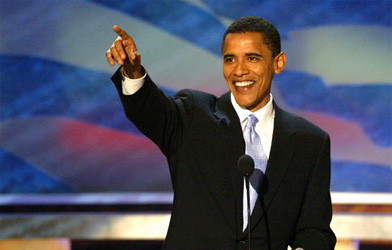
People Illinois Congressional Senator Barack Obama’s history-making
campaign to be nominated as the Democratic Party candidate for President of the Americans, but millions of Americans from sea to
shining sea while posing the very real Question for PAS 350 Advanced Writing students to
consider: “Can an African American indeed Make it to the White House?” Week 12 (April 14th-19th,
2008) Writing The
Research Paper One of the fundamental lessons youth must not only
learn, but appreciate, is that very few are self-made; moreover, that it is a
proud legacy knowing that they stood on the shoulders of giants, their parents
and ancestors who always taught, “You are to go farther, reach higher than I!” 31.
Monday, April 14, 2008
Guest Presentation:
"Some Make It, Some Don't: The Obstacles That Seek to Deny Minority Student Achievement" (Guest Presentors -- Ms. Salomae Kpohanu, CSUN Graduating Senior and Mr. Corey Manlove, CSUN Alum, CTVA Major, Class of 2006)
Return
of WA#2 for Revisions (To be done at LRC with Writing Specialists)
32.
Wednesday, April 16, 2008 Lecture:
"The Function Paragraph: Crucial Considerations in Developing a Writing Persona or the Importance of Attitude, Movement and Consciousness in Written Discourse"
Return
of WA#3 for Revisions (To be done at LRC with Writing Specialists)
.gif)
33.
Friday, April 18, 2008 WA#4
Due (At start of class with creating techniques attached)
“Conducting Research,” pgs.
729-764 from The Sundance Writer.
Week 13 (April 21st-26th,
2008) The
Proper Conduct of Research and Documentation
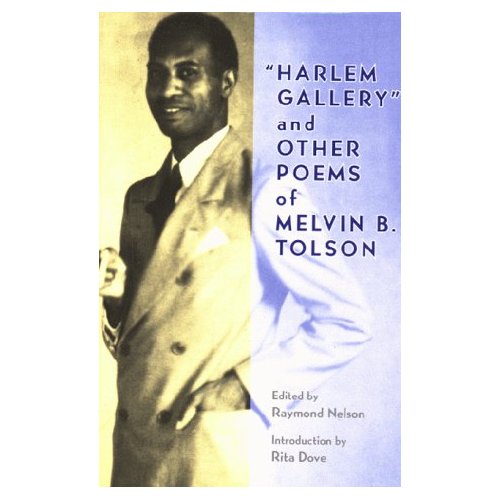
While Denzel Washington should be given credit for "re-discovering"
Melvin Beaunorus Tolson as
the educator-scholar
that he
was at
greater achievement
as one of the nation's major poets, considered a "modernist" alongside T.S.
Eliot and Ezra Pound..
34.
Monday, April 21, 2008 WA#2 Revision Due (At start of class with creating techniques attached)
Writer.
35.
Wednesday, April 23, 2008 WA#3 Revision Due (At start of class with creating techniques attached)
Writer.
36.
Friday, April 25, 2008 Return
of WA#4 for Revisions (To be done at
Write
Time #4 Closes (As of 9:00pm)
Write
Time #5: “What It Will Take to Bring
Respect to Black Studies” (Opens as of
4:00pm today, April 25th, responses to original writing prompt are due by 4:00pm, Wednesday, April 30th, then having one week in which to respond to any two students with this Write Time closing 4:00pm, Friday, May 9th.)
Week 14 (April 28th-May 3rd,
2008) The Annotated Bibliography
.gif)
Pan African Studies teaches its students,
unapologetically, that their world is much larger, and always has been, than
any man-made ghetto.
37.
Monday, April 28, 2008 Presentation/Lecture:
"Writing the Annotated Bibliography" Writing
Assignment #5 Annotated Bibliography Groups: AB#1: Louis Armstrong
(Jessica Driscoll and Irvin Lackey), AB#2: A. Philip Randolph
(Shanna Hudson and Anthony Douglas, AB #3: Rita Dove
(Monica
Youngblood and Von McGee), AB#4: Shirley Chisholm
(Christina Kiflom and Nicole Turner). 38.
Wednesday, April 30, 2008 All Final WA Revisions
Revisions Due (At start of class with original drafts and Tutor’s Signature)
39.
Friday, May 2, 2008
Guest Lecture & Reading: "Sweet Potato Pie
Under the Broiling Sun" (Guest Lecturer:
James Golden, Poet and Author, CSUN Alum)
Week 15 (May 5th-10th,
2008) Review Week
.gif)
As students near the end of this course, they are
given this image of the Black Man
Carrying the world…and left to wonder why it is no
important to develop a cosmogony
That speaks to Black achievement as a significant
contributor to world civilization.
40.
Monday, May 5, 2008 WA#5
Annotated Bibliographies Due (At start of class)
41.
Wednesday, May 7, 2008 Guest
Lecture: “Writing About Literature” (Dr. Tom
Spencer-Walters, Chairperson,
Pan African Studies Department and Author)
Week 16 (May 12th-17th,
2008) Finals Week
.jpeg)
Communities are only as healthy and strong
as the individuals upon whom they are built.
42.
To Be Announced Exit Essay
Examination (Large Blue Book Required)
10:15am-12:15pm Return of PAS
Advanced Writing Student Portfolio (i.e., Essay
Exams, Objective
Exams, Papers, etcetera)
43.
Friday, May 16, 2008 PAS 350 Capstone
Paper Due (In PAS Main Office by or
before 4:30pm –
Santa Susana Bldg. Room 221)
Student Learning Outcomes for PAS 350:
The
PAS 350 Advanced Writing student will realize 18 outcomes as a direct
result of meeting the stated objectives for this course. Those outcomes include
the following:
ü A developed facility at examining explicit
relationships that exist between general concepts and specific details;
ü An enhanced understanding of the relationships among
sentence structures, word choice, and meaning;
ü The ability to read critically about ideas and issues,
including multicultural perspectives; analyze and synthesize information; draw inferences
from data; draw conclusions from arguments; and distinguish fact from fiction;
ü The ability to analyze message, audience, language
choice, tone, purpose, and author’s ethos in selections from a text;
ü The ability to comprehend and critically assess
writings that reflect multicultural images and perspectives;
ü The ability to recognize logical fallacies, biased
language, idioms, slang, jargon, and tone;
ü The ability to develop ideas with logical support,
including the use of informed opinion, facts, and their interpretations;
ü The ability to write critically about ideas, including
multicultural perspectives; analyze and synthesize information; draw inferences
from data; draw conclusions from arguments; and distinguish facts from opinion;
ü The ability to write both independently and in
collaboration with others;
ü The ability to assess and address appropriately the
character and needs of an explicit audience;
ü A facility in using different genres in writing (e.g.,
autobiography, position, problem-solution, argumentative and case studies) for
different academic disciplines or discourse communities;
ü The ability to apply the concepts of
subordination/coordination; abstract/concrete words; general/specific examples;
and cohesion;
ü Development of vocabulary appropriate to the subject
and/or topic;
ü The ability to effectively use the syntactic and
mechanical conventions of Edited American English (.g., grammar, usage,
mechanics, and diction);
ü The ability to integrate one’s own ideas with those of
others, using appropriate documentation;
ü The ability to use a style sheet consistently, such as
MLA or APA style sheets;
ü An awareness and appreciation of diverse cultures and
contexts of human experience;
ü The ability to show ways that writing can contribute
to society and be an instrument for change; and
ü Lastly, the student will be able to demonstrate the
ability to write for possible publication.
Student Information Competence (IC) Outcomes for PAS
350:
The
PAS 350 Advanced Writing student may expect to experience four specific
outcomes as a direct result of meeting the stated objectives for this
course. Those outcomes include the following:
ü The ability to effectively use library and online
resources individually and in concert with others;
ü Knowledge and mastery of basic word processing, email,
WebCT, PowerPoint and the Internet;
ü The ability to integrate one’s own ideas with those of
others, using appropriate documentation with the varied formats of information
technology; and finally,
ü The ability to use computer technology in the writing
process, including research and documentation.
How Met (Assessment):
- Pre-Semester, Midterm and Common Timed Essay
Examinations;
- Objective Quizzes, Midterm Objective Examination
and Exit Essay Examination on grammar and mechanics of writing;
- Formal Homework Assignments submitted via
electronic mail (i.e., Information Technology);
- Advanced Writing Group Presentations using Power
Point to discuss Grammar and
Mechanics of Writing (e.g., The Structure of Sentences) , formats for
documenting research (e.g., Modern Language Assn.) with these Group
Presentations providing another method for assessing information
technology skills;
- Four expository papers involving various
modes of written communication including personal narrative, evaluative, problem-solution
and argumentative essays;
- The Write Time Discussion Forums afford
for students to become orientated to the WebCT and HyperNews at same time
they are learning additional Information Age Technology skills through an
ongoing learning process.