


Abstract:
We are interested in estimating the weights of  objects with
  weighings on an imperfect one-pan scale. These weighing design problems are analyzed through the general linear model. The standard form of this model is
 , where
  is the data vector,
  is the unknown parameter vector,
  is the design matrix, and
  is the error vector. The accuracy of the estimates of the unknown weights is determined from the design matrix; consequently, there is interest in choosing in an optimal fashion.
Under certain assumptions about the distribution of the errors of the scale, we want to find the smallest confidence region for the true weights. This goal is achieved when the determinant of the information matrix
is the error vector. The accuracy of the estimates of the unknown weights is determined from the design matrix; consequently, there is interest in choosing in an optimal fashion.
Under certain assumptions about the distribution of the errors of the scale, we want to find the smallest confidence region for the true weights. This goal is achieved when the determinant of the information matrix  , is maximized, and this is called the D-optimality criterion. The
D-optimal results are known for
, is maximized, and this is called the D-optimality criterion. The
D-optimal results are known for
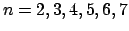 , and for
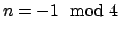 when is large.
In this talk I will present many of these known results, and some new results using simulated annealing, a generalization of the Monte Carlo method that has been used in various combinatorial optimization problems.
when is large.
In this talk I will present many of these known results, and some new results using simulated annealing, a generalization of the Monte Carlo method that has been used in various combinatorial optimization problems.
Andrea Nemeth received her undergraduate degree in mathematics from CSUN.
She is an alumna of the NASA/PAIR program and currently a second year graduate student at CSUN and a FERMAT Fellow. Her talk is based on work for her thesis with Prof. Mark Schilling.