
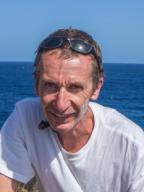
Biography
Education
Ph.D. Glasgow University
1. Research Interests
Research in my lab focuses on the physiological ecology of tropical reef corals and I work at the organismic, population, and community levels. My research program is structured into two thematic areas.
First, I study the ecology and long-term dynamics of coral reefs to identify temporal trends and provide an ecological context within which mechanistic research can be designed. Over the last 30 years, most of my ecological research has taken place on the shallow reefs along the south coast of St. John, US Virgin Islands (https://mcr.lternet.edu/vinp/overview), and on the coral reefs around Moorea, French Polynesia (https://mcr.lternet.edu/). In St. John, the coral reefs are protected within the VI National Park and Biosphere Reserve and I work closely with biologists and resource managers associated with the Virgin Islands National Park to study long-term changes in coral reef communities, and test hypotheses that shed light on the processes driving these changes. In 2013, I began a new project in collaboration with Dr. Howard Lasker (U of Buffalo) to evaluate how the octocoral communities have changed in concert with changes affecting stony corals and macroalgae. In Moorea, I serve as a co-PI on the Moorea Coral Reef LTER which has the objective of quantifying long-term changes in coral communities within a multidisciplinary context created by the large team of scientists associated with the project. My research in Moorea provide a rich context describing the dynamics of coral reefs that are strongly affected by routine physical forces (e.g., storm waves), and periodic disturbances such as the recent outbreak of the crown of the thorns seastar, Acanthaster planci, that decimated these reefs by 2010, and cyclones, like one that hit Moorea in 2010. Remarkably, the outer reefs have staged a phenomenal recovery from both of these events, and by 2016, areas of the outer reef had > 50% coral cover.
Second, I study the biology of individual corals to better understand their basic functionality and establish mechanistic links between organism performance and community dynamics. My work in this area continues to be strongly influenced by the patterns emerging from my time-series research, but recent studies have focused on evaluating the response of corals to ocean acidification (increasing seawater pCO2) and climate change (rising seawater temperature). I share funding with Robert Carpenter (http://www.csun.edu/science-mathematics/biology/robert-c-carpenter) to study the effects of these agents on reef corals and coral reefs in Moorea, and to this end, we have been conducting a program of experimentation utilizing common gardens, shore-based mesocosms and flumes, and in water incubations using field-deployable flumes.
2. Teaching
Undergraduate, on campus
- Invertebrate Biology (Biol 313)
- Physiological Ecology (Biol 422)
Undergraduate, field classes
- Catalina Science Semester. This is a 15-week residential class at Santa Catalina Island, which usually is taught every one every two years in the Fall (next offering F2018)
Graduate
- Seminar in ecology (Biol 691)
I am deeply committed to graduate training, and try to maintain a lab with 2-5 graduate students engaged in field-oriented, coral ecophysiological projects. I seek graduate recruits with the following backgrounds and skills:
- a strong commitment to a marine biology career
- BS degree with emphasis on organismic and ecological topics
- undergraduate coursework that includes invertebrate zoology, marine ecology, fieldwork, and research skills
- strong experience at a marine lab/field station
- experience with tropical coral reefs is strongly preferred
- ability to scuba dive within an AAUS framework is favored
3. Outreach Activities
My lab has strong participation in outreach activities at local schools in California, as well as with children in Moorea and St. John. We work with two local schools – Viewpoint School (https://www.viewpoint.org) and Campbell Hall (https://www.campbellhall.org) -- to support marine biology clubs, independent study opportunities for children, opportunities for fieldwork and study in the tropics and at Santa Catalina Island, and research opportunities for teachers
Publications arising from outreach activities
- Chelsey Wegener, Bradley Martin, Craig Didden, Peter J. Edmunds. Overgrowth of tropical octocorals by milleporid hydrocorals: recruitment or pursuit? Bulletin of Marine Science (in review, October 2016) 2015
- Didden C, Edmunds PJ. Experiential ecological investigations as a vehicle coupling teaching and research in high schools and universities. The American Biology Teacher 78: 278-284 DOI: 10.1525/abt.2016.78.4.278 2014.
- Lenz EA, Brown D, Didden C, Arnold A, Edmunds PJ. The distribution of hermit crabs and their gastropod shells on shallow reefs in St. John, US Virgin Islands. Bulletin of Marine Science 90: 681-692. doi.org/10.5343/bms.2013.1049 2010
- Edmunds PJ, Ross CLM, Didden C. High, but localized recruitment of Montastraea annularis complex in St. John, United States Virgin Islands. Coral Reefs 30: 123-1304.
4. Current Research Funding
- (1) LTER: MCR III: Long-Term Dynamics of a Coral Reef Ecosystem (OCE 16-3796) [with RC Carpenter, and R. Schmitt and S, Holbrook at UCSB]
- (2) RAPID-The implications of El Nino-related bleaching on coral recruitment in Moorea (OCE-16-19893)
- (3) Collaborative research: RUI-Ecology and functional biology of octocoral communities (RET Supplement) (OCE 14 39173)
- (4) Collaborative Research: Ocean Acidification and Coral Reefs: Scale Dependence and Adaptive Capacity (OCE 14-15268) [with RC Carpenter]
- (5) RUI-LTREB Renewal: Three decades of coral reef community dynamics in St. John, USVI: 2014-2019 (DEB 13-50146)
- (6) Collaborative research: RUI-Ecology and functional biology of octocoral communities (OCE 13-32915)
5. Research Web Sites
St. John
Moorea
Ocean acidification research:
Data Archives
St. John:
Moorea:
6. Principal Collaborators
- Drs. Russell Schmitt and Sally Holbrook (University of California at Santa Barbara) - ecology of coral reefs in Moorea
- Dr. Robert Carpenter (CSUN) - ecology of coral reefs in Moorea and the Caribbean
- Dr. Ruth D. Gates (University of Hawaii) http://gatescorallab.com - physiology and molecular biology of reef corals
- Dr. Scott Burgess (Florida State University) - coral population modeling, coral ecophysiology
- Dr. Don Levitan (Florida State University) - Diadema ecology, reef ecology
- Dr. Howard Lasker (U of Buffalo) - octocoral ecology in St. John
- Dr. Kevin Gross (North Carolina State University) - ecological modeling, ocean acidification
- Dr. Ilsa Kuffner (USGS) - coral reef ecology
- Dr. Lorenzo Bramanti (Observatoire Océanologique de Banyuls, Banyuls-sur-mer, France - octocoral ecology in St. John, reef ecology
7. Ongoing and Recent Postdoctoral Scholars
- Dr. Georgios Tsounis
- Dr. Lorenzo Bramanti
- Dr. Emily Shaw
- Dr. Steve Doo
- Dr. Steeve Comeau
- Dr. Vivian Cumbo
- Dr. James Guest
8. Graduate Students
My graduate students work on coral reef research, and develop their own independent research within the umbrella themes of ongoing projects. Recent projects have addressed: (a) morphological variation and scaling in octocorals, (b) phenotypic plasticity and larval physiology in reef corals, (c) the effects of temperature and pCO2 on the settlement success of coral larvae, and (d) the effects of climate change on coral-coral competitive interactions.
Current
- Arien Widrick
- Ashley Potter
- Sigfredo Zimmerman
- Jesse Bergmann
- Daniel Sternberg
- Hannah Nelson
- Jennifer Smolenski
Former
- Ananda Ellis (2015)
- Nick Evensen (2015)
- Beth Lenz (2014)
- Sylvia Zamudio (2014)
- William Goldenheim (2009)
- Daniel Green (2009)
- Caitlin Cameron (2011)
- Nicholas Colvard (2010)
- Nancy Muehllehner (2008)
- Hollie Putnam (2008)
- Mairead Maheigan (2007)
- Robin Elahi (2006)
- Laurie Requa (2005)
- Geoff Horst (2004)
- Traci Prude (2003)
- Joshua Idjadi (2002)
- Rebecca Habeeb (2001)
- Carla Zilberberg (2001)
- Steven Vollmer (1999)
- Diane Gardella (1998)
- Marco Calavetta (1998)
- John Bruno (1995)
- Dione Swanson (1995)
9. Recent Publications
2016 Tsounis G, Edmunds PJ. Three decades of coral reef community dynamics in St. John, USVI: a contrast of scleractinians and octocorals. Ecosphere (in press, November 2016)
2016 Edmunds PJ, Yarid A. The effects of ocean acidification on wound repair in the coral Porites spp. Journal of Experimental Marine Biology and Ecology (in press, October 2016)
2016 Lenz EA, Edmunds PJ. Branches and plates of the morphologically plastic coral Porites rus are insensitive to ocean acidification and warming. Journal of Experimental Marine Biology and Ecology (in press, October 2016)
2016 Edmunds, PJ, Burgess, S. Size-dependent physiological responses of the branching coral Pocillopora verrucosa to elevated temperature and pCO2. Journal of Experimental Biology (in press October 2016)
2016 Edmunds PJ, Lasker HR. Cryptic regime shift in benthic community structure on shallow reefs in St. John, US Virgin Islands. Marine Ecology Progress Series (in press, Sept 2016). DOI 10.3354/meps11900
2016 Tsounis G, Edmunds PJ. The potential for self-seeding by the coral Pocillopora spp. in Moorea, French Polynesia. PeerJ (in press Sept 2016)
2016 Shaw, EC, Carpenter RC, Lantz CA, Edmunds PJ. Intraspecific variability in the response to ocean warming and acidification in a scleractinian coral. Marine Biology (in press Sept 2016)
2016 Evensen N.R., Edmunds, P.J. Interactive effects of ocean acidification and neighboring corals on the growth of Pocillopora verrucosa. Marine Biology (in press, May 2016)
2016 Edmunds PJ and 15 others. Integrating the effects of ocean acidification across functional scales on tropical coral reefs. Bioscience (in press Feb 2016)
2016 Comeau S, Carpenter RC, Lantz CA, Edmunds PJ. Parameterization of the response of calcification to temperature and pCO2 in the coral Acropora pulchra and the alga Lithophyllum kotschyanum. Coral Reefs (in press Feb 2016)
2016 Brown D., Edmunds P.J. Differences in the responses of three scleractinians and the hydrocoral Millepora platyphylla to ocean acidification. Marine Biology DOI 10.1007/s00227-016-2837-7
2016 Peter J. Edmunds, James J. Leichter, Erika C. Johnston, Eric J. Tong, Robert J. Toonen. Ecological and genetic variation in reef-building corals on four Society Islands. Limnology and Oceanography doi: 10.1002/lno.10231
2016 Peter J. Edmunds, James J. Leichter. Depth-dependent variation in coral reef community structure in French Polynesia. Ecosphere (in press Jan 2016)
2016 Lianne M. Jacobson, Peter J. Edmunds,Erik B. Muller, Roger M. Nisbet. The causes and implications of metabolic depression: the case of a resource-limited scleractinian coral. Journal of Experimental Biology (in press JEB)
2016 Bramanti, L, Edmunds PJ. Density-associated recruitment mediates coral population dynamics on a coral reef. Coral Reefs (in press, Jan 2016)
2016 Comeau, S., Carpenter, R.C., Edmunds, P.J. Effects of pCO2 on photosynthesis and respiration of tropical scleractinian corals and calcified algae. ICES Journal of Marine Science doi:10.1093/icesjms/fsv267
2015 Pratchett MS, Anderson KD, Hoogenboom MO, Widman E, Baird AH, Pansolfi JM, Edmunds PJ, Lough JM. Spatial, temporal and taxonomic variation in coral growth – implications for the structure and function of coral reef ecosystems. Oceanography and Marine Biology: An Annual Review 53: 215-295
2015 Edmunds PJ, Tsounis G, Lasker H. Differential distribution of octocorals and scleractinians around St. John and St. Thomas, US Virgin Islands. Hydrobiologia 767, 347-360
2015 Evensen NR, Edmunds PJ, Sakai K. Effects of pCO2 on the capacity for spatial competition by the corals Montipora aequituberculata and massive Porites spp. Marine Ecology Progress Series (in press, Oct 2015)
2015 Comeau S., Lantz C. A., Edmunds P. J., Carpenter R. C.Framework of barrier reefs threatened by ocean acidification. Global Change Biology doi: 10.1111/gcb.13023
2015 Lenz EA, Bramanti L, Lasker HR, Edmunds PJ.Long-term variation in the population density of gorgonians in St. John, US Virgin Islands. Coral Reefs doi:10. 1007/ s00338-015-1315-x
2015 Edmunds P.J. A quarter-century demographic analysis of the Caribbean coral, Orbicella annularis, and projections of population size over the next century. Limnology and Oceanography 60: 840-855
2015 Comeau S., Carpenter R. C., Lantz C. A., Edmunds P. J. Ocean acidification accelerates dissolution of experimental coral reef communities. Biogeosciences 12: 365-372
2015 Bramanti L, Iannelli M, Fan TY, Edmunds PJ. Using demographic models to project the effects of climate change on scleractinian corals: Pocillopora damicornis as a case study. Coral Reefs 34: 505-515
10. Selected Papers from Moorea
2014 Cameron C, Edmunds PJ. Effects of three types of simulated fish predation on the growth and recovery from damage of massive Porites spp. and Pocillopora meandrina. Marine Ecology Progress Series 508: 139-148
2014 Edmunds PJ. Is acclimation beneficial to scleractinian corals? Marine Biology 161: 1531-1542
2010 Edmunds PJ, Lenihan H. The effect of simulated fish predation on juvenile massive Porites spp. exposed to contrasting regimes of water flow and temperature. Marine Biology 157: 887-897
2009 M Adjeroud, F Michonneau, PJ Edmunds, Y Chancerelle, T Lison de Loma, L Penin, L Thibaut, J Vidal-Dupiol, B Salvat, R Galzin. Recurrent disturbances, recovery trajectories, and resilience of coral assemblages on a South Central Pacific reef. Coral Reefs 28: 775-780
11. Selected Papers from St. John
2014 Gross K, Edmunds PJ. Stability of Caribbean coral communities quantified by long-term monitoring and autoregression models. Ecology https://dx.doi.org/10.1890/14-0941.1
2014 Pochon X, Gates RD, Vik D, Edmunds PJ. Molecular characterization of symbiotic algae (Symbiodinium spp.) in soritid foraminifera (Sorites orbiculus) and a scleractinian coral (Orbicella annularis) from St John, US Virgin Islands. Marine Biology 161: 2307-2318
2014 Edmunds PJ. Landscape-scale variation in coral reef community structure in the United States Virgin Islands. Marine Ecology Progress Series 509: 137-152
2014 Edmunds PJ. Large numbers of Acropora palmata grow in shallow water in St. John, US Virgin Islands. Bulletin of Marine Science 90 (4): https://dx.doi.org/10.5343/bms.2014.1027
2014 Edmunds PJ, Nozawa Y, Villanueva RD. Refuges modulate coral recruitment in the Caribbean and Pacific. Journal of Experimental Marine Biology and Ecology 454: 78-84
2014 Edmunds PJ, Gray SC. Storms, heavy rain, and sedimentation favor suspension feeders over scleractinians on the coral reefs of St. John, US Virgin Islands. Hydrobiologia 734: 143-158
2014 EdmundsPJ, PochonX, LevitanDR, YostDM, Mahdi BelcaidM, PutnamHM, Gates RD. .Long-term changes in Symbiodinium communities in Orbicella annularis in St. John, US Virgin Islands. Marine Ecology Progress Series 506: 129-155. doi: 10.3354/meps10808
2014 Levitan, D, Edmunds PJ, Levitan K. What makes a species common? No evidence of density-dependent recruitment or mortality of the sea urchin Diadema antillarum after the 1983-1984 mass mortality. Oecologia 175(1):117-28. doi: 10.1007/s00442-013-2871-9
2013 Edmunds PJ. Decadal-scale changes in the community structure of coral reefs in St. John, US Virgin Islands. Marine Ecology Progress Series 489: 107-123
2013 Brown D, Edmunds PJ. Long-term changes in the population dynamics of the Caribbean hydrocoral Millepora spp. J. Exp Mar Biol Ecol 441: 62-70
2012 Brown D, Edmunds PJ. The hermit crab Calcinus tibicen lives commensally on Millepora spp. in St. John, United States Virgin Islands. Coral Reefs 32: 127-135
2011 Green DH, Edmunds PJ. Spatio-temporal variability of coral recruitment on shallow reefs in St. John, US Virgin Islands. Journal of Experimenal Marine Biology and Ecology 397: 220-229
2010 Edmunds PJ. The population biology of Porites astreoides and Diploria strigosa on a shallow Caribbean reef. Marine Ecology Progress Series 418: 87-104
2010 Green DH, Edmunds PJ, Pochon X, Gates RD. The effects of substratum type on the growth, mortality, and photophysiology of juvenile corals in St. John, US Virgin Islands. Journal of Experimental Marine Biology and Ecology 384: 18-29
2008 Green DH, Edmunds PJ, Carpenter RC. A decadal-scale increase in the relative abundance of the Caribbean coral Porites astreoides. Marine Ecology Progress Series 359: 1-10
2007 Edmunds PJ. Evidence for a decadal-scale decline in the growth rates of juvenile scleractinian corals. Marine Ecology Progress Series 341: 1-13
2007 Edmunds PJ, Elahi R. The demographics of a 15-year decline in cover of the Caribbean reef coral Montastraea annularis. Ecological Monographs 77: 3-18
2006 Edmunds PJ. Temperature-mediated transitions between isometry and allometry in a colonial modular invertebrate. Proceedings of the Royal Society of London B 273: 2275-2281
2006 Idjadi JA, Edmunds PJ. Scleractinian corals as facilitators: evidence for positive interactions between scleractinian corals and other reef invertebrates. Marine Ecology Progress Series 319: 117-127
12. Selected Papers on Ocean Acidification
2014 Comeau S, Edmunds PJ, Lantz CA, Carpenter RC. Water flow modulates the response of coral reef communities to ocean acidification. Nature Scientific Reports 4: 1-6
2014 Comeau S, Carpenter RC, Nojiri Y, Putnam HM, Sakai K, Edmunds PJ. Pacific-wide contrast highlights resistance of reef calcifiers to ocean acidification. Royal Society of London (B) 281: doi.org/10.1098/rspb.2014.1339
2014 Comeau, S, Edmunds PJ, Spindel NB, Carpenter, RC. Fast coral reef calcifiers are more sensitive to ocean acidification. Limnology and Oceanography (USA) 59: 1081-1091
2014 Comeau S, Carpenter RC, Edmunds PJ. Effects of irradiance on the response of the coral Acropora pulchra and the calcifying alga Hydrolithon reinboldii to temperature elevation and ocean acidification. Journal of Experimental Marine Biology and Ecology (in press)
2014 Comeau S, Edmunds PJ, Spindel NB, Carpenter RC. Diel pCO2 oscillations modulate the response of the coral Acropora hyacinthus to ocean acidification. Marine Ecology Progress Series 453: 28-35
2014 Wall CB, Fan TY, Edmunds PJ. Ocean acidification has no effect on thermal bleaching in the coral Seriatopora caliendrum. Coral Reefs 33: 119-130
2013 Wall CB, Edmunds PJ. In situ effects of low pH and elevated HCO3- on juvenile Porites spp. in Moorea, French Polynesia. Biological Bulletin 225: 92-101
2013 Comeau, S, Carpenter, RC, Edmunds PJ. Response to: Coral reef calcification – carbonate, bicarbonate and proton flux under conditions of increasing ocean acidification. Proceedings of the Royal Society of London 280: doi.org/10.1098/rspb.2013.1153
2013 Vivian R Cumbo, Peter J Edmunds, Christopher B Wall, Tung-Yung Fan. Brooded coral larvae differ in their response to high temperature and elevated pCO2 depending on the day of release. Marine Biology DOI 10.1007/s00227-013-2280-y
2013 Aaron M Dufault, Aaron Ninokawa, Lorenzo Bramanti, Vivian R Cumbo, Tung-Yung Fan, Peter J Edmunds. The role of light in mediating the effects of ocean acidification on coral calcification. Journal of Experimental Biology 216: 1570-1577
2013 Comeau S, Edmunds P, Spindel N, Carpenter RC. The responses of eight coral reef calcifiers to increasing partial pressure of CO2 do not exhibit a tipping point. Limnology and Oceanography 58: 388-398
2013 Comeau S, Carpenter RC. Edmunds PJ. Effects of feeding and light intensity on the response of the coral Porites rus to ocean acidification. Marine Biology 160: 1127-1134
2012 Comeau S, Carpenter RC. Edmunds PJ. Coral reef calcifiers buffer their response to ocean acidification using both bicarbonate and carbonate. Proceedings of the Royal Society of London B 280, doi: 10.1098/rspb.2012.2374
2012 Cumbo, VR, Fan TY, Edmunds PJ. Effects of exposure duration on the response of Pocillopora damicornis larvae to elevated temperature and high pCO2. J Exp Mar Biol Ecol 439: 100-107
2012 Edmunds PJ. Effect of pCO2 on the growth, respiration, and photophysiology of massive Porites spp. in Moorea, French Polynesia. Marine Biology 159: 2149-2160
2012 Aaron M Dufault, Vivian R Cumbo, Tung-Yung Fan, Peter J Edmunds. Effects of diurnally oscillating pCO2 on the calcification and survival of coral recruits. Royal Society of London (B) 279: 2951-2958
2012 Edmunds, PJ, Brown DB, Moriarty C. Interactive effects of ocean acidification and temperature on two scleractinian corals from Moorea, French Polynesia. Global Change Biology 18: 2173-2183
2011 Edmunds PJ. Zooplanktivory ameliorates the effects of ocean acidification on the reef coral Porites spp. Limnology and Oceanography 56, 2402-2410
2013 Edmunds PJ, Cumbo VR, Fan TY. Metabolic costs of larval settlement and metamorphosis in the coral Seriatopora caliendrum under ambient and elevated pCO2. Journal Experimental Marine Biology and Ecology 443: 33-38
13. Selected Other Papers
2014 Edmunds P.J., Burgess S.C., Putnam H.M., Baskett M.L., Bramanti L., Fabina N.S., Han X., Lesser M.P., Wall C.B., Yost D.M., Gates R.D. Evaluating the causal basis of ecological success within the Scleractinia. Marine Biology 161: 2719-2734
2014 Edmunds P.J., Adjeroud M., Baskett M.L., Baums I.B, Budd A.F., Carpenter R.C., Fabina N., Fan T-Y., Franklin E.C., Gross K., Han X., Jacobson L.1, Klaus, J.S., McClanahan T.R., O’Leary J.K., van Oppen, M.J.H., Pochon X., Putnam H.M., Smith T.B., Stat M.I., Sweatman, H., van Woesik, R., and R.D. Gates. Persistence and change in community composition of reef corals through past, present, and future climates. PlosONE DOI: 10.1371/journal.pone.0107525
2011 Edmunds PJ, Putnam HM, Nisbet R, Muller E. Benchmarks in organism performance and their use in comparative analyses. Oecologia DOI: 10.1007/s00442-011-2004-2
2009 Muller EB, Doyle FJ, Nisbet RM, Edmunds PJ, Kooijman S. Dynamic energy budgets of syntropic symbiotic relationships between heterotrophic hosts and photoautotrophic symbionts. Comparative Biochemistry and Physiology A – Molecular and Integrative Physiology (Supplement) 153A: S145-S145
2008 Edmunds PJ, Gates RD. Acclimatization in tropical reef corals. Marine Ecology Progress Series 361: 307-310
2001 Edmunds PJ, Carpenter RC. Recovery of Diadema Leads to Reduced Macroalgal Cover and Increased Abundance of Juvenile Corals on a Caribbean Reef. Proceedings of the National Academy of Sciences USA 98: 5067-5071
1997 Bruno JF, Edmunds PJ. Clonal variation for phenotypic plasticity in the coral Madracis mirabilis. Ecology 78: 2177-2190
1986 Edmunds PJ, Spencer Davies P. An energy budget for Porites porites (Scleractinia). Marine Biology 92: 339-347