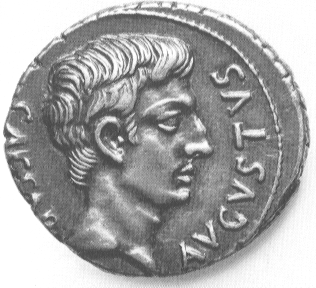
1-4 AUGUSTUS' ANCESTRY
5-8 AUGUSTUS' BOYHOOD
- 7: How he came to be called `Caesar Augustus'
9-19 THE CIVIL WARS
- 10: Augustus and Antony: Mutina
- 11: Hirtius and Pansa: suspicion of foul play
- 12: 43 B.C.: Octavian abandons the Optimate faction
- 13: The Second Triumvirate: Philippi (42 B.C.) Proscriptions
- 14: 40 B.C.: Perusia (15: `Arae Perusinae')
- 16: 38-36 B.C.: Sicily: Sextius Pompeius and Lepidus Naulochus
- 17: 31 B.C. September 2: Battle of Actium
- 18: Antonius and Cleopatra
- 19: Conspiracies and rebellions.
20-25 AUGUSTUS' FOREIGN WARS AND MILITARY POLICY
- 20: Wars Augustus fought in person
- 21: Wars fought by proxy (legati). Frontier policy.
- 22: Peace: The Temple of Janus
- 23: Triumphs and Disasters
- 24: Military Discipline
- 25: Slaves in the military: military rewards. Augustus' caution
26-28 AUGUSTUS AND THE CONSTITUTION: THE `PRINCIPATE'
- 26: The consulships (31-23, 12, 5)
- 27: The triumvirate. Tribunicia potestas. Censorships.
- 28: Augustus and the Republic. The new regime.
29-34 SOCIAL AND RELIGIOUS AFFAIRS
- 29: Public works in Rome
- 30: Social Services: fires and floods, road repair
- 31: Religious Policy
- 32: Brigandage. Legal Reforms
- 33: Augustus as judge
- 34: Moral legislation. Concern over the birth rate.
35-42 POLITICAL REFORMS: SENATE, EQUESTRIAN ORDER, THE PEOPLE
- 35: Lectio Senatus. Legislative procedures
- 36: Official bureaucratic procedures
- 37: Senatorial committees. Revival of the censorship
- 38: Military service for senators and equites.
- 39: Revision of the Roll of the Equestrian Order
- 40: The Populus: grain dole, elections, citizenship
- 41: Augustus' generosity
- 42: Augustus' moderation
43-45 POLICY ON PUBLIC SPECTACLES
- 43: Shows given by Augustus
- 44: Legislation on public spectacles
- 45: Augustus' personal tastes. Actors.
46-50 ITALIAN AND IMPERIAL POLICY
- 46: Colonies in Italy
- 47: Provincial policies: Imperial visitations
- 48: Client Kingdoms
- 49: Imperial troops. The cursus publicus. Military treasury
- 50: Augustus' signet ring. The Sphinx.
51-60 AUGUSTUS' PUBLIC VIRTUES:
- 51: Clementia
- 52: Reverentia
- 53: Civilitas
- 54: Tolerantia
- 55: Treatment of Opposition
- 56: Humanitas. Behavior in Comitia & Courts
- 57: Equestrians and the Plebs: Affection for Augustus
- 58: Pater Patriae (2 B.C.)
- 59: Prayers for his long life
- 60: Gratitude on the part of Client Kings.
61-67 AUGUSTUS' FAMILY AND HOUSEHOLD:
- 61: His mother (Atia) and sister (Octavia Minor)
- 62: His Wives (Scribonia, Livia Drusilla)
- 63: Julia his daughter
- 64: His grandchildren (Gaius, Lucius, Agrippa Postumus, Agrippina Major)
- 65: Family Disasters
- 66: His close friends: Salvidienus, Gallus, Agrippa, Maecenas
- 67: Slaves and freedmen.
68-83 AUGUSTUS' PERSONAL HABITS AND PRIVATE LIFE:
- 68: Charges of effeminacy and homosexuality.
- 69: Charges of adultery and loose living.
- 70: A blasphemous banquet.
- 71: Summary of his vices.
- 72: His houses. The theme of `simplicity'.
- 73: Furniture and clothing.
- 74: Entertainment.
- 75: Holidays and feast days.
- 76: Food and appetite.
- 77: Drink.
- 78: Sleep
- 79: Personal appearance.
- 80: Intimate details.
- 81: Health
- 82: Personal care
- 83: Exercise.
84-89 AUGUSTUS AS A MAN OF LETTERS:
- 84: Oratory
- 85: Written works: prose and verse.
- 86: Style
- 87: Peculiarities of expression.
- 88: Grammar; secret code.
- 89: Greek studies.
90-96 PERSONAL RELIGION IN AUGUSTUS' LIFE:
- 90: Lightning
- 91: Dreams
- 92: Omens
- 93: Attitude to foreign cults.
- 94: Omens of Augustus' birth and destiny.
- 95: Omens of his youth and public life.
- 96: Omens of his battles and victory.
97-101 AUGUSTUS' DEATH, BURIAL, AND DEIFICATION (A.D.14):
- 97: Omens of death.
- 98: Cause of death. The last journey to Nola
- 99: The deathbed and last words.
- 100: His burial, honors, and deification ceremony.
- 101: His will, bequests, and final instructions.