







2106
Education Bldg.
email: brian.foley@csun.edu
phone: (818) 677-4005
Welcome to my home page. I work in the department of Secondary
Education on issues of Educational Technology and Science Education. Education
in this country - especially science education - is in need of significant
improvement at all levels. Technology is only one of a number of means
 to this end, but it can be a powerful agent for change in schools and
universities.
to this end, but it can be a powerful agent for change in schools and
universities.
Courses
Use the links to the left to access the course websites.
Our book is available in paperback!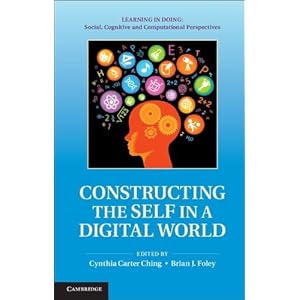
Constructing the Self in a Digital World (Learning inDoing: Social, Cognitive and Computational Perspectives)
Cynthia Carter Ching PhD (Editor), Brian J. Foley PhD (Editor)
Ongoing Projects
(if you are interested in working on these for independent study please let me know)
Computer Supportent Collaborative Science (CSCS)
Applying ideas from Computer Supported Collaborative
Learning (CSCL) to science classrooms is aided by online tools such as Google Docs. We are working with science teachers to demonstrate how using freely available tools can transform a science class into a thinking laboratory. Digital science classes are the future!
Computational Thinking and Science (aka Scatch Science)
Science can be understood at many levels and with different
perspectives. By teaching visualization of science concepts, teachers
can focus students attention on conceptual causes and effects. Use of
visualizations in lecture and other presentations is valuable, but even
more effective is when students construct visualizations themselves.
We have started Scratch
Science, a working group to look at the use of
the software Scratch (scratch.mit.edu)
to enable students to create their own visualizations.
Virtual Communities for Teachers
Many educational websites provide valuable links for
teachers, but the Math Forum and TAPPED-In have demonstrated that active
communities of teachers can provide far more support than static lists
of resources. We are working to develop ways to best leverage the technology
to support both teachers in the classroom and teachers in training. The RTCweb and Teacher Resource Database page are three examples we have developed. The Eduwiki provides a resource for teachers to share information - but we are currently putting together the next version of information sharing.





| Last
Updated 1/10/15 report problems to brian.foley@csun.edu |